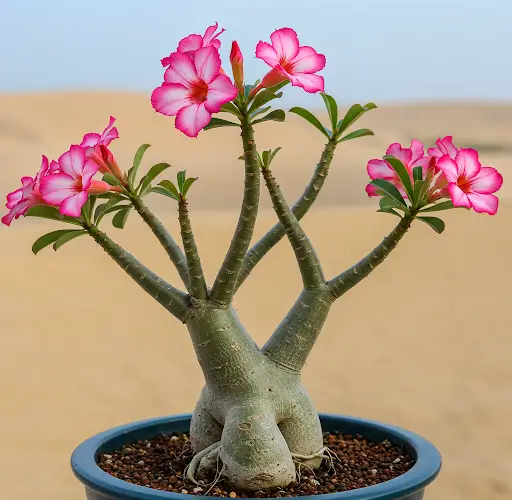
How to Transplant Desert Rose Correctly: A Step-by-Step Guide
The desert rose (Adenium obesum) is a beautiful and resilient plant known for its striking flowers and thick, swollen trunk called the caudex. However, when you buy a desert rose plant, it’s crucial to transplant it properly to ensure it thrives. In this guide, we will walk you through the correct way to transplant a desert rose, prepare the ideal substrate, and take care of the plant to ensure strong growth and abundant blooms.
Why You Need to Transplant Your Desert Rose
When you purchase a desert rose, it often comes in a pot that isn’t ideal for its growth. The first step in caring for this plant is transplanting it into a suitable container. Transplanting it allows the roots to expand freely and prevents them from becoming root-bound in a cramped pot. Additionally, it ensures the plant has the proper substrate and environment to flourish.
Desert roses are members of the succulent family, so they do not require excessive watering. In fact, too much moisture can be harmful to them. Therefore, understanding how to transplant and care for your desert rose is key to its success.
Choosing the Right Pot
When selecting a pot for your desert rose, it’s important to choose one that allows for good drainage. A shallow, wide container is ideal for this plant. Deep pots are not recommended because they can retain too much moisture, which is not suitable for desert roses. A pot made of ceramic or cement is preferable because these materials allow for better airflow and evaporation. Avoid plastic pots, as they tend to retain too much moisture.
Before you begin the transplanting process, ensure that the pot has drainage holes. This will help prevent water from accumulating at the bottom and causing root rot.
Preparing the Substrate
The substrate you use for transplanting is critical for the desert rose’s health. Since desert roses prefer well-draining soil, it’s essential to use a mix that doesn’t retain too much moisture. Here’s how to prepare the ideal substrate:
-
Base Material: Begin with a base of pine bark or similar organic matter. This type of material is ideal for desert plants.
-
Sand: To improve drainage, mix in some coarse construction sand. You don’t need to add too much—just enough to allow the soil to dry out faster.
-
Worm Castings: If available, add a small amount of worm castings. This will provide nutrients to the plant and support its overall growth. However, this is optional.
After mixing these components, you should have a well-draining, slightly gritty substrate perfect for your desert rose.
Transplanting the Desert Rose
Now that you have the right pot and substrate, it’s time to transplant the desert rose:
-
Remove the Plant from Its Old Pot: Gently remove the desert rose from its original pot. Be careful not to damage the roots. If the plant is stuck, lightly tap the sides of the pot to loosen it.
-
Inspect the Roots: Once the plant is out, examine the roots. Healthy roots should be white and firm. If you notice any dark or mushy roots, prune them away to prevent disease.
-
Fill the New Pot: Place a layer of charcoal at the bottom of the new pot. This helps with drainage and prevents any unpleasant odors. Add your prepared substrate on top of the charcoal, leaving enough space for the plant’s roots.
-
Position the Plant: Gently place the desert rose in the new pot, making sure the caudex (the thick, swollen trunk) is above the soil line. This is an essential part of the plant’s structure and should not be buried in the soil. Fill in around the roots with the substrate, but avoid compacting the soil too much, as this can cause water retention.
-
Watering: After transplanting, water the plant generously to help settle the soil. However, do not overwater. Desert roses do not like excessive moisture, so it’s crucial not to keep the soil too wet.
Post-Transplant Care
After transplanting, place the desert rose in a shaded area for a few days to allow it to adjust to its new environment. Avoid placing it in direct sunlight immediately, as it may suffer from stress.
-
Watering Schedule: Water the desert rose only once a week. Since the plant stores water in its caudex, it can go long periods without needing water. Overwatering can lead to root rot, so it’s better to underwater than overwater.
-
Fertilizing: Desert roses can benefit from regular feeding. Apply worm casting fertilizer every 15 days, or use a balanced liquid fertilizer. Avoid overfertilizing, as this can harm the plant.
-
Sunlight: After a few days in the shade, gradually move the plant into a location with bright, indirect sunlight. Desert roses thrive in full sun, so ensure they receive at least 6-8 hours of sunlight daily to encourage blooming and healthy growth.
Encouraging Caudex Growth and Branching
One of the most distinctive features of the desert rose is its thick, swollen trunk, called the caudex. To encourage the development of a robust caudex, you should ensure that the plant has plenty of lateral branches. Prune the plant regularly to stimulate branching, as a bushier desert rose will develop a more pronounced and thicker caudex.
If you notice that your plant is not developing multiple branches, it may be due to improper care or lack of sunlight. Ensure that your desert rose is getting enough light and that its soil is well-draining.
Conclusion
Transplanting your desert rose into the correct pot with the right substrate is crucial for its health and development. By following the steps outlined in this guide, you can help your plant thrive, grow stronger, and produce beautiful flowers. Remember to water it sparingly, provide adequate sunlight, and regularly check for signs of overwatering or root rot. With the proper care, your desert rose will flourish and reward you with its stunning blooms for years to come.


