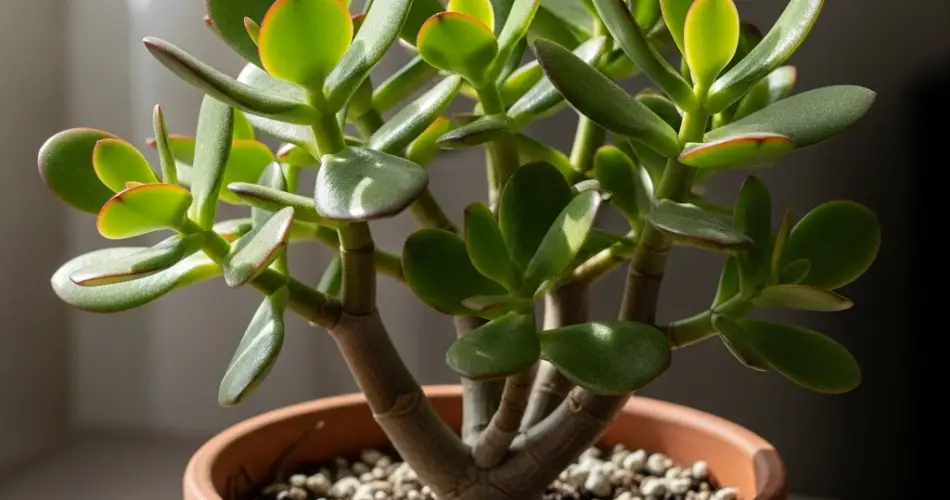
Jade plants (Crassula ovata) are beloved houseplants admired for their thick, glossy leaves, symbolic associations with luck and prosperity, and their ability to live for decades when cared for properly. However, without the right maintenance, jade plants can become leggy, stretched, or overly tall, losing their tree-like charm. The good news is that with a few simple techniques, you can encourage your jade plant to stay compact, shapely, and full of healthy growth.
This guide covers practical steps you can take to maintain the perfect balance of beauty and vigor in your jade plant, from pruning strategies to light management and container choices.
Provide Plenty of Light
Light is the single most important factor in determining the shape and density of your jade plant. Insufficient light causes the stems to stretch out, resulting in tall, thin, and weak growth.
-
Bright, indirect light: Place your jade plant in a location where it receives at least 4–6 hours of bright, indirect sunlight each day. A south- or west-facing window works best.
-
Outdoor placement: If the weather allows, move your jade outdoors in spring and summer to give it access to natural sunlight. Outdoor light is more intense and helps jades grow sturdier and more compact.
-
Rotate regularly: Turn the container every few weeks so the plant grows evenly on all sides and doesn’t lean toward the light source.
Strategic Pruning
Pruning is the most effective way to keep a jade plant compact and shaped like a miniature tree. It not only controls the size but also encourages branching, leading to fuller, more balanced growth.
-
When to prune: The best time to prune is in spring or early summer when the plant is actively growing. Avoid pruning in winter, when jade plants enter a semi-dormant phase.
-
How to prune: Use clean, sharp scissors or pruning shears to trim stems just above a node (the point where leaves grow). This stimulates new shoots to form below the cut.
-
Shaping tips: Trim back leggy stems, remove awkward growth, and thin out overcrowded areas. Over time, consistent pruning will give your jade a neat, tree-like silhouette.
-
Don’t overdo it: Never remove more than one-third of the plant at a time, as this can shock the plant.
Pinching for Young Plants
For younger jade plants, pinching is an easy way to promote bushier growth. Simply use your fingers to pinch off the tips of new shoots. This encourages the plant to send energy into side branches rather than growing taller. Pinching every few weeks during the growing season can create a dense, compact jade plant from the start.
Proper Watering Practices
Watering plays a role in maintaining plant health and compactness. Jade plants store water in their thick leaves, so they prefer infrequent but thorough watering.
-
Soak and dry: Allow the soil to dry out completely between waterings. When you do water, give it a deep soak until water drains from the bottom.
-
Avoid overwatering: Consistently wet soil leads to root rot, weak stems, and floppy growth.
-
Adjust seasonally: In winter, when the plant’s growth slows, reduce watering significantly.
Healthy watering habits support strong roots and sturdier growth, keeping the plant upright and compact.
Container Size and Stability
The container you choose has an impact on the plant’s size and growth pattern.
-
Avoid oversized pots: Large containers hold excess moisture and encourage root overgrowth, which can fuel unwanted stretching in the upper stems.
-
Step up gradually: Repot only when the plant has clearly outgrown its pot, usually every 2–3 years. Move to a container that is just one size larger.
-
Choose heavy pots: Jade plants can become top-heavy as they grow. Terracotta or stone pots provide weight and stability, keeping the plant upright.
Fertilizing for Balanced Growth
Over-fertilizing a jade plant can lead to fast but weak growth, which makes the plant leggy rather than compact.
-
Use a diluted fertilizer: Apply a balanced, water-soluble fertilizer at half strength every 4–6 weeks during the growing season.
-
Skip winter feeding: Fertilizer is unnecessary when the plant is dormant.
-
Encourage strength, not speed: Moderate feeding supports healthy leaves and roots without forcing spindly growth.
Environmental Support
The environment in which your jade plant lives also influences its shape.
-
Temperature: Keep your jade in moderate room temperatures between 60–75°F (15–24°C). Cooler nighttime temperatures encourage stronger, compact growth.
-
Air circulation: Good airflow reduces the risk of fungal diseases and keeps stems strong.
-
Humidity: Jade plants prefer low to moderate humidity, which mimics their native arid environment.
Long-Term Shaping and Training
As jade plants mature, they can be trained to resemble miniature bonsai-style trees. By carefully pruning branches, supporting trunks with stakes if necessary, and removing lower leaves gradually, you can shape your plant into a compact, artistic form. Patience is key, as jade plants grow slowly but reward consistent care with beautiful structure.
Final Thoughts
A jade plant doesn’t have to grow tall and leggy to thrive. With the right combination of light, pruning, pinching, and proper care, you can maintain a compact, attractive jade that looks healthy year-round. By choosing the right container, managing water and fertilizer carefully, and giving it the light it needs, you create the perfect environment for balanced growth.
Over time, these techniques will not only keep your jade plant compact but also help it develop into a strong, graceful plant that can live for generations.


