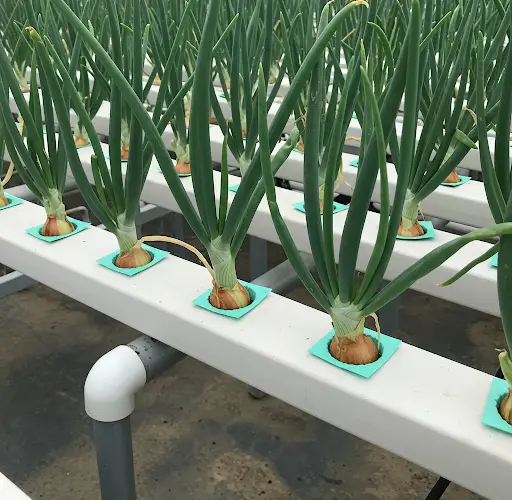
If you’re tired of constantly buying onions and want a sustainable, space-saving way to grow them at home, hydroponics may be the perfect solution. This innovative method allows you to grow onions without soil—right in your kitchen, on a balcony, or any small space—and can boost productivity up to ten times compared to traditional methods.
Hydroponic onions grow faster, require less maintenance, and offer continuous harvests. This guide will show you how to set up a simple hydroponic system at home and grow healthy, flavorful onions with abundant green tops all year round.
Why Choose Hydroponics for Onions?
Hydroponics is a method of growing plants in a nutrient-rich water solution without soil. The roots absorb nutrients directly from the water, which results in faster growth, healthier plants, and higher yields. Here’s why it’s a game-changer for onion cultivation:
-
Higher Yield in Less Space: Vertical or stacked hydroponic systems allow you to grow dozens of onions in a small footprint.
-
Faster Growth: Onions mature more quickly when they receive direct access to water and nutrients.
-
Cleaner and Pesticide-Free: Since there’s no soil involved, your onions grow cleaner and are less susceptible to pests and diseases.
-
Water Efficient: Hydroponic systems use significantly less water than traditional gardening.
What You Need to Get Started
To grow onions hydroponically at home, gather the following items:
-
Onion bulbs or sets
-
Plastic containers or bottles (2-liter soda bottles work great)
-
Hydroponic nutrient solution (available at garden supply stores)
-
Water (preferably filtered or rainwater)
-
Wicking material (optional, for semi-hydroponic systems)
-
A drill or sharp tool to make holes
-
Grow lights (if growing indoors without natural light)
Step-by-Step Guide to Growing Hydroponic Onions
1. Prepare the Growing Containers
Cut the tops off of plastic bottles or containers. If using soda bottles, cut just above the label. Invert the top part like a funnel and place it back into the bottom portion. This creates a simple wick system with a water reservoir at the base. Drill or cut small holes near the tip of the funnel for drainage and airflow.
For a more advanced setup, use a deep water culture system or a hydroponic tray with net cups and air pumps, but the bottle method is perfect for beginners.
2. Add Growing Medium (Optional)
While not necessary, you can fill the funnel section with a lightweight, sterile medium like coconut coir, perlite, or vermiculite. This will support the onions and hold moisture between watering.
If you’re doing a true water culture setup, skip the medium and place the bulbs directly into net cups so only the roots touch the nutrient water.
3. Insert the Onion Bulbs
Place each onion bulb with the root side down and the pointy side facing up. The roots should just touch the water or sit close enough to absorb moisture through the medium.
If the onions haven’t sprouted yet, you can pre-soak them in water for a few hours to help jumpstart the growth.
4. Add the Nutrient Solution
Fill the bottom reservoir with water mixed with hydroponic nutrients. Follow the instructions on the product label for proper dilution. For onions, the ideal pH level is around 6.0–6.5.
Check the water level regularly and refill the reservoir as needed. Every two weeks, replace the solution entirely to avoid buildup of salts or algae.
5. Provide Proper Light and Air
Place your onion system in a sunny spot where it can get at least 6 hours of light daily. If natural light is limited, use LED grow lights to supplement. Keep lights about 6–12 inches above the plants for optimal results.
For systems using standing water, add an aquarium air pump and stone to oxygenate the solution. This helps prevent root rot and encourages healthier, faster growth.
Tips for Successful Hydroponic Onion Growth
-
Use green onion or scallion varieties if you want continuous leaf harvesting.
-
Harvest leaves often to encourage more top growth—cut the outer leaves and leave the inner core intact.
-
Avoid overcrowding the containers. Give each bulb enough space to grow without competing for light or nutrients.
-
Keep an eye on algae—if the water turns green or cloudy, clean the container and replace the solution.
-
Maintain proper temperatures (between 60–75°F or 15–24°C) for optimal growth.
Harvesting Your Hydroponic Onions
You can begin harvesting green onion leaves within 2–3 weeks of growth. These fresh tops are excellent for soups, salads, and garnishes. Just snip them with scissors as needed, and they’ll regrow continuously.
If you’re growing bulb onions, allow 8–12 weeks for full development. When the tops begin to yellow and fall over, it’s a sign that the bulbs are ready for harvesting. Pull them out gently, rinse, and dry them before storing.
Conclusion
Hydroponic onion gardening is an efficient, rewarding way to grow your own food at home without needing soil or a large garden. With just a few basic materials and a bit of care, you can produce fresh, healthy onions in a fraction of the time and space required by traditional methods.
This method not only saves money but ensures a steady supply of nutrient-rich onions with ten times the productivity—right from your own home. Whether you’re a gardening enthusiast or just looking to eat fresher, this technique is worth trying.


