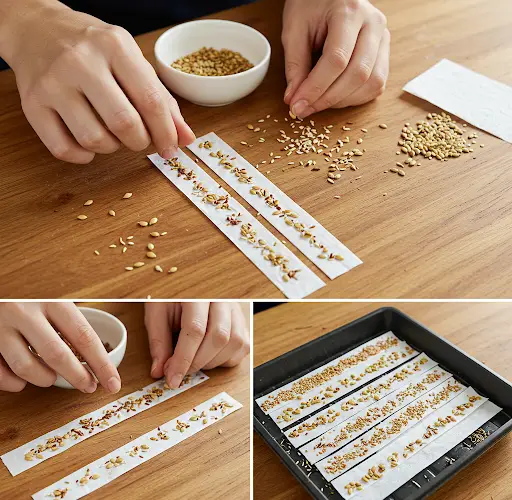
Spring sowing can be a challenging and time-consuming process, especially when dealing with small seeds like carrots, radishes, and celery. Manually sowing seeds requires patience and precision, as seeds must be evenly distributed at the right distance to ensure healthy growth. Bending over for extended periods while carefully placing seeds can be uncomfortable, particularly for older gardeners. Moreover, seeds often clump together, leading to the need for later thinning, which requires additional labor.
To make the sowing process easier and more efficient, a simple and effective method has been developed: seed tape. Seed tape allows gardeners to prepare their seeds indoors at a table and then transfer them directly to the garden bed when ready. This method eliminates the need for bending over and ensures that seeds are evenly spaced, reducing the need for thinning later.
What You Need to Make Seed Tape
To create seed tape at home, you will need a few basic materials:
- Toilet paper (preferably 100% cellulose, free of dyes and perfumes)
- Vegetable or flower seeds
- A spray bottle filled with water
- A pen or ruler for marking spacing (optional)
- Homemade seed glue (optional, made from flour and water)
How to Make Seed Tape
- Prepare the Work Area: Choose a clean, flat surface to work on, such as a table or countertop. Lay out your materials within easy reach.
- Roll Out the Toilet Paper: Unroll a strip of toilet paper to the desired length. You can cut it to fit your garden rows if needed.
- Moisten the Paper: Lightly spray the toilet paper with water using a spray bottle. The moisture helps keep the seeds in place without the need for glue. If you prefer a more secure method, you can use homemade seed glue by mixing a small amount of flour and water to create a paste.
- Mark the Spacing: If precision is important, use a pen or ruler to mark the appropriate distances for seed placement according to the seed packet instructions. Proper spacing prevents overcrowding and ensures each plant has enough room to grow.
- Place the Seeds: Carefully place seeds in the center of the toilet paper strip, following the spacing guidelines. For example, radishes and carrots typically require about an inch of space between seeds, while larger seeds like lettuce or beets may need more room.
- Fold the Paper: Gently fold the toilet paper over the seeds, covering them. If using glue, place a small dab at each marked seed position before folding to secure them in place.
- Press the Paper: Lightly press down on the folded paper to ensure the seeds adhere and remain in position. If necessary, spray a little more water to keep the layers together.
- Let It Dry: If not planting immediately, allow the seed tape to dry completely before rolling it up for storage. Store it in a cool, dry place until you are ready to use it.
How to Use Seed Tape for Planting
Once the soil is prepared and ready for sowing, follow these steps:
- Prepare the Garden Bed: Loosen the soil and create shallow furrows where the seed tape will be placed.
- Lay Down the Seed Tape: Stretch the seed tape along the furrow, ensuring it lies flat against the soil.
- Moisten the Tape: Lightly spray the tape with water to encourage moisture retention and faster seed germination.
- Cover with Soil: Gently cover the tape with a thin layer of soil and press it down lightly to secure it.
- Water the Area: Water the newly planted seed tape thoroughly but gently, avoiding excessive runoff that might disturb the placement.
Advantages of Using Seed Tape
- Even Seed Distribution: Ensures proper spacing and eliminates overcrowding.
- Reduces Thinning: Saves time and effort by preventing excessive seedlings.
- Minimizes Waste: Avoids dropping too many seeds in one spot.
- Eases Planting for All Ages: Makes gardening accessible for children and elderly individuals who may struggle with manual seeding.
- Saves Time: Quickly unrolls and plants in seconds compared to traditional hand-sowing.
Best Crops for Seed Tape
Seed tape works best for small-seeded vegetables and flowers, including:
- Carrots
- Radishes
- Celery
- Lettuce
- Spinach
- Onions
- Parsley
Using homemade seed tape is an excellent way to streamline the planting process while ensuring a more organized and efficient garden. This simple method improves seed distribution, enhances germination, and reduces labor, making spring planting an easier and more enjoyable experience for gardeners of all levels.


