Eggs are a staple in kitchens worldwide, prized for their versatility in everything from breakfasts to baked goods and savory dishes. Most people store their eggs in the refrigerator to prolong freshness, but did you know that salt can also be used to preserve eggs for long periods? This ancient yet effective method allows you to keep eggs fresh even without refrigeration, making it a valuable trick for any home cook.
Why Use Salt for Egg Preservation?
The use of salt for preserving food dates back centuries. Before modern refrigeration, salt was indispensable for storing meat, fish, and vegetables. Its effectiveness lies in its hypertonic properties, which prevent bacterial growth. By drawing moisture out of the food, salt creates an environment in which bacteria cannot survive, effectively prolonging the life of the preserved item.
For eggs, this method works just as well today as it did in the past. While fresh eggs can last for weeks in the fridge, they have a limited shelf life if kept at room temperature. Salt offers a natural solution to extend this period, making it particularly useful when refrigeration is unavailable or when you want to store eggs for long-term use.
Methods of Preserving Eggs with Salt
There are two primary ways to preserve eggs using salt: dry preservation and brining.
1. Dry Preservation:
This method involves coating the eggs in salt, either by rubbing the salt directly on their shells or layering them in a container with salt. It’s important to use a container made of glass, ceramic, or another non-plastic material, as salt can react with some plastics. The coarse salt works best because it fills the spaces between the eggs and penetrates effectively, creating a protective barrier that inhibits bacterial contamination.
2. Brining:
Brining involves immersing the eggs in a solution of water and salt, with the concentration of salt varying depending on the intended duration of storage. For long-term preservation, a high concentration — around 20% to 25% — is recommended. Occasionally, it may be necessary to add more salt to the solution to maintain its potency. The salt solution not only prevents bacterial growth but also helps absorb moisture from the eggs, keeping them fresh without compromising their quality.
Both methods rely on salt’s ability to penetrate the eggs’ outer layers, forming a barrier against spoilage. Using coarse salt ensures rapid and thorough penetration, making it superior to fine salt for preservation purposes.
How to Apply Salt to Preserve Eggs
The process of preserving eggs with salt is straightforward and requires minimal equipment. Here’s a step-by-step guide for dry preservation:
-
Select a large glass bowl: Ensure it is spacious enough to hold all the eggs you want to preserve.
-
Arrange the eggs inside: Place the eggs carefully so they do not touch each other too tightly.
-
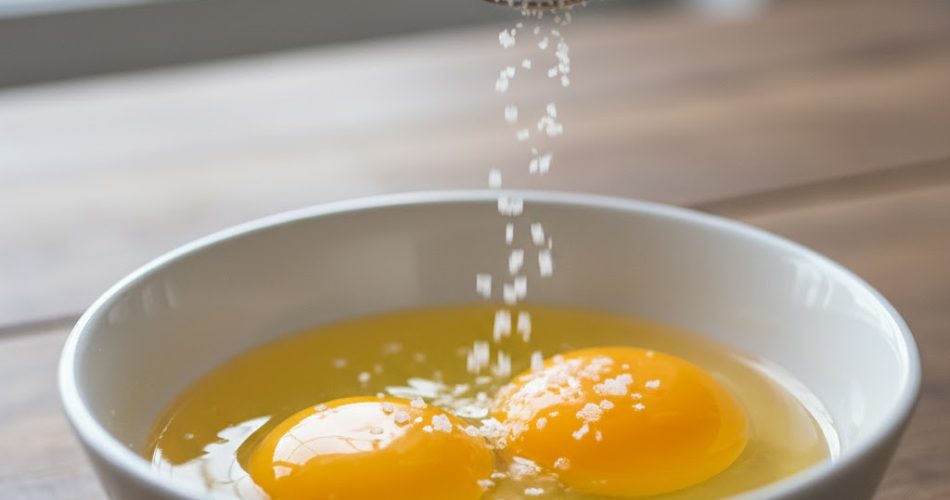
Generously sprinkle coarse salt: Cover the eggs completely, filling the spaces between them and ensuring some salt reaches the bottom of the container.
It’s essential to use enough salt to cover all surfaces of the eggs thoroughly. Coarse salt works best because its large grains can reach gaps between the eggs, creating a natural protective layer. Once arranged, the eggs do not need to be covered with plastic wrap or other materials. Simply keep the container in a cool, dry place in the kitchen.
Storage Duration and Tips
When preserved correctly with salt, eggs can remain fresh for several months, even at room temperature. The method allows you to have eggs available throughout the year without fear of spoilage. This is particularly beneficial for households that consume eggs regularly or for those who want to stock up in advance.
To maximize the eggs’ shelf life, check periodically that the salt has not clumped or absorbed excess moisture. If needed, lightly stir the eggs and add more salt to maintain an even distribution. This ensures that each egg remains fully protected and extends the preservation period.
Advantages of Salt Preservation
Using salt to store eggs has several benefits:
-
No refrigeration needed: Ideal for situations where a fridge is unavailable or during power outages.
-
Long shelf life: Eggs can remain usable for months.
-
Cost-effective: Salt is inexpensive and widely available.
-
Natural method: No chemical preservatives are involved, making it safe and eco-friendly.
Additionally, this method allows you to preserve large quantities of eggs at once, making it convenient for families, seasonal cooking, or situations where eggs are purchased in bulk.
Conclusion
Salt preservation is a simple, ancient, and effective method to keep eggs fresh for extended periods. By either coating them with coarse salt or immersing them in a brine solution, you create an environment that inhibits bacterial growth and prevents spoilage. This technique is perfect for anyone looking to maintain a supply of eggs without relying solely on refrigeration.
Whether you are an avid home cook, someone who enjoys stocking up on fresh eggs, or simply looking for a natural preservation method, using salt is an excellent solution. With just a glass bowl, coarse salt, and a little patience, you can ensure that your eggs remain fresh, safe, and ready to use whenever you need them.
This timeless practice not only honors traditional food preservation methods but also provides a practical, cost-effective, and reliable way to keep eggs in perfect condition year-round.