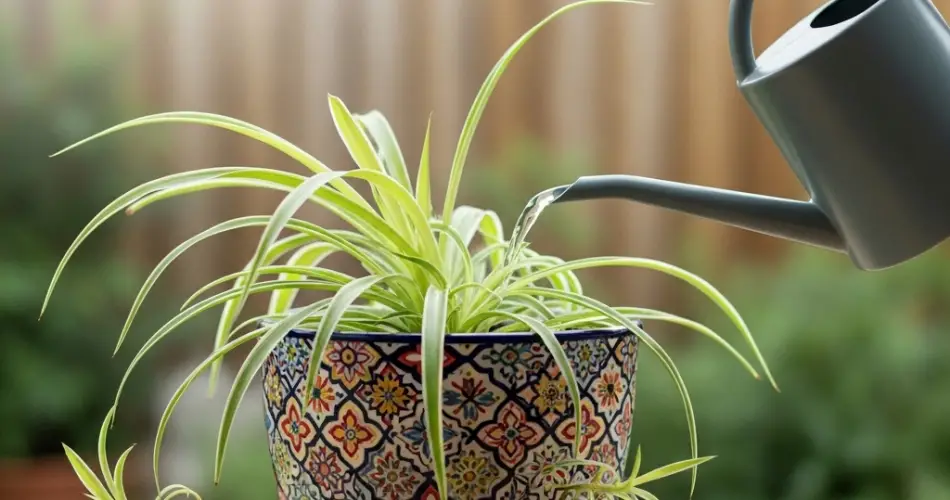
Spider plants (Chlorophytum comosum) are popular indoor houseplants known for their bright green, arching leaves and easy-going nature. They’re especially great for beginners due to their adaptability and low-maintenance care requirements. However, one of the most important aspects of keeping your spider plant healthy is learning how to water it properly. Overwatering or underwatering can lead to a variety of issues, from yellowing leaves to root rot. This guide covers everything you need to know about watering your spider plant, including choosing the right soil, ensuring good drainage, and setting an ideal watering schedule.
Why Proper Watering Is Essential
Watering is critical for plant health, but spider plants can be sensitive to inconsistent moisture levels. While they are more forgiving than many other houseplants, prolonged neglect or overwatering can still cause serious stress.
The key is to keep the soil evenly moist—never too soggy, and never bone dry for long periods. Spider plants have fleshy roots that store water, which means they can tolerate short dry spells, but they are still happiest when their watering needs are balanced and consistent.
Choosing the Right Soil
The first step in maintaining a proper watering routine starts with using the right soil. Spider plants prefer a light, airy, well-draining soil mix that allows excess water to pass through quickly while retaining enough moisture for the roots.
Ideal soil components:
-
Peat moss or coco coir for moisture retention
-
Perlite or pumice for improved drainage and aeration
-
A touch of compost for nutrients
You can either purchase a high-quality general-purpose potting mix labeled for houseplants or create your own mix using two parts peat moss or coco coir, one part perlite, and one part compost. Avoid heavy garden soils or mixes that retain too much water.
Importance of Drainage
No matter how perfect your soil is, your spider plant will suffer if it’s sitting in water. Ensuring excellent drainage is non-negotiable.
Tips for proper drainage:
-
Always use pots with drainage holes. Water must be able to flow out of the bottom to prevent root rot.
-
Use a saucer to catch excess water, but make sure to empty it after watering.
-
Avoid pots that are too large; excess soil can hold too much moisture, leading to soggy conditions around the roots.
If you like decorative containers without holes, place a smaller nursery pot with drainage inside the outer decorative one, and remove it to water and drain as needed.
How Often to Water a Spider Plant
The frequency of watering depends on several factors, including temperature, humidity, light levels, and the size of the pot. As a general rule:
-
Water once every 7–10 days during spring and summer, when the plant is actively growing.
-
Water less frequently in fall and winter, approximately every 2–3 weeks, as growth slows and evaporation rates decrease.
Rather than sticking to a rigid schedule, it’s better to check the soil’s moisture before watering. Stick your finger about an inch into the soil—if it feels dry, it’s time to water. If it’s still moist, wait a few more days.
How to Water Properly
When it’s time to water your spider plant, it’s best to do so thoroughly:
-
Pour water slowly over the soil until it starts to drain from the bottom of the pot.
-
Let the excess water drain completely—never leave the pot soaking in water.
-
Empty the saucer after 15–30 minutes to ensure the roots aren’t sitting in moisture.
Avoid light surface watering, as it doesn’t reach the deeper roots and can lead to shallow root development.
Signs of Overwatering and Underwatering
Spider plants will often show clear signs if their watering needs are not being met.
Overwatering signs:
-
Yellowing or browning leaf tips
-
Soft, mushy roots
-
Foul-smelling soil
-
Wilting despite wet soil
Underwatering signs:
-
Dry, crispy leaf tips
-
Drooping or wilting leaves with dry soil
-
Soil pulling away from the sides of the pot
If you notice issues, adjust your watering routine and check the soil to determine if it’s too dry or too wet.
Water Quality Matters
Spider plants can be sensitive to chemicals found in tap water, especially fluoride and chlorine, which may cause brown leaf tips over time. To minimize this, use filtered water, distilled water, or rainwater whenever possible. If using tap water, let it sit out overnight to allow chlorine to dissipate before watering.
Final Thoughts
Mastering the watering routine for spider plants is essential to keeping them vibrant and thriving. With the right soil, good drainage, and careful attention to moisture levels, your spider plant will flourish. By observing your plant’s signals and maintaining a healthy balance, you’ll enjoy its lush foliage and charming baby plantlets for years to come.


