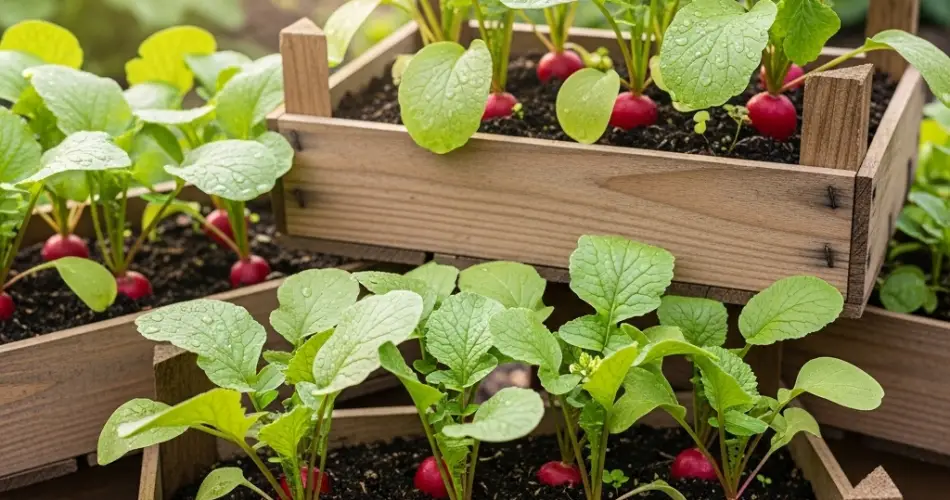
Radishes are one of the most rewarding vegetables for home gardeners. Crisp, colorful, and ready to harvest in just a few weeks, they make an excellent crop for those with limited space. Even without a traditional garden bed, you can enjoy a steady supply of fresh radishes by growing them in wooden crates.
This method is simple, inexpensive, and perfect for balconies, patios, or compact backyards. With the right crate setup, soil mix, and care routine, you can enjoy crunchy radishes almost year-round.
Why Choose Crate Gardening for Radishes?
Radishes adapt well to container growing, and wooden crates offer specific benefits:
-
Space efficiency – Great for small outdoor areas.
-
Custom soil control – You choose the right soil blend for optimal growth.
-
Better drainage – Prevents soggy conditions that can cause root rot.
-
Mobility – Crates can be moved to follow the sun or avoid heavy rain.
-
Rustic appeal – Adds charm and style to your gardening space.
Because radishes are fast growers, crates also allow for successive planting, giving you fresh harvests every few weeks.
Selecting the Right Radish Varieties
Radishes come in many shapes, sizes, and colors, so choose varieties based on taste preference, climate, and space:
-
Cherry Belle – Classic red, round radish, ready in about 22 days.
-
French Breakfast – Oblong, pink-and-white radishes with a mild flavor.
-
Easter Egg Mix – A colorful assortment for visual appeal.
-
Daikon – Long, white radish, ideal for cooler seasons.
For crate gardening, small to medium-sized radishes generally perform best, as they mature quickly and don’t require deep soil.
Preparing the Wooden Crate
Choose a crate at least 8–10 inches deep to allow roots to develop fully. Ensure the wood is untreated to avoid chemical leaching into the soil.
Steps to prepare the crate:
-
Line the interior – Use landscape fabric or burlap to hold soil while letting excess water drain.
-
Add drainage holes – Drill several holes in the base if they’re not already present.
-
Raise the crate – Place it on bricks, wooden blocks, or pot feet to improve air circulation and drainage.
Creating the Perfect Soil Mix
Radishes grow best in loose, well-draining soil that’s rich in organic matter. For crate planting, mix:
-
50% high-quality garden soil
-
30% compost for nutrients
-
20% coarse sand or perlite to improve drainage
Avoid heavy clay soils, as they can cause misshapen roots.
Planting Radishes in Crates
Radishes grow quickly, so you can sow seeds directly into the crate without starting indoors.
-
Spacing – Sow seeds 1 inch apart and cover with ½ inch of soil.
-
Rows – Space rows about 4 inches apart for good airflow.
-
Succession planting – Plant new seeds every 10–14 days for a continuous harvest.
Water gently after sowing to settle the soil without washing away seeds.
Watering and Sunlight
Radishes need consistent moisture for even growth and a crisp texture. Irregular watering can cause the roots to split or become woody.
-
Watering – Keep soil evenly moist, but not soggy. In hot weather, you may need to water daily.
-
Sunlight – Position the crate where it receives 6–8 hours of direct sunlight daily. In extremely hot climates, light afternoon shade can prevent the plants from bolting too quickly.
Fertilizing for Healthy Growth
Radishes don’t require heavy feeding, but they do benefit from balanced nutrition. Too much nitrogen will result in lush leaves but small roots.
-
Before planting, mix in a small amount of balanced organic fertilizer.
-
Midway through the growing cycle, give a light feed with a phosphorus-rich blend to support root development.
Pest and Disease Management
Crates naturally lift plants away from some pests, but a few common issues can still occur:
-
Flea beetles – Cover seedlings with row fabric until they’re established.
-
Root maggots – Rotate crops and avoid planting radishes in the same soil repeatedly.
-
Fungal issues – Avoid overcrowding and water at the base to keep leaves dry.
Harvesting Your Radishes
One of the biggest advantages of crate-grown radishes is the ease of harvesting.
-
Timing – Most varieties are ready 20–30 days after sowing.
-
Check size – Gently brush away soil to check the root’s diameter. Harvest when they’re firm and about 1 inch across.
-
Avoid over-maturity – Radishes left in the soil too long can become pithy and overly spicy.
Harvest regularly to make space for new plantings and keep your crop cycle going.
Replanting and Successive Crops
After harvesting, loosen the soil, add fresh compost, and replant. Since radishes grow quickly, you can enjoy multiple harvests throughout the year in mild climates. In colder regions, plant during spring and autumn for the best results.
End-of-Season Care
When the growing season ends, empty the crate, remove any plant debris, and refresh the soil before the next planting cycle. If you live in a wet winter climate, store the crate under cover to extend its life.
Final Thoughts
Radish crate gardening is proof that you don’t need a large yard to grow fresh, crunchy vegetables. This method combines speed, simplicity, and style, allowing you to enjoy homegrown radishes in as little as three weeks. Whether you prefer classic red rounds or colorful specialty varieties, a wooden crate can deliver big harvests from even the smallest spaces.


