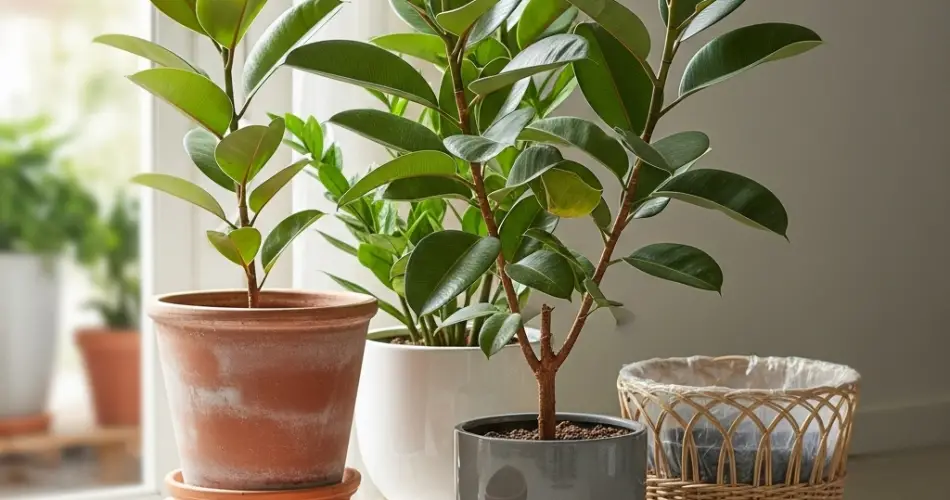
Rubber plants (Ficus elastica) are striking houseplants known for their broad, glossy leaves and strong upright growth. Native to Southeast Asia, these plants can reach impressive heights indoors when properly cared for. Grown in containers, rubber plants not only add a bold, sculptural element to interior spaces but also help purify the air.
To keep your rubber plant thriving—and those signature leaves glossy and healthy—it’s essential to provide the right pot, growing conditions, and routine care. This guide covers everything you need to grow a rubber plant in a container successfully, with a special focus on keeping those beautiful leaves in top condition.
Choosing the Right Container
The first step to a healthy rubber plant is choosing a proper container. While the pot’s design can enhance your interior style, function is equally important.
Key Considerations:
-
Drainage Holes: Always select a container with adequate drainage. Rubber plants do not tolerate soggy soil, and poor drainage can lead to root rot.
-
Pot Size: Choose a pot that is 2–4 inches wider than the plant’s root ball. Avoid oversized pots, which can hold excess moisture.
-
Material: Terracotta is a great option for moisture control, while glazed ceramic, plastic, or fiberglass containers work well as long as drainage is ensured.
Rubber plants are fast growers, so be prepared to repot every couple of years as the plant matures.
The Ideal Soil Mix
Rubber plants prefer a well-aerated, quick-draining soil mix. A standard indoor potting mix can work well if amended slightly.
Recommended Mix:
-
2 parts all-purpose potting soil
-
1 part perlite or coarse sand for drainage
-
Optional: 1 part coconut coir or peat moss for moisture retention
Avoid heavy, compacted soils that retain too much water.
Light Requirements
Light plays a crucial role in the rubber plant’s health and appearance. These plants thrive in bright, indirect light. A few hours of morning sunlight is fine, but prolonged exposure to harsh afternoon rays can scorch the leaves.
Ideal placement:
-
Near an east- or south-facing window with filtered light
-
A bright room where the plant receives plenty of natural daylight but not direct sun
If light is too low, your rubber plant may drop its lower leaves and become leggy. Variegated varieties need more light to maintain their patterns.
Watering Routine
Rubber plants prefer consistent moisture but do not like to sit in water. The top inch or two of soil should dry out before the next watering.
Watering Tips:
-
Water thoroughly until it drains from the bottom of the pot.
-
Empty the saucer after watering to prevent root rot.
-
In spring and summer, water every 7–10 days.
-
In fall and winter, water less frequently, about every 2–3 weeks depending on indoor humidity.
Monitor the plant closely—yellowing or drooping leaves are signs of overwatering, while dry, crispy leaves may indicate underwatering.
Humidity and Temperature
Rubber plants prefer warm, slightly humid environments. Ideal temperatures range from 60–80°F (15–27°C). Avoid placing the plant near cold drafts, heaters, or air conditioning vents.
To increase humidity:
-
Mist the plant occasionally, especially in dry winter months.
-
Place a tray of water and pebbles under the pot.
-
Use a room humidifier if needed.
Leaf Care for Shine and Health
One of the rubber plant’s most appealing features is its shiny, waxy leaves. Keeping them clean not only enhances their beauty but also improves photosynthesis.
Leaf-Cleaning Tips:
-
Wipe leaves gently with a soft, damp cloth every 1–2 weeks.
-
For stubborn dust, use a solution of lukewarm water with a few drops of mild liquid soap. Wipe clean with a water-dampened cloth afterward.
-
Avoid commercial leaf shine products—they can clog pores and attract dust.
Keeping the leaves clean also helps prevent pest infestations.
Fertilizing
During the active growing season (spring and summer), feed your rubber plant once a month with a balanced, water-soluble houseplant fertilizer diluted to half strength.
In fall and winter, stop fertilizing as the plant’s growth naturally slows.
Pruning and Shaping
Prune your rubber plant to control its height and encourage bushier growth.
-
Use sharp, sterilized shears to cut just above a leaf node.
-
Wear gloves—rubber plants exude a milky sap that can irritate skin.
-
Pruning can be done any time, but spring is ideal for shaping.
You can also propagate new plants from pruned branches using stem cuttings.
Common Issues
-
Yellow leaves: Usually a sign of overwatering or poor drainage.
-
Leaf drop: Can occur from sudden temperature changes, drafts, or inconsistent watering.
-
Pests: Watch for spider mites, mealybugs, or scale. Wipe leaves with neem oil or insecticidal soap at the first sign of pests.
Final Thoughts
Rubber plants are bold, easy-care houseplants that thrive in containers when given the right environment. With the right light, well-draining soil, consistent watering, and clean leaves, your rubber plant can grow into a stunning indoor tree that lasts for years. Regular attention to its needs will keep its glossy leaves healthy and make it a standout feature in your indoor garden.


