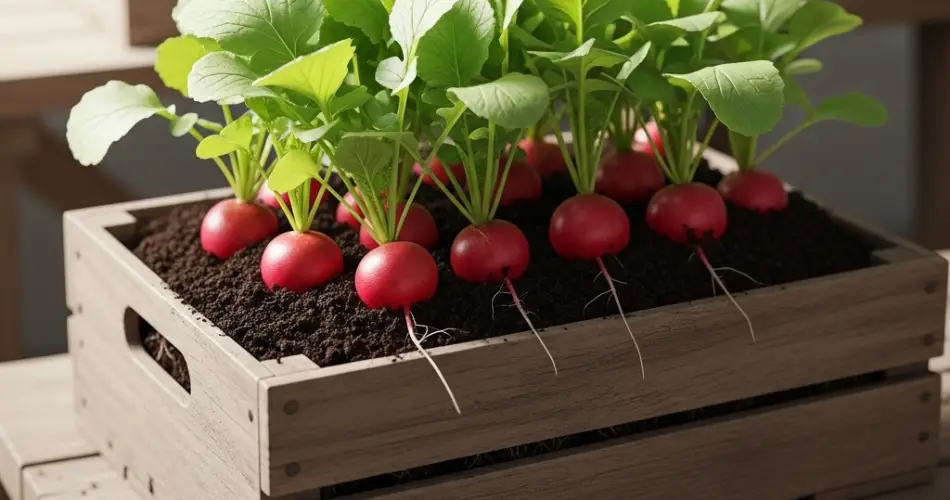
Radishes are one of the quickest and easiest vegetables to grow, making them perfect for both new and experienced gardeners. Their crisp texture and peppery flavor add a refreshing bite to salads, sandwiches, and cooked dishes. Best of all, radishes thrive in small spaces — even in crate beds — so you can grow them right in your backyard, on a balcony, or in a sunny patio corner.
Planting radishes in crates offers excellent soil control, portability, and neat organization. With the right crate, soil mix, and care routine, you can enjoy fresh radishes from seed to table in just a few weeks.
Why Grow Radishes in Crate Beds?
Crate beds are ideal for radish cultivation for several reasons:
-
Space Efficiency – Perfect for small gardens, patios, and balconies.
-
Faster Soil Warming – Raised crates warm up more quickly in spring, encouraging earlier planting.
-
Mobility – Move crates to follow the sun or avoid harsh weather.
-
Fewer Pests – Raising plants off the ground can help reduce slug and insect damage.
-
Soil Control – You can prepare the ideal growing medium without worrying about poor or compacted ground soil.
Choosing the Right Crate
Radishes have relatively short roots, so crate beds don’t need to be deep.
-
Size – A depth of 8–10 inches is sufficient. A wider crate (18–24 inches) allows multiple rows for a bigger harvest.
-
Material – Use untreated wood like cedar or pine to avoid chemical leaching.
-
Drainage – Drill several holes in the base to prevent waterlogging.
-
Lining – Line the inside with breathable fabric such as burlap or landscape cloth to hold soil in place while allowing drainage.
Preparing the Soil
Radishes prefer loose, well-draining soil that encourages quick root development. Compact or heavy clay soil can cause misshapen roots, so creating the right mix is essential.
A good soil blend for crate-grown radishes is:
-
50% quality garden soil or loam
-
30% compost (well-aged)
-
20% coarse sand or perlite for improved aeration
Aim for a soil pH between 6.0 and 7.0. Avoid adding too much nitrogen, as it encourages leafy growth at the expense of root formation.
Selecting Radish Varieties
There are many radish varieties, and most do well in crates:
-
Cherry Belle – Fast-maturing, mild flavor.
-
French Breakfast – Oblong shape with a crisp texture.
-
Easter Egg – Colorful mix of red, purple, pink, and white roots.
-
Daikon – Larger, mild-flavored radishes that need deeper crates.
For a steady supply, choose a mix of quick-growing and slower-maturing types.
Planting in Crate Beds
-
Direct Sowing – Radishes grow best when seeds are sown directly in the soil rather than transplanted.
-
Depth and Spacing – Sow seeds about ½ inch deep and 1 inch apart. Space rows 4–6 inches apart.
-
Succession Planting – For continuous harvests, sow new seeds every 1–2 weeks during the growing season.
Care and Maintenance
-
Watering – Keep the soil evenly moist, as inconsistent watering can lead to splitting or a woody texture.
-
Weeding – Radishes don’t like competition, so keep the crate free of weeds.
-
Thinning – When seedlings are about 2 inches tall, thin to 2 inches apart to allow room for roots to develop.
-
Mulching – A thin layer of mulch can help retain moisture and reduce weeds, but don’t cover seedlings completely.
Common Problems and Solutions
-
Pithy or Woody Roots – Usually caused by leaving radishes in the soil too long or by inconsistent watering.
-
Root Maggots – Prevent by covering crates with fine mesh row covers.
-
Bolting – Hot weather or drought stress can cause radishes to flower early. Plant in cooler seasons and keep soil moist.
Harvesting Radishes
Radishes mature quickly — most small varieties are ready in 20–30 days. Check by gently brushing away soil at the base to see root size. Harvest when roots are firm and about 1 inch in diameter for the best flavor.
-
Pulling – Grasp the greens near the base and pull gently from moist soil to avoid breaking the root.
-
Cleaning – Rinse immediately to remove soil and store greens separately to prevent them from drawing moisture from the root.
Enjoying Your Harvest
Radishes can be eaten raw, pickled, roasted, or sautéed. The greens are edible too, with a peppery flavor perfect for stir-fries, soups, or pesto. Because they grow so quickly, crate-grown radishes can be an ongoing source of fresh produce from spring through fall.
From Seed to Table — All in a Crate
Growing radishes in backyard crate beds is simple, fast, and satisfying. You control the soil, reduce pest issues, and can position your crops for maximum sun. In just a few weeks, you can go from planting seeds to enjoying crisp, flavorful radishes in your kitchen.
With regular sowing, consistent watering, and the right crate setup, you’ll have a steady stream of fresh radishes ready for your table — proving that even a small space can deliver big flavor.


