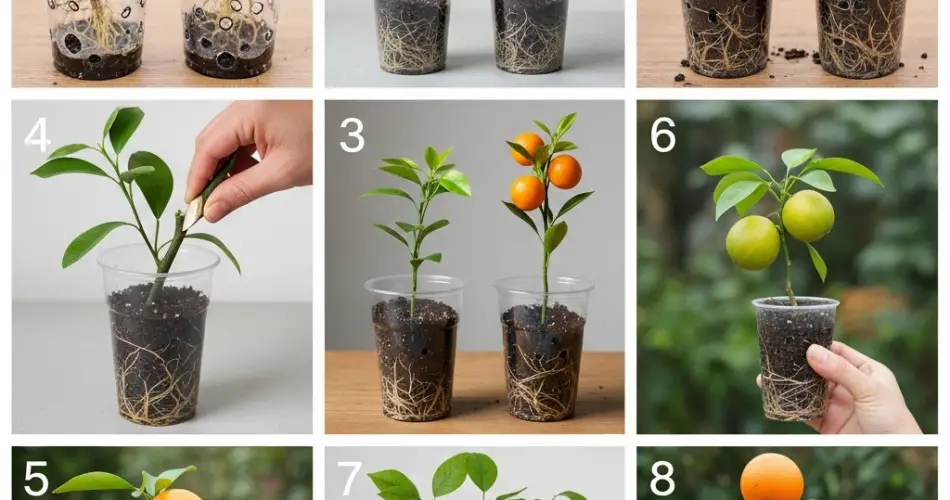
If you’ve ever wished you could easily multiply your favorite fruit or citrus trees without waiting for seeds to sprout or cuttings to take root, air layering might be the perfect solution. This ancient yet simple method allows you to root branches while they’re still attached to the parent plant, making it one of the most effective ways to propagate woody plants like lemon, orange, guava, fig, or pomegranate trees.
Air layering is not only reliable—it also speeds up the process of creating new trees with strong, established roots. With the right technique and a bit of patience, you can clone healthy trees right in your garden.
What Is Air Layering?
Air layering is a plant propagation technique where a branch or stem is encouraged to develop roots while it is still connected to the main plant. Once roots form, the new plant can be cut off and transplanted.
This method is especially useful for trees and shrubs that are difficult to root using cuttings. Air layering produces larger, more mature plants faster than starting from seed or traditional cuttings.
Benefits of Air Layering
-
High success rate – Roots form directly on the living branch, receiving water and nutrients during the process.
-
Clone exact copies – The new plant is genetically identical to the parent.
-
Ideal for fruit and citrus trees – Works well on species like lemon, orange, fig, guava, mango, pomegranate, and more.
-
Stronger root systems – Since the branch remains attached during rooting, the resulting plant is more vigorous and transplant-ready.
What You’ll Need
-
A healthy, flexible branch on your chosen tree
-
A sharp knife or pruning tool
-
Rooting hormone (optional, but helpful)
-
Moist sphagnum moss, coconut fiber, or rich compost
-
Plastic wrap or a plastic bag
-
String or twist ties
-
Aluminum foil (optional, to block sunlight)
Step-by-Step Guide to Air Layering
1. Select the Right Branch
Choose a healthy, pencil-thick branch that’s flexible but mature. It should be part of a strong, disease-free tree and receive good sunlight.
2. Make the Cut
Using a clean, sharp knife, make a 1- to 2-inch ring around the branch, removing the bark and the green layer beneath (cambium). This interrupts the flow of nutrients and encourages root formation above the cut.
3. Apply Rooting Hormone
Dust the exposed area with rooting hormone to accelerate root growth. While optional, this can significantly boost success rates.
4. Wrap with Moist Growing Medium
Take a handful of moist sphagnum moss or compost and pack it around the cut area. Ensure it’s damp but not dripping wet.
5. Cover with Plastic
Wrap the moss tightly with plastic wrap or a plastic bag to hold moisture. Secure both ends with string, twist ties, or tape. Optionally, wrap the entire setup with aluminum foil to protect it from sunlight and temperature fluctuations.
6. Wait for Roots
In warm weather, roots typically form in 4 to 8 weeks, depending on the tree. Check periodically to ensure the moss stays moist. You’ll know it’s ready when white roots are visible through the plastic.
7. Cut and Plant
Once roots are well-developed, use clean pruning shears to cut the branch just below the rooted section. Remove the plastic carefully, keeping the root ball intact, and plant it in a pot or directly in the ground.
Tips for Air Layering Success
-
Timing matters – Spring or early summer is ideal, when trees are actively growing.
-
Keep moisture consistent – Dry moss will stop root development; always maintain light moisture.
-
Label your work – If you’re propagating multiple trees, note the date and species on a tag.
-
Acclimate before transplanting – Once rooted and planted, keep the new plant in partial shade for a few days before full sun exposure.
Best Trees for Air Layering
Air layering is especially effective for:
-
Citrus trees (lemon, orange, lime)
-
Guava
-
Fig
-
Pomegranate
-
Mango
-
Apple and pear trees
-
Some tropical ornamentals (like hibiscus or rubber trees)
Many hard-wooded shrubs and houseplants also respond well to this method.
Conclusion
Air layering is a powerful and underutilized propagation technique for home gardeners. With just a few tools and some patience, you can replicate your favorite fruit or citrus trees without purchasing new plants or dealing with finicky cuttings. It’s a reliable way to produce vigorous, productive plants that will thrive in your garden or orchard.
Once you’ve mastered air layering, you’ll see just how easy and satisfying it is to expand your collection of fruit-bearing trees—right from your own backyard.


