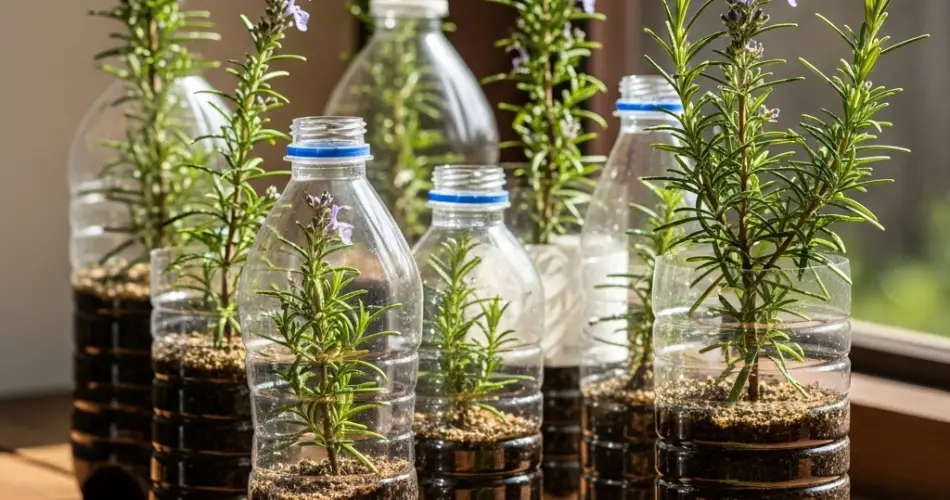
Rosemary is a woody, evergreen herb known for its rich aroma, culinary uses, and ornamental value. While it’s often grown in outdoor beds or pots, you can also cultivate healthy rosemary plants using recycled plastic bottles—perfect for balconies, windowsills, and small garden setups. This approach is not only space-saving but also environmentally conscious, giving discarded containers a second life.
By following a few essential steps, you can enjoy fresh rosemary year-round with minimal space and resources.
Why Grow Rosemary in Bottles?
Rosemary is well-suited to container growing due to its drought-tolerant nature and moderate growth rate. Plastic bottles make ideal containers because they’re easy to obtain, lightweight, and customizable. They’re particularly helpful for urban gardeners who want to grow herbs in compact spaces like balconies or kitchen windows.
Using recycled bottles also supports sustainable living. Instead of throwing away plastic waste, you can convert it into productive, green planters for herbs that serve both culinary and aesthetic purposes.
Choosing and Preparing the Bottles
Start with a sturdy plastic bottle—1.5 or 2-liter soft drink bottles work best. Wash the bottle thoroughly to remove any residue. You can use the bottle in either of two ways:
-
Vertical planter: Cut off the top third and use the bottom as a pot.
-
Horizontal planter: Lay the bottle on its side and cut a rectangular window on the top for planting.
Regardless of the method, ensure that you poke several drainage holes in the bottom. Rosemary is sensitive to overwatering, so proper drainage is essential to prevent root rot.
If you’re using a clear bottle, consider painting the outside or wrapping it in fabric or jute to block sunlight from reaching the roots and to prevent algae growth.
Soil Requirements for Rosemary
Rosemary prefers dry, well-draining soil that mimics its natural Mediterranean habitat. Heavy or overly rich soils retain too much moisture, which can lead to root diseases in plastic containers.
For best results, mix:
-
2 parts potting mix (or garden soil)
-
1 part coarse sand or perlite
-
1 part compost or aged manure
This combination ensures good drainage while still providing enough nutrients to support steady growth.
Planting Rosemary
While you can grow rosemary from seed, it’s notoriously slow to germinate and establish. A quicker option is to start with a cutting or a young nursery plant.
Transplant the rosemary gently into the prepared bottle, placing it at the same depth as it was in its original container. Lightly press the soil around the roots and water gently.
Place your bottle garden in a sunny location where the rosemary can receive at least 6 hours of sunlight daily. A balcony railing, sunny windowsill, or patio shelf is ideal.
Watering and Feeding
Rosemary thrives on minimal watering. In bottle gardens, it’s best to wait until the top inch of soil is completely dry before watering again. The plastic container will hold moisture longer than a clay pot, so check the soil frequently to avoid overwatering.
Use a balanced, all-purpose liquid fertilizer once every 4 to 6 weeks during the growing season (spring through early autumn). Dilute the fertilizer to half-strength to prevent excessive leaf growth with less aromatic quality.
Pruning and Maintenance
Rosemary benefits from light but regular pruning to encourage a bushier shape and prevent it from becoming woody. Begin trimming once the plant reaches about 6 to 8 inches in height.
-
Pinch off new tips to promote branching.
-
Remove any weak or spindly stems.
-
Trim back up to one-third of the plant if it becomes overgrown.
Avoid cutting into old, woody stems, as rosemary may not regrow from them. Use clean, sharp scissors or pruners to avoid damaging the plant.
Harvesting Rosemary
Once your rosemary plant is established, you can begin harvesting the fragrant sprigs as needed. For culinary use, snip stems close to a leaf node. The oils in rosemary are strongest just before the plant flowers, so harvest during this period for the most intense flavor.
Rosemary leaves can be used fresh, dried, or frozen. To dry rosemary:
-
Bundle a few sprigs together and hang them upside down in a dry, shaded place.
-
Once completely dry, strip the leaves from the stems and store them in airtight containers.
Dried rosemary can last for up to a year without losing much of its fragrance.
Display and Expansion Ideas
You can get creative with your recycled rosemary bottles. Decorate the exterior with twine, paint, or labels to add a rustic touch. Hang several bottles from a wooden frame or metal rack to create a vertical herb wall.
If space allows, consider planting additional Mediterranean herbs like thyme, oregano, and sage in similar containers. Together, they make a flavorful and low-maintenance herb garden suitable for small spaces.
Final Thoughts
Recycled plastic bottles offer a practical and eco-friendly solution for growing rosemary in limited spaces. With good drainage, proper soil, sunlight, and minimal maintenance, your bottle-grown rosemary will reward you with year-round harvests of this fragrant, versatile herb. Whether you’re seasoning a roast or steeping a soothing tea, fresh rosemary will always be within arm’s reach—right from your balcony or windowsill.


