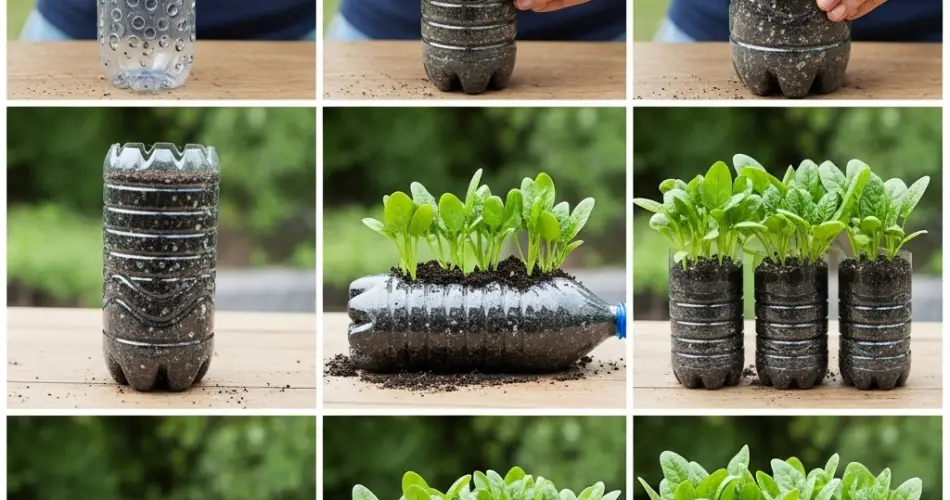
Spinach is a fast-growing leafy green that’s both nutritious and easy to cultivate at home—even in small spaces. For those who want to grow their own food but lack garden space, plastic bottles offer a creative and sustainable way to start spinach seedlings. These DIY bottle planters are not only budget-friendly and eco-conscious, but they also make propagation accessible to urban dwellers or anyone with a sunny windowsill or balcony.
Here’s how to successfully propagate spinach seedlings using recycled plastic bottles and grow your own greens with minimal space and effort.
Why Use Bottles for Seedling Propagation?
Plastic bottles, especially 1.5- to 2-liter soda bottles, are ideal for starting spinach seedlings because:
-
They are readily available and free.
-
Their transparent sides allow you to monitor moisture and root development.
-
They can be easily modified to control drainage and airflow.
-
They help reduce plastic waste by giving bottles a second life.
With just a few simple tools and supplies, these bottles can become miniature greenhouses that support healthy spinach seedling development.
Materials You’ll Need
To begin, gather the following:
-
Empty plastic bottles (clear ones are best)
-
A cutter or sharp knife
-
A nail or heated needle (for poking holes)
-
Potting mix or a seed-starting mix
-
Spinach seeds
-
Water spray bottle
-
Optional: labels or markers
Step 1: Prepare the Bottles
Start by washing your bottles thoroughly to remove any residue. Cut each bottle in half or approximately two-thirds of the way up from the base. You can choose one of two setups:
-
Top-as-lid method – Keep the top half to use as a humidity dome.
-
Self-watering version – Invert the top half into the bottom to form a reservoir, threading a cotton wick through the cap to draw up moisture (useful for later stages).
For seed starting, the bottom portion is often enough. Be sure to poke drainage holes at the bottom to prevent waterlogging, which can rot seeds or roots.
Step 2: Fill with Soil
Add seed-starting mix or a light potting soil into the bottom section of the bottle. Fill to about 2–3 inches deep. Moisten the soil evenly using a spray bottle. Avoid soaking it; you want it damp but not soggy.
Spinach prefers well-draining, nutrient-rich soil. A mix of garden soil, compost, and cocopeat works well if you’re mixing your own.
Step 3: Sow the Seeds
Sow spinach seeds about ¼ inch (0.6 cm) deep. You can scatter a few seeds in each bottle and thin them later, or plant 2–3 seeds per bottle and keep the strongest one once they sprout.
After sowing, lightly cover the seeds with a thin layer of soil and mist the top with water to keep it moist.
Label your bottles with the sowing date to track germination progress.
Step 4: Create a Mini Greenhouse (Optional)
If you kept the top half of the bottle, you can place it over the base to form a mini greenhouse. This helps trap humidity and warmth, speeding up germination. Just remember to lift the lid daily to allow air circulation and prevent mold growth.
Place the bottle planters in a bright, warm area out of direct harsh sun. A windowsill or shaded balcony is ideal.
Step 5: Germination and Early Growth
Spinach seeds usually germinate within 5 to 10 days, depending on temperature and conditions. Keep the soil moist by misting lightly when the surface feels dry.
Once seedlings appear, remove the cover (if using one) to prevent overheating and fungal issues. Position the bottles in a spot that gets indirect sunlight or early morning sun. Spinach prefers cool to moderate temperatures, so avoid placing them in strong midday heat.
Step 6: Thinning and Transplanting
When the seedlings develop two to three true leaves, it’s time to thin them. Choose the strongest seedling in each container and snip the rest at the base. This allows the remaining plant to grow without competition.
You can keep the spinach in the bottle a bit longer until the roots strengthen and the plant grows larger. Once it reaches about 3–4 inches tall, you can transplant it into a larger container, vertical garden, or raised bed.
To transplant:
-
Water the seedling well before removing it.
-
Gently loosen the soil to lift the seedling with its roots.
-
Plant it in a pot or garden bed with rich, moist soil.
-
Water it immediately after transplanting.
Tips for Success
-
Use multiple bottles to grow several seedlings and ensure a good harvest.
-
Rotate the containers daily if kept indoors so that each seedling gets even light.
-
Fertilize lightly after two weeks with diluted organic liquid fertilizer to boost growth.
-
Keep bottles clean and watch for mold—good airflow is essential.
Final Thoughts
Bottle propagation is a smart and sustainable way to grow spinach from seed, whether you’re new to gardening or simply want to make use of limited space. With just a few household items and a little care, you can start healthy spinach seedlings and enjoy a homegrown harvest. This method also helps instill eco-friendly habits while providing your kitchen with fresh, nutritious greens.
So next time you finish a soda or water bottle, don’t toss it—turn it into a miniature seed nursery for your future spinach crop!


