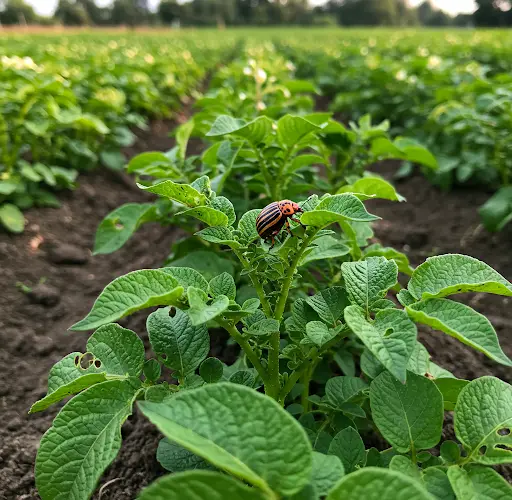
The potato beetle is a major pest affecting potatoes, tomatoes, and eggplants. It appears annually and has the potential to completely devastate entire plantations. This highly mobile insect can travel up to 40 km in search of host plants, making its spread difficult to control. The potato beetle belongs to the Solanaceae family and is known for its high fertility, resilience, and voracious appetite. It thrives in diverse weather conditions and can easily adapt to new environments.
Originating from Colorado, this pest initially fed on wild plants before settlers introduced cultivated potatoes to the region. With the introduction of potatoes, the beetle quickly became the most significant pest of this crop and spread rapidly to all regions where potatoes are cultivated. The number of generations per year varies based on weather conditions. In lower altitudes, up to 600 meters above sea level, two generations typically develop annually, while favorable conditions may support the development of a third generation. The beetle overwinters as an adult insect, burrowing up to 30 cm deep in the soil of old potato fields.
Overwintered beetles begin emerging in April and continue appearing in May. Their ability to fly long distances enables them to locate new potato fields with ease. Female beetles are exceptionally fertile, laying up to 2,000 eggs in their lifetime. The eggs are orange-colored and deposited in clusters on the underside of leaves, resembling the eggs of ladybugs. It is crucial to distinguish between these two species to ensure the conservation of beneficial insects in gardens.
Both adult beetles and larvae inflict significant damage by consuming potato leaves, leading to defoliation and the transmission of various viruses that cause potato diseases. While the beetle primarily targets potatoes, it also feeds on tomatoes and eggplants. The pest can complete its life cycle on eggplants, whereas tomatoes are a less preferred but viable food source. If tomatoes are grown in proximity to potatoes, the beetle may alternate between the two crops, leading to potential infestations.
Preventive measures against the potato beetle involve careful selection of fertilizers. Potatoes nourished with manure and compost experience fewer attacks compared to those grown with mineral fertilizers. Regular inspection and manual removal of beetles, larvae, and egg clusters from leaves is one of the most effective preventive strategies. Since the beetle deposits its eggs on the underside of leaves, gardeners should inspect and remove affected leaves regularly.
The potato beetle has few natural predators, but some wildlife can help regulate its population. Hedgehogs, moles, and pheasants consume adult beetles, while predatory insects, such as certain bedbug species, feed on the beetle’s eggs. The fungus Beauveria bassiana has also proven effective in biological control methods. This fungus-based treatment utilizes spores that infect and kill the beetle, providing an environmentally friendly alternative to chemical insecticides.
Crop rotation is another critical strategy for managing potato beetle populations. Ideally, potatoes should not be grown in the same location for four to five consecutive years. Additionally, potato peel traps can be used to attract and capture beetles. These traps involve placing fresh potato peels inside yogurt cups, burying the cups at soil level between potato rows, and checking them every few days to remove trapped beetles. Regularly replacing the peels ensures continued effectiveness.
Certain companion plants, such as horseradish, chamomile, and beans, naturally repel potato beetles with their scent. Similarly, shredded pine bark and pine needle preparations can deter beetles due to their strong aroma. Mulching with nettles also provides protection, as the stinging hairs of the nettle prevent beetles from burrowing into the soil during hot periods.
Ash-based solutions offer another organic control method. A mixture of 2 kg of ash dissolved in 10 liters of water can be diluted further and sprayed onto plants. Additionally, treatments using tobacco or poplar leaf extracts can help control beetle infestations. These treatments should be applied when the potato leaves are dry, preferably in the morning after the dew has evaporated.
The frequency of treatments depends on the severity of the infestation and the type of control method used. In general, treatments should be repeated every five to ten days as needed. The final treatment should be conducted at least 20 days before harvesting to ensure residue-free produce.
In cases of severe infestations, insecticides may be necessary. The most effective time to apply insecticides is during the larval stage when beetles are most vulnerable. Adult beetles do not cause significant damage, as their primary focus is reproduction rather than feeding. The damage threshold for initiating chemical control is the presence of four larvae per ten plants. The first insecticide treatment should be applied when 40% to 50% of the larvae have hatched.
However, potato beetles develop resistance to insecticides quickly, making it essential to use newer-generation insecticides for effective control. Several insecticides are registered for controlling potato beetles, including Mospilan, Actara, Calypso, Tonus, Confidor, and Talstar. Proper timing and application of insecticides can significantly reduce beetle populations and prevent large-scale damage to crops.
By implementing a combination of preventive measures, biological controls, and, when necessary, targeted insecticide treatments, farmers and gardeners can effectively manage potato beetle infestations and protect their crops from severe damage. Awareness and early intervention are key to mitigating the impact of this persistent pest.


