As the beautiful season arrives (a bit ahead of schedule), it’s time to protect our plants from insects (and fungi, in the case of sooty mold) that parasitize them during this time of year – namely, aphids, scale insects, and sooty mold.
Against these pests and fungi, you can effectively use an almost natural spray that costs practically nothing. The key ingredient for this “recipe” is Alga soap with coconut oil.
Natural Pest Repellent Against Aphids, Scale Insects, and Sooty Mold
Alga soap is a potassium soap, readily available in stores and commonly used for laundry purposes. It has good stain-removing effects and can sometimes make clothes look brand new. Most importantly, it costs less than two euros!
Its INCI (the component index listed on the label) includes only glycerin, coconut oil, and water – a product that can be used with a clear conscience regarding its environmental impact (with an important caveat, see below). In other words, it doesn’t pollute!
But its virtues don’t end here!
In addition to its cleaning qualities, it also possesses a quite effective insecticidal action, making it perfect for eliminating aphids, mites, scale insects, and sooty mold.
However, there’s a precaution to keep in mind: do not use it during flowering, as it can harm bees and pollinating insects.
But let’s see how to prepare it.
Ingredients:
- One liter of water
- 12 grams of Alga soap
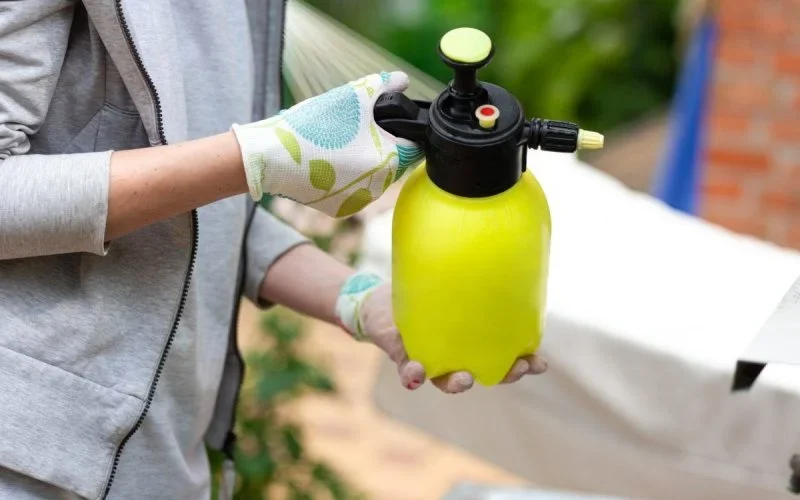
- An empty and clean spray bottle
Instructions:
- Boil the water in a wide and large pot, then turn off the heat and dissolve the soap.
- Let it cool, then transfer it to a spray bottle using a funnel.
Spray it early in the morning or in the evening after sunset to avoid interfering with the work of pollinating insects.
Repeat the operation after 24 hours if the pests are still present and continue for a maximum of three consecutive days. Then, suspend its use for a week.
For any doubts and advice, always consult your trusted nursery, as this treatment is not suitable for all plants (not recommended, for example, for azaleas, cherries, plums, cucumbers, and gardenias).