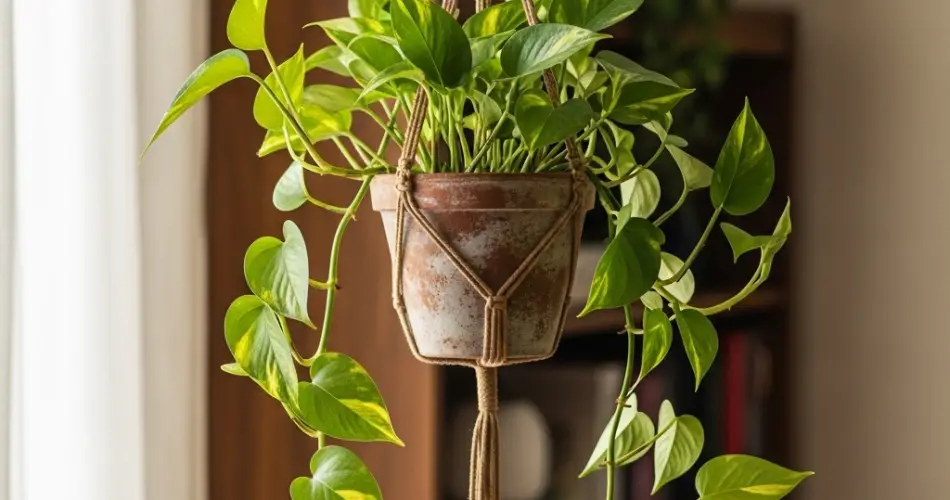
Pothos, also known as Epipremnum aureum, is one of the most forgiving and attractive houseplants you can grow indoors. With its trailing vines and heart-shaped leaves, it brings life to shelves, hanging baskets, and corners that don’t get much sunlight. But even a low-maintenance plant like pothos benefits from the right setup—especially when it comes to its pot. Choosing the proper container ensures your pothos remains healthy, hydrated, and vibrant even in low-light conditions.
Here’s everything you need to know to help your pothos thrive in low light by picking the best pot and providing proper care.
Why Pothos Loves Low Light
Pothos is a tropical vine native to forest understories, where sunlight filters through dense canopies. This natural environment has made it highly adaptable to low-light indoor spaces. While it grows fastest in bright, indirect light, it tolerates dim conditions far better than many other houseplants.
That said, growth may slow, and variegated varieties might lose some color intensity in very low light. But with proper care and potting, even a pothos placed far from windows can remain lush and green.
The Role of the Right Pot in Pothos Health
The container you choose can make or break your pothos care routine, especially in low-light areas where moisture tends to linger longer. The pot should help regulate moisture, encourage healthy root development, and support its trailing vines. Here’s what to consider:
1. Drainage Holes Are Non-Negotiable
No matter the lighting condition, pothos absolutely needs a pot with drainage holes. In low light, where soil dries more slowly, these holes are crucial to avoid soggy roots and rot. Always ensure that excess water can escape freely.
2. Choose Breathable Materials
Terracotta pots are great for beginners because they allow air and moisture to pass through the pot walls, reducing the risk of overwatering. However, in extremely dry environments, they may cause soil to dry out too fast. If humidity is low, consider ceramic pots with drainage holes, which offer a balance of function and design.
Plastic pots retain moisture longer, which might work for very dry indoor settings, but they require more careful monitoring to prevent water buildup.
3. Avoid Oversized Pots
Pothos doesn’t like swimming in wet soil, so avoid pots that are too large. A container that’s just one size larger than the current root ball is ideal. Too much soil around the roots can stay damp for too long, leading to fungal issues or root rot.
Ideal Soil for Pothos in Low Light
Pair your pot with well-draining soil. A standard indoor potting mix amended with a bit of perlite or pumice works well. This encourages airflow to the roots while holding just enough moisture. Avoid dense, moisture-retentive soils, especially in low-light settings, where evaporation is slower.
Watering Tips for Pothos in Dim Rooms
In low-light environments, pothos needs less water than it would in brighter spaces. Here’s how to strike the right balance:
-
Check the soil before watering. Let the top 1–2 inches dry out completely before you water again.
-
Use room-temperature water. Cold water can shock the roots.
-
Empty drainage trays after watering. Never let the pot sit in standing water.
Over time, you’ll notice a rhythm in how often your pothos needs watering based on its environment. In low light, that might mean watering only every 10–14 days.
Additional Care for Low-Light Success
Even in ideal pots, pothos in low light needs occasional support to stay vibrant.
-
Dust the leaves regularly so they can photosynthesize efficiently, even in minimal light.
-
Rotate the pot occasionally so the plant grows evenly toward the light source.
-
Feed lightly during the growing season (spring and summer) with a balanced liquid fertilizer diluted to half strength. Avoid overfeeding in winter.
Creative Pot Ideas for Indoor Style
One of the best things about pothos is its versatility. It can grow upright with a moss pole or trail beautifully from shelves or hanging baskets. Match your style with the right container:
-
Macramé hanging planters add a boho touch and save space.
-
Wall-mounted pots allow pothos to drape dramatically, creating living wall effects.
-
Modern ceramic pots pair well with minimalist interiors and keep your plant looking chic.
Make sure whatever design you choose still includes adequate drainage.
When to Repot
Pothos likes being slightly root-bound, so repot only when necessary—usually every 1–2 years. Signs that it’s time include:
-
Roots growing out of the drainage holes.
-
Slowed growth despite good care.
-
Water running straight through the pot.
When repotting, always move up just one pot size and refresh the soil to promote continued health.
Final Thoughts
Pothos plants are the perfect match for dimly lit corners and cozy rooms—but only when planted in the right pot. Proper drainage, size, and materials make all the difference in keeping this trailing beauty happy. With the right container and attentive care, your pothos will continue to bring life to your indoor spaces, even far from the sun.


