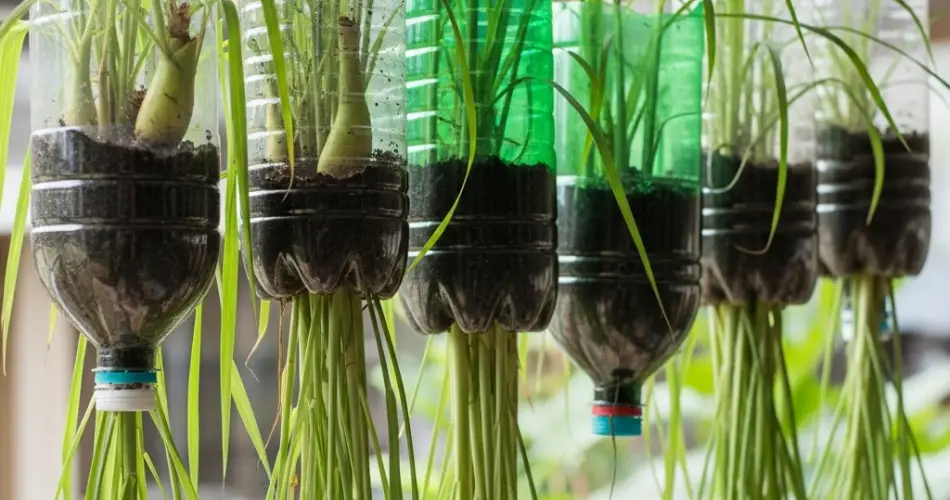
Lemongrass (Cymbopogon citratus) is a versatile, aromatic herb widely used in cooking, teas, and herbal remedies. Its fresh, citrusy scent adds a bright flavor to dishes, while its tall, graceful foliage can enhance the aesthetic of any indoor or outdoor space. Growing lemongrass in hanging bottle planters on a vertical wall is a sustainable, space-saving solution for home gardeners who want fresh herbs within easy reach.
Using recycled plastic bottles for a vertical lemongrass garden not only reduces plastic waste but also allows gardeners to maximize limited space on balconies, patios, or kitchen walls. This approach combines functionality with visual appeal, creating an herb wall that is both practical and decorative.
Choosing Bottles and Preparing the Wall
For a vertical lemongrass garden, 1–2-liter plastic bottles work best. Wash each bottle thoroughly to remove any residues. Cut a wide opening on the side or top of the bottle to accommodate the plant and provide access for watering and harvesting.
To hang the bottles, use hooks, screws, or a wooden or metal frame securely mounted to the wall. Ensure the structure can support the combined weight of soil and water. Arrange the bottles in a staggered or grid pattern to maximize sunlight exposure and airflow for all plants.
Preparing Soil and Bottle Setup
Lemongrass thrives in well-draining, fertile soil. A high-quality potting mix enriched with organic compost provides essential nutrients for strong growth. Avoid dense or clay-heavy garden soil, which can compact in bottles and hinder root development.
Place a small layer of stones or gravel at the bottom of each bottle to improve drainage. Fill the remaining space with potting mix, leaving sufficient room for the roots. Proper soil preparation ensures the growth of healthy, tall stalks and aromatic leaves.
Planting Lemongrass
Lemongrass can be grown from fresh stalks, seedlings, or divisions:
-
From stalks: Select fresh stalks with firm white bases. Place the base in water until roots develop, typically within 1–2 weeks. Once roots are visible, transplant the stalk into the prepared bottle.
-
From divisions: Separate healthy clumps from an existing plant and transplant them into the bottles, spacing them about 20–25 cm apart to allow for growth.
Firm the soil around the roots and water thoroughly after planting to help the lemongrass establish quickly.
Watering and Maintenance
Lemongrass prefers consistently moist soil without being waterlogged. Water the plants whenever the top 2–3 cm of soil feels dry. Hanging bottles may dry out faster than ground containers, so check soil moisture regularly, especially during hot weather.
Good drainage is essential to prevent root rot. Occasional misting helps maintain humidity and encourages robust leaf growth. Avoid overwatering the foliage to reduce the risk of fungal issues.
Sunlight Requirements
Lemongrass thrives in full sun, requiring at least 6–8 hours of direct sunlight each day. Place your vertical garden in a south- or west-facing location for optimal growth.
If natural light is limited indoors, consider using a supplemental grow light. Adequate sunlight ensures tall, firm stalks and vibrant, aromatic leaves. Insufficient light can result in spindly growth and reduced flavor.
Fertilizing Hanging Lemongrass
Container-grown lemongrass benefits from regular feeding, as nutrients in small soil volumes are quickly depleted. Apply a balanced liquid fertilizer every 3–4 weeks or incorporate slow-release organic fertilizer at planting.
Organic options, such as compost tea or fish emulsion, promote healthy foliage and flavorful stalks. Avoid excessive nitrogen, which can encourage leafy growth at the expense of stalk thickness.
Harvesting Lemongrass
Lemongrass is ready for harvest when the stalks are 30–45 cm tall and firm at the base. Cut the stalks at soil level, leaving the roots in place for continued growth. The leaves can also be trimmed for use in teas, soups, or garnishes.
Frequent harvesting encourages bushier plants and ensures a continuous supply of fresh lemongrass. Freshly harvested stalks can be used immediately or stored in the refrigerator for up to two weeks.
Tips for a Thriving Hanging Lemongrass Garden
-
Rotate bottles occasionally for even sunlight exposure.
-
Remove yellowing or damaged leaves to maintain plant health.
-
Monitor for pests such as aphids or spider mites and manage them using natural methods.
-
Check the stability of the wall and hanging setup regularly.
Final Thoughts
Creating a hanging bottle lemongrass wall is a sustainable, space-saving way to enjoy fresh, aromatic herbs at home. This method repurposes plastic bottles, maximizes vertical space, and keeps flavorful stalks within easy reach.
With well-draining soil, consistent watering, adequate sunlight, and regular harvesting, your hanging lemongrass garden will thrive, providing both culinary benefits and decorative greenery. Transform an ordinary wall into a productive, fragrant, and visually appealing herb display that enhances any indoor or outdoor space.


