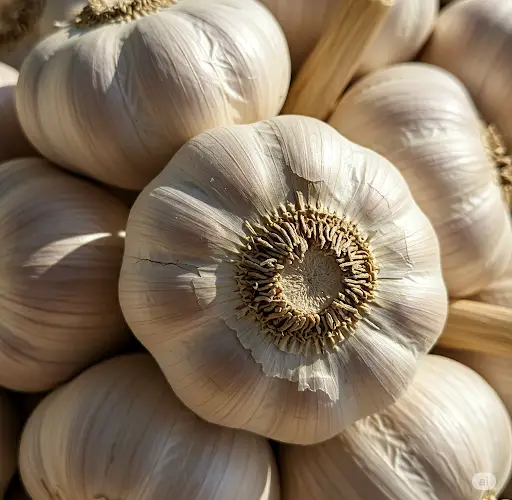
If you’ve planted garlic last fall or early this spring, you’re now approaching the final stretch before harvest. But did you know that one last feeding in late spring can make a huge difference in the size and quality of your garlic bulbs?
With the right timing and nutrients, you can help your garlic swell into large, firm, and aromatic bulbs—just in time for harvest in early summer. Here’s how to give your garlic a final nutritional boost to maximize your yield.
Why Garlic Needs a Final Feeding
Garlic spends most of its early growth period developing a strong root system and healthy green leaves. As temperatures rise in late spring, the plant begins focusing its energy on forming bulbs. This is the most critical phase for garlic growers.
If the plant lacks nutrients—particularly nitrogen and potassium—during this bulb-forming stage, the result can be small or soft cloves. A final feeding in May or early June, depending on your local climate, supports the plant right when it needs it most.
When to Feed Garlic for the Last Time
The best time for the final garlic feeding is approximately 30 to 40 days before harvest. In most regions, this means sometime between mid-May and early June. Look for the following signs to time it just right:
-
The garlic has 6 to 8 healthy green leaves.
-
The weather has warmed up, but the soil is still moist.
-
Bulb formation has just started underground (you can check one plant if needed).
Avoid feeding garlic too late in the season—once the leaves start yellowing naturally, the plant is nearing maturity and no longer benefits from added nutrients.
Best Fertilizer Options for Final Feeding
For the final feeding, garlic benefits most from a balanced fertilizer that contains nitrogen, potassium, and phosphorus, with an emphasis on potassium to promote bulb development.
Here are three recommended options:
1. Organic Compost Tea or Vermicompost Tea
A liquid compost tea made from mature compost or worm castings is rich in trace minerals and beneficial microbes. Apply it as a soil drench around the base of the plants to gently stimulate root activity and bulb growth.
2. Wood Ash + Organic Potassium Fertilizer
Wood ash (in small quantities) can be combined with an organic potassium-rich fertilizer such as kelp meal. This blend boosts potassium levels without adding excessive nitrogen, which the plant no longer needs in large amounts.
Use this blend only if your soil pH is neutral or slightly acidic. Wood ash can raise pH, so avoid it in already alkaline soils.
3. Balanced NPK Fertilizer (10-10-10 or 5-10-10)
If you’re using a commercial organic fertilizer, a balanced slow-release NPK formula works well. Apply lightly around the garlic base and water it in thoroughly. Avoid placing fertilizer directly on the stems.
How to Apply the Final Feeding
Follow these simple steps for effective feeding:
-
Water first if the soil is dry. Moist soil helps nutrients absorb more efficiently.
-
Apply fertilizer around the plant, not directly on the stalk. Create a ring 2–3 inches away from the plant base.
-
Work it in gently with your fingers or a hand cultivator to avoid disturbing roots.
-
Water again to help the nutrients move into the root zone.
-
Mulch lightly after feeding to retain moisture and suppress weeds.
If you’re using a liquid fertilizer or compost tea, simply water the base of each plant thoroughly, making sure the nutrients reach the root area.
Extra Tips for Growing Big Garlic Bulbs
-
Keep watering regularly. Garlic needs consistent moisture in the final weeks of growth—especially during bulb development. Water deeply once or twice a week depending on rainfall and soil type.
-
Remove garlic scapes. For hardneck garlic varieties, removing the curly flower stalk (scape) redirects energy from seed production back to bulb development. Harvest scapes as soon as they appear and use them in the kitchen.
-
Control weeds. Garlic doesn’t like competition. Keep the area around the plants weed-free to ensure all nutrients go to the garlic, not unwanted plants.
-
Don’t harvest too early. Wait until the lower 2–3 leaves have turned yellow and dried, but the upper leaves are still green. This indicates the bulbs are mature and well-developed.
Conclusion
One final feeding before harvest can be the difference between small, underwhelming bulbs and large, fist-sized garlic you’ll be proud to store and use throughout the year. Timing, balanced nutrients, and consistent moisture are key in these last few weeks.
Whether you’re growing garlic in raised beds, rows, or containers, don’t skip this crucial final step. It’s a small effort with big rewards—and your kitchen will thank you when it’s time to slice into plump, homegrown garlic cloves bursting with flavor.


