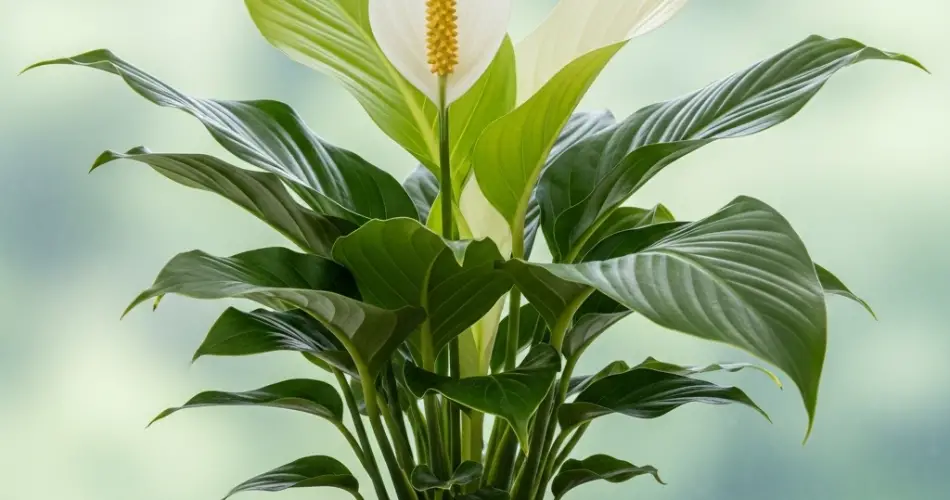
The Spathiphyllum, commonly known as the Peace Lily, is one of the most cherished indoor plants thanks to its graceful white blooms and air-purifying abilities. While generally easy to care for, many plant owners face a recurring issue — their peace lily grows lush green leaves but rarely blooms. The good news? A simple trick involving just one nutrient pill can encourage your Spathiphyllum to burst into bloom, even if it hasn’t flowered in months.
In this article, you’ll learn how to apply this easy method at home, why it works so well, and how to support your peace lily for year-round flowering.
Why Your Peace Lily Might Not Be Blooming
There are several reasons why a healthy-looking peace lily fails to flower:
-
Lack of nutrients: Over time, the potting soil loses its nutritional value. Without the proper balance of nutrients, especially phosphorus and potassium, the plant cannot form flower stalks.
-
Insufficient light: Peace lilies can survive in low light, but they need bright, indirect sunlight to flower.
-
Overwatering or underwatering: Irregular watering stresses the plant, redirecting energy away from blooming.
-
Rootbound condition: If the plant outgrows its pot, the roots become crowded, affecting nutrient absorption and bloom potential.
Fortunately, a targeted fertilizer tablet can address these issues efficiently.
The One-Pill Trick That Triggers Flowering
The secret to coaxing your peace lily into blooming lies in providing the right nutrients — and doing it consistently. A single slow-release fertilizer pill or tablet, rich in phosphorus, is often enough to wake the plant from its vegetative state and encourage bloom production.
Recommended Nutrient Profile:
Look for a fertilizer with a balanced or bloom-boosting NPK ratio — such as 10-20-10 or 15-30-15. The higher middle number (phosphorus) is key to promoting flower formation.
How to Apply the Pill for Best Results
Step 1: Water the Soil Lightly
Before adding any fertilizer, ensure the soil is lightly moist. This helps prevent root shock and allows the pill to dissolve gradually.
Step 2: Insert the Pill
Push one fertilizer pill about 1–2 inches deep into the soil, near the edge of the pot but not directly touching the roots. This placement allows nutrients to diffuse evenly through the root zone.
Step 3: Resume Normal Watering
Water the plant as you normally would. The pill will slowly dissolve over the next few weeks, providing a steady supply of nutrients.
Step 4: Repeat Monthly (If Needed)
Depending on your pill’s instructions, you can repeat this process every 4–6 weeks during the growing season (spring through early autumn).
What to Expect After Applying the Pill
With improved nutrient access, your peace lily will respond with visible signs of renewed health and flowering potential:
-
Greener, more vibrant foliage
-
Stronger stems and leaf structure
-
Emerging flower stalks within 2–3 weeks
-
Prolonged and frequent blooming cycles
Consistency is key. By continuing to apply the right nutrients and providing proper care, your peace lily can bloom multiple times a year — sometimes even continuously under ideal conditions.
Other Tips to Support Flowering
While the nutrient pill is highly effective, combining it with other good plant care practices will supercharge your results:
-
Light: Place your peace lily near a bright window with filtered sunlight. Avoid direct sun, which can scorch the leaves.
-
Humidity: These plants love humidity. Mist the leaves regularly or place a tray of water with pebbles under the pot to increase local moisture.
-
Watering: Water only when the top inch of soil feels dry. Don’t let the plant sit in standing water.
-
Cleaning: Wipe the leaves occasionally to remove dust and improve photosynthesis.
-
Repot if Needed: If roots are circling the pot or pushing out of the drainage holes, consider repotting into a slightly larger container.
Common Mistakes to Avoid
-
Using too many tablets at once: Overfertilizing can burn roots and delay flowering.
-
Placing tablets too close to the stems: This may concentrate nutrients in one area instead of dispersing them.
-
Ignoring light needs: Even with the best nutrients, inadequate light can prevent flowering.
Conclusion
Peace lilies are hardy, beautiful houseplants that bring serenity and beauty to any space. If yours has been reluctant to bloom, don’t give up — one well-placed fertilizer pill may be all it needs to produce lush, white blossoms once again.
By combining this simple trick with attentive care — proper light, water, and humidity — you’ll have a thriving Spathiphyllum that rewards you with continuous flowering, season after season.
Try this method today and watch the transformation unfold — your peace lily might just surprise you with a bloom explosion!


