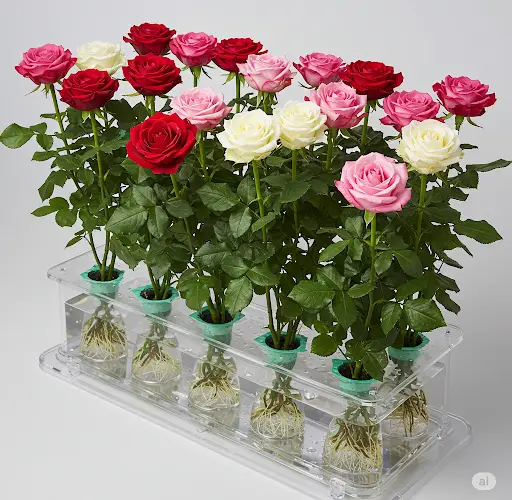
Hydroponic rose propagation offers an efficient, soil-free way to grow beautiful, thriving rose plants. Unlike traditional soil-based methods, hydroponics allows roses to grow in a nutrient-rich water solution, which often leads to faster growth and healthier plants. However, one of the main challenges of hydroponic propagation is ensuring the successful rooting of rose cuttings. This is where a secret solution can make all the difference. With just one bottle of the right solution, you can guarantee 100% success in hydroponic rose propagation.
Why Hydroponic Propagation Works for Roses
Hydroponics is a method of growing plants using water and nutrients without the use of soil. In this system, rose cuttings are submerged in a nutrient-rich water solution, allowing them to absorb essential elements directly. The primary benefits of hydroponic propagation for roses include:
-
Faster Rooting: Without the limitations of soil, roses in hydroponic systems can root faster.
-
Cleaner Growth: Hydroponic systems reduce the risk of soil-borne diseases, providing cleaner and healthier plant growth.
-
Precise Nutrient Control: The water-based solution allows you to control the exact nutrients the roses receive, ensuring optimal conditions for growth.
However, for success in hydroponic propagation, a key element is the rooting solution that supports root development. This is where a specially formulated rooting solution comes into play.
The Secret Ingredient for Success: The Rooting Solution
The solution that guarantees 100% success in hydroponic rose propagation is a high-quality, nutrient-enriched rooting liquid. It’s not just a simple fertilizer but a carefully balanced mixture designed to provide the exact elements that rose cuttings need for healthy root formation. This solution is typically available in a bottle and can be used in a variety of hydroponic setups, including simple glass jars or advanced hydroponic systems.
Key Ingredients in the Rooting Solution
-
Rooting Hormones: These are natural or synthetic compounds that stimulate the growth of roots from plant cuttings. The most common rooting hormone is auxin, which encourages root cells to form at the base of the cutting.
-
Nutrients: In addition to rooting hormones, the solution contains essential nutrients like nitrogen, phosphorus, and potassium. These elements help the cuttings develop roots and grow strong once they’ve rooted.
-
Vitamins and Minerals: The solution may also contain micronutrients like calcium, magnesium, and trace elements that support overall plant health and encourage robust root systems.
How to Use the Rooting Solution for Hydroponic Rose Propagation
Now that you know the secret behind successful hydroponic rose propagation, it’s time to dive into how to use the solution for the best results. Follow these simple steps to ensure 100% success in propagating your roses:
-
Prepare Your Rose Cuttings
Start by selecting healthy rose cuttings from a mature, disease-free rose plant. Cut a 6–8 inch section from a healthy stem, ensuring it includes at least two or three nodes (the small bumps where leaves grow). Remove any leaves from the lower half of the cutting, leaving the top leaves intact. -
Prepare the Hydroponic Setup
Set up your hydroponic container. You can use a small glass jar or vase, or a more advanced hydroponic system. Fill the container with the prepared rooting solution, following the instructions on the bottle. Make sure the water level is sufficient to submerge the lower part of the rose cutting without fully immersing the top leaves. -
Submerge the Cuttings
Place the prepared rose cuttings into the rooting solution, ensuring the cut end is fully submerged. The cutting should not touch the sides of the container, as this could lead to rotting. You can use a small support, like a piece of foam, to keep the cuttings upright and stable. -
Place in the Right Environment
Place the container in a warm, bright location but avoid direct sunlight, as this can overheat the water. The optimal temperature for rooting rose cuttings is around 70–75°F (21–24°C). Keep the area well-lit but not overly hot to prevent the solution from heating up too much. -
Monitor and Maintain the Solution
Change the water and rooting solution every 3 to 5 days to ensure fresh nutrients and prevent stagnation. During this time, you should start to see roots developing within 2 to 4 weeks. If the cuttings are placed in a system with proper aeration and nutrition, the rooting process can be even faster. -
Transplant the Rooted Cuttings
Once your rose cuttings have developed a strong root system, typically after 3–4 weeks, it’s time to transplant them into larger pots with a hydroponic medium or directly into your garden. You can also continue growing them in the hydroponic system, depending on your preference.
The Benefits of Using This Method
Using this rooting solution offers several key benefits for hydroponic rose propagation:
-
Increased Success Rate: With the right mixture of hormones and nutrients, this solution ensures that your rose cuttings are more likely to root successfully.
-
Faster Growth: The added nutrients and hormones accelerate the rooting process, allowing you to see results in a shorter period of time.
-
Cleaner and Healthier Plants: Growing in a soil-free environment reduces the risk of pests and diseases, leading to healthier, more vibrant roses.
Final Thoughts
Hydroponic rose propagation can be a rewarding and efficient way to grow roses at home. By using the right rooting solution, you can guarantee 100% success in rooting your rose cuttings, ensuring that they develop strong, healthy roots in a matter of weeks. This method is not only effective but also eco-friendly and cost-efficient, making it ideal for both beginner and experienced gardeners alike. Try using this solution and watch your roses thrive!


