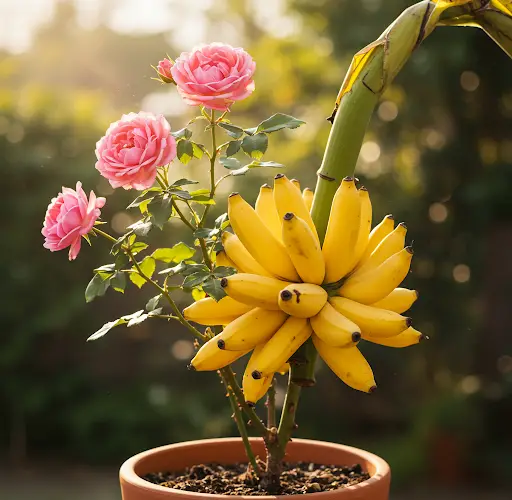
Rose gardening is a favorite pastime for many, and growing beautiful roses from cuttings can be a rewarding and enjoyable experience. While there are several methods for propagating roses, one of the most effective and surprising techniques involves using bananas. That’s right—bananas aren’t just a healthy snack; they can also be the secret to making your rose cuttings root quickly and bloom year-round.
Bananas contain essential nutrients like potassium, phosphorus, and calcium, all of which play a significant role in promoting plant growth. These nutrients help roses grow strong roots, enhance their overall health, and support consistent blooming. In this guide, we’ll show you how to use bananas to propagate roses and keep them flourishing throughout the year.
Why Bananas Are Ideal for Rose Propagation
Bananas are packed with nutrients that help rose cuttings grow faster and stronger. Here’s why they work so well:
-
Potassium: Potassium is essential for flower and fruit development. It strengthens plant cell walls, improves drought resistance, and supports the overall growth of the cutting.
-
Phosphorus: Phosphorus promotes root development, which is key to successful propagation. It helps establish a strong root system, allowing the rose plant to absorb nutrients and water more efficiently.
-
Calcium: Calcium aids in cell wall structure and promotes healthy root and shoot growth.
-
Natural sugars: Bananas provide natural sugars, which help stimulate the growth of new roots in rose cuttings.
These nutrients create the perfect environment for rose cuttings to thrive, making bananas an excellent and organic alternative to commercial rooting hormones.
Materials You’ll Need
To propagate roses with bananas, gather the following materials:
-
Fresh rose cuttings (6–8 inches long)
-
A ripe banana (preferably organic)
-
A sharp knife or pruning shears
-
A clean container for banana mash
-
Well-draining potting mix
-
Small pots or containers
-
A plastic bag or clear plastic dome for humidity control
Step-by-Step Guide to Propagating Roses with Bananas
1. Select and Prepare the Rose Cuttings
Choose healthy rose stems for propagation. The best time to take cuttings is during the spring or early summer when the plant is actively growing. Look for semi-hardwood stems, which are neither too soft nor too woody.
Using sharp pruning shears, cut a 6–8 inch section of the rose stem just below a leaf node (where leaves attach to the stem). Remove any flowers, buds, or extra leaves from the lower half of the cutting to reduce moisture loss.
It’s also a good idea to scrape the bottom of the cutting slightly to expose the cambium layer (the layer beneath the bark). This will encourage the cutting to develop roots more effectively.
2. Prepare the Banana Mixture
To prepare the banana for propagation, peel a ripe banana and mash it into a smooth paste. You can use a fork or blender for this process. Bananas are rich in sugars and nutrients, which will provide the cutting with the necessary energy and nourishment to promote root growth.
Once the banana is mashed, place it in a clean container. You’ll need enough banana paste to coat the bottom inch of each rose cutting.
3. Coat the Cuttings with Banana Paste
Dip the bottom inch of each rose cutting into the mashed banana paste. The nutrients from the banana will help stimulate root growth and provide essential vitamins for the cutting. Make sure the cutting is well-coated, but don’t let the paste get on the leaves, as this can cause rot.
Once the cutting is coated, gently shake off any excess banana paste.
4. Plant the Cuttings
Now that your rose cuttings are prepared, it’s time to plant them. Prepare small pots or containers with well-draining potting mix. A mixture of peat moss, perlite, and compost works well for rose propagation.
Make a small hole in the center of the soil and place the banana-coated cutting into the hole. Firm the soil gently around the base of the cutting to secure it in place.
Water the soil lightly to moisten it, but avoid overwatering, as this can cause the cutting to rot.
5. Create a Humid Environment
To encourage the cutting to root successfully, it’s essential to maintain high humidity. Cover each pot with a plastic bag or a clear plastic dome. This will trap moisture and warmth around the cutting, mimicking a greenhouse effect and creating an ideal environment for rooting.
Place the pots in a location with bright, indirect sunlight. Avoid direct sunlight, as it can dry out the cuttings and overheat them. The temperature should be between 65–75°F (18–24°C) for optimal rooting.
Ongoing Care and Monitoring
-
Watering: Keep the soil lightly moist, but not soggy. Mist the cuttings daily to maintain humidity, especially if you live in a dry climate.
-
Air circulation: Open the plastic cover every day for a few minutes to allow fresh air to circulate and prevent mold from developing.
-
Rooting progress: After 2–3 weeks, gently tug on the cutting to check for resistance, which indicates that roots have started to form. You may also notice new growth, which is a good sign that the cutting is establishing itself.
Once the cuttings have developed strong roots and new growth, they are ready to be transplanted into larger pots or directly into your garden.
Transplanting the Rooted Cuttings
Once your rose cuttings have rooted and begun to grow, they can be moved to a larger pot or into your garden. If transplanting to your garden, choose a spot with well-draining soil and plenty of sunlight. Roses love full sun, so a sunny location is ideal.
Continue to care for your rose plants by watering them regularly, pruning when necessary, and feeding them with a balanced fertilizer to encourage strong growth and abundant blooms.
Final Thoughts
Using bananas to propagate rose cuttings is a simple, effective, and natural method to encourage root growth and keep your roses blooming year-round. By harnessing the power of the nutrients in bananas, you can boost the health and vitality of your rose plants, giving them the best possible start.
Whether you’re a seasoned gardener or a beginner, this method is an easy way to propagate roses and create a beautiful garden full of vibrant blooms. So, the next time you have a ripe banana, don’t throw it away—use it to grow your very own rose garden!


