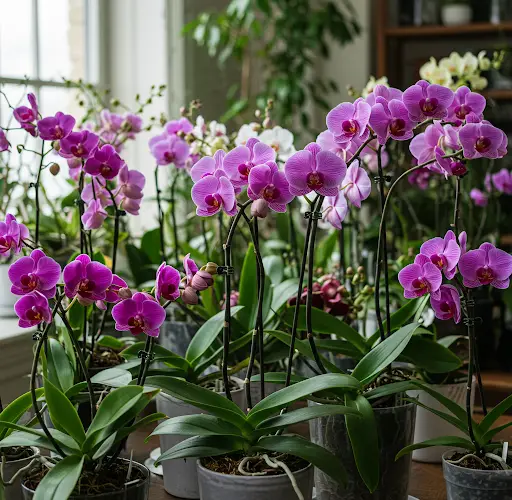
5 Essential Tips for Orchid Care and Encouraging Blooming
Orchids are delicate and beautiful flowers that require special attention to maintain their health, encourage new growth, and ensure abundant blooming. Today, I will share five essential tips on orchid care, including leaf maintenance and fertilization techniques, to help your orchids thrive, particularly during winter. By using the right natural fertilizers at home and following these methods consistently, you can support the development of lush green leaves, healthy roots, and vibrant flowers.
The Importance of Natural Fertilization
Using natural fertilizers at home regularly is crucial for orchids’ growth and overall well-being. Natural fertilizers provide essential nutrients that strengthen the roots and leaves of orchids, helping them to produce new flower branches more quickly. Today, I will share a special fertilizer recipe that you can easily prepare using potato peels. Let’s dive right into the process!
Homemade Orchid Fertilizer Using Potato Peels
Potato peels are incredibly beneficial for orchid development. They are rich in potassium, calcium, and B and C vitamins. Additionally, the antioxidant properties of potato peels help to keep orchid leaves vibrant and resistant to diseases such as fungal infections.
How to Prepare Potato Peel Fertilizer
- Peel two potatoes, ensuring they are thoroughly washed.
- Place the potato peels into a blender.
- Add 400 milliliters of water.
- Blend until the mixture turns into a smooth puree.
- Strain the mixture to separate the liquid from the pulp.
- Do not discard the pulp; you can use it to make a secondary fertilizer.
The resulting liquid is a nutrient-rich fertilizer that can be used on all plants in your home. Let the mixture sit overnight before application for best results. Once settled, pour the liquid into a spray bottle and dilute it further by adding twice as much purified water. Now, your homemade orchid fertilizer is ready to use!
Tip #1: Pruning for New Growth
Pruning is one of the most important steps in encouraging orchids to bloom again after shedding their flowers. Once an orchid has lost all its flowers, or if only a few remain, pruning the flower branches is necessary.
- If the tip of the orchid branch has no visible bud, prune the branch promptly.
- If pruning is delayed, the branch may turn yellow, making it harder for the orchid to produce new flower branches.
- When pruning, avoid cutting off healthy green nodes, as they can develop into new flower branches.
- Always remove empty nodes where flowers have already fallen.
- The earlier you prune your orchid in autumn, the sooner it will produce new flower branches.
Tip #2: Inspect for Insects and Pests
A healthy orchid is more likely to produce flowers. Therefore, it’s essential to check your orchid regularly for insect infestations. A simple and effective way to detect pests is by using potato slices:
- Cut a potato into thin slices.
- Place a slice on the orchid’s soil.
- Leave it overnight.
- The following day, remove and discard the slice.
Repeat this process for three consecutive days to attract and eliminate hidden pests such as snails, mites, and insects.
Tip #3: Maintaining Healthy Orchid Leaves
Checking your orchid’s leaves every 15 days is vital for disease prevention. If you notice white spots or discoloration on the leaves, it could indicate a fungal infection or pest infestation.
To protect and nourish your orchid’s leaves:
- Spray the prepared potato peel juice onto the upper and lower surfaces of the leaves.
- The nutrients in the potato peel solution will repair damaged leaves and help maintain their firmness.
- Allow the solution to remain on the leaves overnight before wiping off any residue with a damp cloth.
- Apply this treatment once a month for optimal results.
Tip #4: Proper Watering Techniques
Watering orchids correctly is essential for their growth and blooming potential. Overwatering can lead to root rot, while under-watering can cause dehydration.
- Check the root color before watering:
- If the roots appear gray or white, the orchid needs water.
- If the roots are green, avoid watering.
- To encourage blooming, you can water the orchid with diluted potato peel juice once every two months.
Tip #5: Providing the Right Environment
Temperature and lighting play a significant role in orchid blooming. Sudden temperature fluctuations can cause buds to turn yellow and drop before they bloom.
- Maintain a consistent temperature for your orchids, especially during flowering.
- Place your orchid in a well-lit area near a window to ensure sufficient sunlight.
- If daylight is insufficient during winter, consider moving your orchid to a brighter spot to support its growth.
- If your orchid is not flowering despite proper care, try an air change technique:
- Only attempt air change when the nighttime temperature is between 10-15°C.
- Avoid exposing orchids to temperatures below 10°C, as extreme cold can be harmful.
Final Thoughts
By following these five essential tips, you can ensure that your orchids remain healthy, vibrant, and produce abundant flowers. Regular pruning, proper watering, natural fertilization, pest control, and a stable environment are the keys to successful orchid care.
If you found these tips helpful, consider sharing them with other orchid enthusiasts. Happy gardening!


