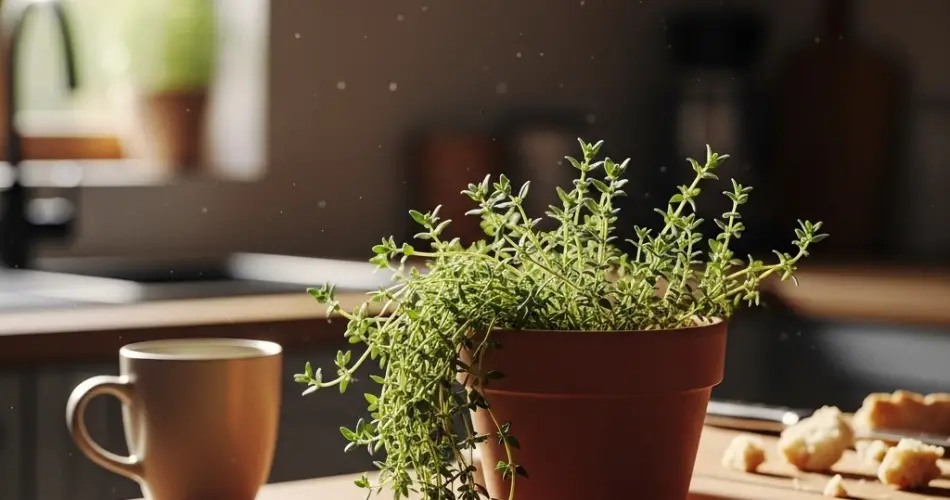
Thyme is a versatile and aromatic herb that adds depth and flavor to countless dishes, from roasted meats and vegetables to soups, sauces, and marinades. Its subtle, earthy notes enhance both Mediterranean and classic cuisine, making it a kitchen staple. While fresh thyme is often purchased from stores, growing it indoors offers superior flavor, convenience, and the satisfaction of home cultivation. A simple kitchen pot on a windowsill can provide a year-round supply of fresh thyme, even for those without outdoor garden space.
Why Grow Thyme Indoors
Thyme is well-suited for indoor cultivation because it is hardy, compact, and low-maintenance. Unlike some delicate herbs, it tolerates container life, adapts to varying light conditions, and requires minimal attention while still producing flavorful leaves. Growing thyme indoors ensures fresh herbs are always within reach for cooking and garnishing. Additionally, the presence of thyme in your kitchen brings greenery and a subtle aromatic fragrance, enhancing your cooking space and environment.
Choosing the Right Thyme Variety
Several varieties of thyme thrive indoors, each with distinct flavor profiles. Common thyme, also called English thyme, is versatile and slightly peppery, ideal for everyday cooking. Lemon thyme adds a citrusy note that brightens seafood, poultry, and vegetable dishes. French or creeping thyme has a milder flavor and is often used for decorative purposes as well as culinary applications. Select the variety that best fits your cooking style, or grow a mix to experiment with different flavors in your dishes.
Light and Placement
Thyme requires bright light to flourish. A south- or west-facing windowsill is ideal, providing 6–8 hours of direct or strong indirect sunlight daily. If natural light is insufficient, a small LED or fluorescent grow light positioned 6–12 inches above the plant can provide the necessary illumination. Keep the light on for 12–14 hours daily to promote healthy growth and prevent leggy stems. Positioning thyme near your kitchen counter allows easy access for harvesting while ensuring it receives enough light for aromatic, flavorful leaves.
Containers and Soil
Proper containers and soil are essential for thriving indoor thyme. Choose a pot at least 6–8 inches wide with drainage holes to prevent water accumulation and root rot. Terracotta or ceramic pots are ideal because they allow airflow and help regulate moisture levels. Use a lightweight, well-draining potting mix enriched with organic matter. Avoid heavy garden soil, which can compact indoors and restrict root development. Well-aerated, nutrient-rich soil encourages strong stems and abundant leaves.
Watering Thyme
Thyme prefers slightly dry conditions compared to many herbs, so careful watering is crucial. Allow the top inch of soil to dry before watering, and ensure excess water drains from the pot. Standing water can lead to yellowing leaves and root problems, while under-watering can slow growth and cause woody stems. Maintaining moderate, consistent moisture ensures a healthy and long-lasting plant.
Feeding and Fertilizing
Container-grown thyme benefits from occasional feeding to replenish nutrients depleted from potting soil. Use a balanced, water-soluble fertilizer every four to six weeks during the growing season. Organic alternatives, such as liquid seaweed or compost tea, help produce robust, aromatic leaves without overpowering the herb’s natural flavor. Avoid over-fertilizing, as excess nutrients can lead to weak stems and reduced aromatic intensity.
Harvesting Fresh Thyme
The best advantage of indoor thyme is the ability to harvest fresh leaves whenever needed. Snip stems just above a set of leaves to encourage branching and continuous growth. Regular harvesting prevents the plant from becoming woody and promotes bushier growth. Fresh thyme is perfect for seasoning soups, sauces, roasted vegetables, poultry, and meat dishes. Avoid taking more than one-third of the plant at a time to maintain steady production.
Pruning and Maintenance
Regular pruning is essential to keep thyme compact and productive. Trim long or leggy stems and remove flowers, which can redirect energy away from leaf growth. Pruning encourages dense foliage, prolongs productivity, and ensures aromatic leaves remain available year-round. Combined with proper watering and fertilization, pruning maintains a healthy, vibrant indoor herb plant.
Preserving Extra Thyme
If your thyme produces more leaves than you can use, preserving it is simple. Fresh leaves can be stored in the refrigerator wrapped in a damp paper towel for several days. For long-term use, freeze leaves in ice cube trays with water or olive oil. Drying small sprigs is another option, allowing you to store thyme for months while retaining most of its flavor.
Enjoying Thyme in Your Kitchen
Growing thyme in a kitchen pot allows you to enjoy fresh, flavorful leaves year-round. With proper light, soil, watering, and pruning, thyme thrives indoors, enhancing both your meals and your kitchen environment. Fresh, homegrown thyme elevates the taste of your dishes, adds greenery to your space, and provides the satisfaction of cultivating your own herbs. Indoor kitchen gardening with thyme is practical, rewarding, and a simple way to bring freshness and flavor into your cooking routine.


