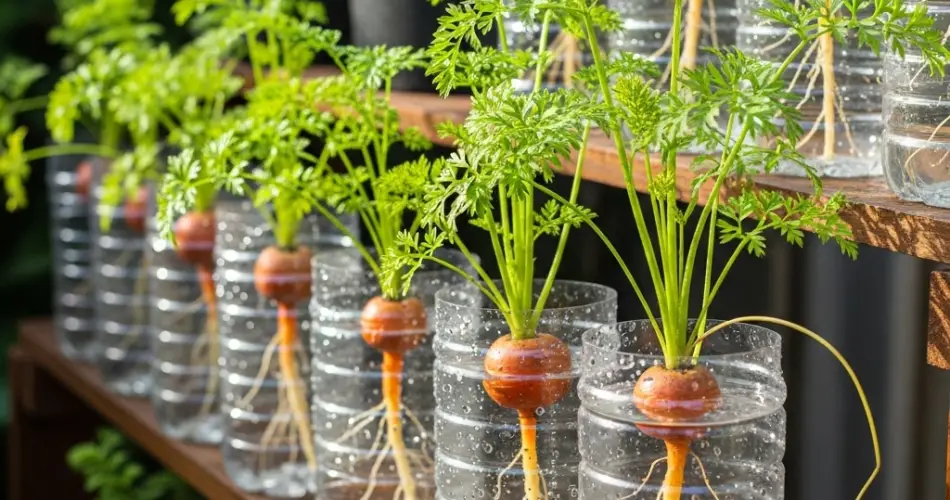
Carrots are a staple vegetable in many households, valued for their crunch, sweetness, and versatility in cooking. But did you know that the tops of carrots, which are often discarded, can be sprouted and regrown into fresh greenery? This is a sustainable gardening trick that not only reduces food waste but also brings life to your windowsill or balcony. Using plastic bottles as mini planters, you can turn carrot scraps into thriving green tops that can be used for garnishes, salads, or as an ornamental indoor plant.
This method is simple, eco-friendly, and perfect for beginners or children who want to see quick gardening results. By upcycling bottles, you also contribute to reducing plastic waste while making the most out of kitchen leftovers.
Why Sprout Carrot Tops?
Unlike carrot roots, which do not regrow once harvested, carrot tops can easily regenerate greenery when given the right conditions. The leaves that sprout from carrot tops are edible, offering a slightly earthy, parsley-like flavor. They can be chopped and added to soups, pestos, smoothies, or salads.
Sprouting carrot tops also provides:
-
Educational value: A great way to teach children about plant growth.
-
Sustainability: Reduces food waste by reusing scraps.
-
Decoration: The leafy greens add beauty to your indoor or balcony garden.
-
Low maintenance: Carrot tops require very little care compared to other plants.
Materials You Will Need
-
Carrot tops (from carrots with at least 1–2 inches of root crown left)
-
Clean plastic bottles (1–2 liters work best)
-
A sharp knife or scissors
-
Water
-
Small stones or potting mix (optional, depending on method)
-
A sunny windowsill or bright indoor spot
Preparing the Plastic Bottle Planters
-
Cut the bottle: Slice a plastic bottle horizontally about one-third from the top. The bottom half will serve as your sprouting container.
-
Optional drainage: If you want to use potting mix instead of just water, poke 2–3 small holes at the base for drainage.
-
Clean thoroughly: Wash the bottle before use to avoid bacteria that might harm the plants.
You now have a simple and sustainable planter for sprouting carrot tops.
Two Methods for Sprouting Carrot Tops
1. Sprouting in Water
This is the easiest and most common method.
-
Place a few carrot tops (cut ends down) inside the bottom half of the bottle.
-
Add just enough water to cover the base of the carrots.
-
Set the container on a sunny windowsill.
-
Change the water every 2–3 days to prevent mold and bacteria.
Within a week, you’ll notice green shoots emerging from the tops. After 10–14 days, you’ll have lush carrot greens ready to harvest.
2. Sprouting in Soil
If you’d like sturdier, longer-lasting greens, use soil instead of water.
-
Fill the bottom half of the bottle with a light potting mix.
-
Place the carrot tops cut side down into the soil, pressing gently so that the crown sits just above the surface.
-
Water lightly to moisten the soil.
-
Keep the container in a bright location and maintain consistent moisture.
This method allows carrot tops to grow for a longer period, producing fuller, healthier greens.
Caring for Carrot Tops
Carrot tops are hardy and easy to care for. Here are a few tips to keep them thriving:
-
Sunlight: Place them where they can receive at least 4–6 hours of indirect sunlight.
-
Watering: Keep the water fresh (if sprouting in water) or the soil evenly moist (if sprouting in soil).
-
Harvesting: Trim leaves once they reach 3–4 inches long. Cutting them regularly encourages new growth.
-
Feeding: For soil-based growing, an occasional liquid fertilizer will boost growth.
Creative Uses for Carrot Greens
Carrot greens are not only nutritious but also versatile. Here are some ideas:
-
Pesto: Blend carrot greens with olive oil, garlic, nuts, and cheese for a fresh pesto.
-
Herb substitute: Use in place of parsley in soups, salads, or sauces.
-
Smoothies: Add a handful for an earthy flavor and nutrient boost.
-
Garnish: Brighten up your meals with a sprinkle of fresh greens.
-
Decor: Grow carrot tops as mini houseplants for a touch of greenery indoors.
Benefits of Using Plastic Bottles
-
Eco-friendly: Gives new life to discarded bottles.
-
Low-cost: No need to purchase planters.
-
Compact: Perfect for small apartments and kitchens.
-
Educational: Helps children see how plants regenerate.
-
Sustainable: Encourages a habit of reusing and recycling.
Conclusion
Sprouting carrot tops in plastic bottles is a simple and rewarding way to practice sustainable gardening. Not only do you reduce waste by repurposing bottles and reusing carrot scraps, but you also enjoy fresh, edible greens right at home. This method requires little effort, making it suitable for beginners, busy households, or even as a fun science experiment for kids.
With just a few carrot tops, a bottle, and some sunlight, you can transform kitchen leftovers into a thriving mini garden. It’s proof that gardening doesn’t always require a backyard—sometimes, all it takes is a bit of creativity and the willingness to upcycle what you already have.


