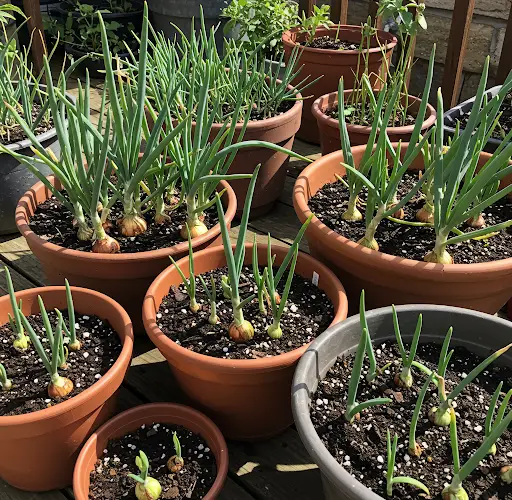

Onions are one of the most versatile and essential ingredients in the kitchen, and the good news is—they’re also easy to grow at home. Whether you have a large garden or just a few containers on your balcony, onions can be grown successfully from seed with the right care and setup. This guide will walk you through the entire process of growing onions from seed, both in containers and garden beds, from planting to harvest.
1. Why Grow Onions from Seed?
Growing onions from seed offers several benefits over using sets or transplants:
-
A wider variety of onion types to choose from (red, yellow, white, sweet, and storage onions).
-
Disease-free and healthier long-term growth.
-
More economical for larger harvests.
Although it takes a bit longer than planting sets, starting from seed gives you full control over your crop and often results in better storage quality.
2. Choosing the Right Onion Variety
Select onion varieties suited to your region’s day length:
-
Short-day onions: Ideal for southern climates (USDA Zones 7–10), requiring 10–12 hours of daylight.
-
Long-day onions: Best for northern climates (Zones 6 and below), needing 14–16 hours of daylight.
-
Intermediate-day onions: Good for mid-range climates.
Examples:
-
Short-day: ‘Texas Early Grano’, ‘Red Creole’
-
Long-day: ‘Walla Walla’, ‘Yellow Sweet Spanish’
-
Intermediate: ‘Candy’, ‘Red Candy Apple’
3. When to Start Onion Seeds
Start onion seeds indoors 8–10 weeks before your last frost date. This gives the seedlings enough time to develop before being transplanted outdoors.
-
For spring planting: Start seeds in late winter.
-
For fall planting (in mild climates): Start seeds in mid to late summer.
4. Starting Onion Seeds Indoors
Materials needed:
-
Seed trays or shallow containers
-
Seed-starting mix (light and well-draining)
-
Onion seeds
-
Light source (sunny window or grow lights)
Steps:
-
Fill trays with moistened seed-starting mix.
-
Sow seeds ¼ inch deep, spacing them about ½ inch apart.
-
Cover lightly and mist with water.
-
Keep trays in a warm spot (60–75°F or 15–24°C).
-
Seeds will germinate in 7–10 days.
Once seedlings are 2–3 inches tall, trim them back to about 3 inches to encourage sturdy growth.
5. Transplanting to Containers or Garden Beds
Transplant your onion seedlings outdoors once they are 5–6 inches tall and the risk of frost has passed.
For containers:
-
Choose pots or grow bags at least 10–12 inches deep.
-
Use a rich, well-draining potting mix blended with compost.
-
Space seedlings 3–4 inches apart.
For garden beds:
-
Prepare loose, fertile soil with compost or aged manure.
-
Remove rocks and clumps to allow bulbs to expand.
-
Plant rows 12–18 inches apart with 3–4 inches between plants.
Water thoroughly after transplanting.
6. Sunlight and Watering Requirements
Onions need full sun—at least 6–8 hours per day. The more sunlight they receive, the better bulb development you’ll get.
Watering tips:
-
Keep soil evenly moist but not soggy.
-
Avoid letting the soil dry out, especially during bulb formation.
-
Water at the base to prevent disease on leaves.
As harvest nears, reduce watering to allow bulbs to cure naturally in the soil.
7. Feeding and Mulching
Onions are heavy feeders and benefit from consistent nutrition.
Fertilizing:
-
Mix compost or organic slow-release fertilizer into the soil before planting.
-
Apply a nitrogen-rich fertilizer every 2–3 weeks during the early growth stage.
-
Stop fertilizing once bulbs start to form.
Mulching:
-
Add a layer of straw or dry grass to retain moisture and suppress weeds.
-
Helps regulate temperature in containers and garden beds.
8. Common Problems and Pests
-
Thrips: Tiny insects that damage leaves. Spray with neem oil or insecticidal soap.
-
Downy mildew: Avoid overhead watering and ensure good airflow.
-
Bolting (premature flowering): Caused by cold stress. Choose the right variety for your region and avoid transplanting too early.
Good spacing and consistent care reduce most onion issues.
9. Harvesting Onions
Onions are ready to harvest when:
-
The tops begin to yellow and fall over.
-
Bulbs feel firm and are sticking out of the soil.
Harvesting steps:
-
Gently loosen soil around each bulb.
-
Pull onions by the base of the stem.
-
Let them dry (cure) in a shaded, dry area for 1–2 weeks.
Once cured, trim the tops and roots. Store in a cool, dry, well-ventilated place for several months.
Final Tips for Growing Onions from Seed
-
Start seeds early for a strong head start.
-
Choose the correct variety for your climate’s daylight hours.
-
Keep soil rich and well-drained for maximum bulb development.
-
Regular watering and weeding make a big difference.
-
Patience pays off—onions take time but reward you with a long-lasting harvest.
Growing onions from seed in containers or garden beds is a simple, rewarding process that provides fresh, flavorful bulbs for months to come.


