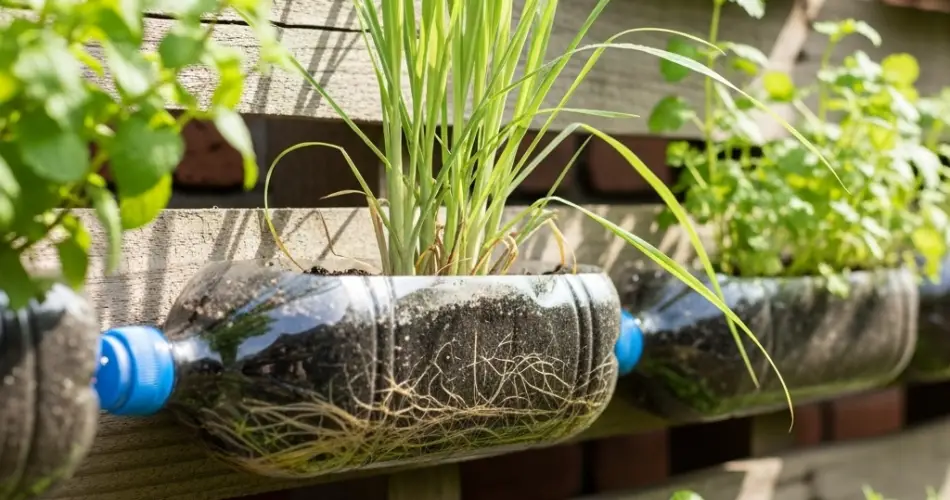
Lemongrass (Cymbopogon citratus) is a fragrant, tropical herb known for its citrusy aroma and vibrant flavor. It enhances teas, soups, curries, stir-fries, and marinades, making it an essential addition to many kitchens. For urban gardeners or those with limited space, growing lemongrass in a vertical wall garden using recycled bottles is an innovative, space-saving solution. This method allows you to maintain a continuous supply of fresh stalks while creating a visually appealing green wall.
Vertical bottle gardening is ideal for small apartments, balconies, or patios. By suspending bottles on a wall, you maximize vertical space while keeping plants easily accessible for watering, harvesting, and care. Using upcycled bottles adds an eco-friendly dimension, reducing waste and providing lightweight, versatile containers for your herbs.
Selecting Bottles for Lemongrass
Plastic bottles are perfect for vertical lemongrass gardens due to their size, durability, and adaptability.
Size and Shape
-
Use 1–2 liter bottles to provide enough space for root growth.
-
Straight-sided bottles are preferable for mounting stability and uniformity.
Preparation Steps
-
Cut an opening on the side or top for planting.
-
Drill small drainage holes at the bottom to prevent waterlogging.
-
Optionally, tilt bottles slightly forward to improve water flow and sunlight exposure.
Repurposing bottles not only creates functional planters but also contributes to sustainable gardening practices.
Choosing Lemongrass Stalks
Healthy lemongrass stalks are essential for successful vertical propagation.
Selection Tips
-
Choose firm stalks with intact white bases, ideally with small root nodes or emerging roots.
-
Avoid wilted, discolored, or overly dry stalks.
-
Fresh, vigorous stalks root faster and produce stronger plants.
Starting with high-quality stalks ensures a productive and visually appealing vertical garden.
Water Propagation
Water propagation is the simplest way to initiate lemongrass growth before transferring to soil-filled bottles.
Steps
-
Trim the stalks, leaving 4–6 inches from the base.
-
Remove dried outer layers.
-
Place stalks in shallow water, ensuring the bottom 2–3 inches are submerged.
-
Change the water every 2–3 days to prevent stagnation and bacteria buildup.
Within a few days to a week, roots begin to form, signaling readiness for transplanting.
Transplanting into Bottles
Once roots are about 1–2 inches long, stalks can be planted in prepared bottles.
Soil Preparation
-
Use a light, well-draining potting mix enriched with compost or organic matter.
-
Avoid heavy soil that retains excess moisture and restricts root growth.
Planting Steps
-
Fill bottles with soil, leaving an inch from the top.
-
Insert rooted stalks and gently press soil around the base.
-
Water thoroughly to settle soil without causing runoff.
Proper planting ensures strong, healthy stalks that grow consistently in a vertical setup.
Mounting the Vertical Garden
Creating a secure structure is key to maintaining a vertical lemongrass wall.
Mounting Tips
-
Use a wooden frame, metal grid, or pallet as a base.
-
Secure bottles with hooks, wire, or strong twine.
-
Space bottles evenly to allow airflow, sunlight, and easy access for maintenance.
A stable vertical structure prevents tipping and promotes uniform growth.
Light and Temperature
Lemongrass thrives in bright light and warm conditions.
Lighting Tips
-
Place the vertical wall in a location with 6–8 hours of sunlight daily.
-
Supplement with grow lights in low-light indoor environments.
Temperature Guidelines
-
Maintain temperatures between 70–85°F (21–29°C).
-
Avoid drafts, frost, or extreme heat.
Adequate light and consistent temperature support lush growth and flavorful stalks.
Watering and Maintenance
Regular care ensures productive lemongrass plants.
Watering Tips
-
Keep soil evenly moist but not waterlogged.
-
Check each bottle individually, as upper bottles may dry faster.
-
Water from the top, allowing excess to drain through drainage holes.
Maintenance Practices
-
Harvest outer stalks regularly to encourage bushier growth.
-
Remove yellowing or damaged leaves to maintain plant health.
-
Rotate bottles occasionally for uniform sunlight exposure.
Harvesting Lemongrass
-
Stalks can be harvested once they reach 12 inches or taller.
-
Cut outer stalks at the base, leaving inner stalks to continue growing.
-
Frequent harvesting promotes fuller, healthier plants.
Fresh stalks can be used immediately, refrigerated, or dried for later culinary use.
Benefits of a Vertical Lemongrass Wall
-
Maximizes limited space in kitchens, balconies, and apartments.
-
Upcycles plastic bottles, reducing environmental waste.
-
Provides year-round access to fresh, aromatic lemongrass.
-
Creates a decorative, green focal point that enhances indoor or outdoor spaces.
Final Thoughts
Growing lemongrass in bottles on a vertical wall garden is an efficient, eco-friendly solution for urban gardeners. With proper stalk selection, soil preparation, adequate sunlight, and consistent care, lemongrass can thrive in even the smallest spaces. This method ensures a continuous supply of fragrant stalks while turning ordinary bottles into a productive, visually appealing herb display.


