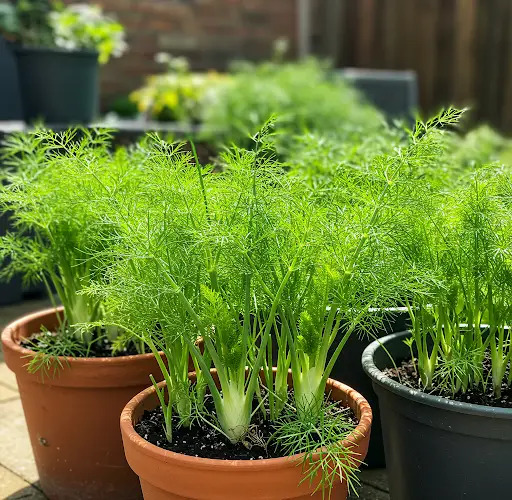
Fennel is a versatile and flavorful herb that can be grown in containers, making it an ideal choice for gardeners with limited space. There are two main types of fennel: bulbing fennel (also known as Florence fennel) and herb fennel. Bulbing fennel is prized for its sweet, anise-like flavor and its bulbous base, which can be harvested and eaten like a vegetable, while herb fennel is grown primarily for its feathery fronds and seeds.
Growing fennel from seed in containers can be simple and rewarding. Whether you want to harvest fennel bulbs or simply enjoy the fronds and seeds, this guide will walk you through the essential steps to successfully grow fennel in containers.
1. Choosing the Right Fennel Variety for Containers
For container gardening, it’s best to choose bulbing fennel or Florence fennel, as these varieties grow compactly and are well-suited to container environments. Herb fennel, while also suitable for containers, is primarily grown for its fronds and seeds, which means it doesn’t form the bulb you might expect from the bulbing variety.
Recommended fennel varieties:
-
‘Perfection’: A reliable and early-maturing bulbing fennel variety, known for its smooth bulbs.
-
‘Milan’: A compact variety that’s great for container gardens, producing tender and flavorful bulbs.
-
‘Zefa Fino’: A slower-growing variety that develops large, robust bulbs and is ideal for gardeners who want to focus on bulb production.
2. Selecting the Right Container
Fennel requires a decent amount of space to grow, particularly if you’re aiming to develop bulbs. When growing fennel in containers, choose a pot that is large enough to allow the plant’s roots to spread out and the bulb to develop.
Recommended container size:
-
Choose a container that is at least 12 inches deep and has a diameter of 12 to 16 inches.
-
Ensure the container has drainage holes at the bottom to prevent water from accumulating, which can cause root rot.
-
If you’re using a larger container, you can grow multiple fennel plants, but be sure to space them 6 to 8 inches apart.
3. Preparing the Soil for Fennel
Fennel grows best in well-draining, fertile soil that is slightly acidic to neutral (pH 6.0-7.0). Fennel is a heavy feeder, so rich, organic soil is essential for healthy growth and bulb formation.
Soil preparation:
-
Use a high-quality potting mix designed for vegetables.
-
Add organic compost or well-rotted manure to enrich the soil and provide essential nutrients.
-
Fennel prefers loamy soil that retains moisture but doesn’t become waterlogged.
Avoid using heavy garden soil, as it can become compacted in containers and hinder fennel’s growth.
4. Sowing Fennel Seeds
Fennel is usually started from seed, and it’s best to sow them directly into the container once the risk of frost has passed and the soil has warmed to at least 60°F (15°C).
Steps for sowing fennel seeds:
-
Sow seeds about ¼ inch deep in the container.
-
Space the seeds 6 to 8 inches apart for optimal bulb development. If you’re planting multiple seeds, you can thin the seedlings later to ensure each plant has enough room to grow.
-
Water gently after sowing to keep the soil moist but not soggy.
-
Place the container in a sunny spot, as fennel requires 6-8 hours of sunlight daily to thrive.
Fennel seeds generally germinate within 7-14 days. Once the seedlings appear, you can thin them to maintain adequate spacing.
5. Thinning and Maintaining Proper Spacing
As fennel grows, it’s important to thin out the seedlings to ensure each plant has enough space to develop. Overcrowding can result in smaller bulbs and poor air circulation, which may increase the risk of disease.
Thinning tips:
-
Thin seedlings to 6 to 8 inches apart once they’ve developed their first set of true leaves.
-
If you’re growing multiple plants in a larger container, ensure that there’s enough space for each plant to grow freely.
Thinning not only gives each plant space to grow but also encourages strong, healthy bulb development.
6. Watering and Fertilizing Fennel
Fennel requires regular watering to maintain consistent moisture, but overwatering can cause root rot, so good drainage is crucial. Keep the soil moist but not soaking wet.
Watering tips:
-
Water fennel deeply, ensuring the moisture reaches the root zone.
-
Water at the base of the plant, avoiding the foliage, to prevent fungal diseases.
-
During hot weather, fennel may need more frequent watering, especially in containers that dry out quickly.
Fertilizing:
-
Fennel is a heavy feeder and benefits from regular feeding. Use a balanced, slow-release fertilizer or organic compost to provide nutrients every 4-6 weeks.
-
If growing in containers, fertilize more frequently, as container soil tends to lose nutrients faster than garden soil.
7. Managing Pests and Diseases
While fennel is generally resistant to pests, it can occasionally be affected by aphids, caterpillars, or slugs. Regular monitoring and early intervention are key to keeping these pests under control.
Pest management:
-
Aphids: Remove aphids by spraying the plant with a mixture of water and mild soap or using insecticidal soap.
-
Caterpillars: Inspect the leaves regularly and remove any caterpillars by hand. You can also use floating row covers to protect the plants.
-
Slugs: To deter slugs, place slug traps around your container or use crushed eggshells around the base of the plants.
Fennel is also susceptible to fungal diseases like powdery mildew. To prevent this, avoid overhead watering and ensure adequate air circulation around the plant.
8. Harvesting Fennel
Bulbing fennel can be harvested once the bulbs are 4-6 inches in diameter and have reached their full size. Harvesting early will give you tender, sweet bulbs, while waiting longer will result in larger, stronger-flavored bulbs.
Harvesting tips:
-
Use a sharp knife to cut the bulb at the base, leaving the roots in the soil. This will allow the plant to continue growing if you’d like to harvest it later.
-
You can also harvest the fennel fronds at any time during the growing season, as they’re great for garnishes or in salads.
9. Final Tips for Growing Fennel in Containers
-
Sunlight: Fennel loves full sun, so place the container in a location that receives plenty of light.
-
Temperature: Fennel prefers cooler weather but can tolerate some warmth. Ensure the plant receives adequate shade during the hottest parts of the day if you live in a warm climate.
-
Container size: Larger containers are better for growing fennel, as they allow for more root space and better bulb development.
Conclusion
Growing fennel from seed in containers is a great way to enjoy this flavorful herb or vegetable in a small space. Whether you’re growing fennel for its tender bulbs or its aromatic fronds, following the proper planting, care, and harvesting guidelines will help ensure a successful crop. With a little attention to soil, watering, and spacing, you can enjoy fresh, homegrown fennel throughout the growing season.


