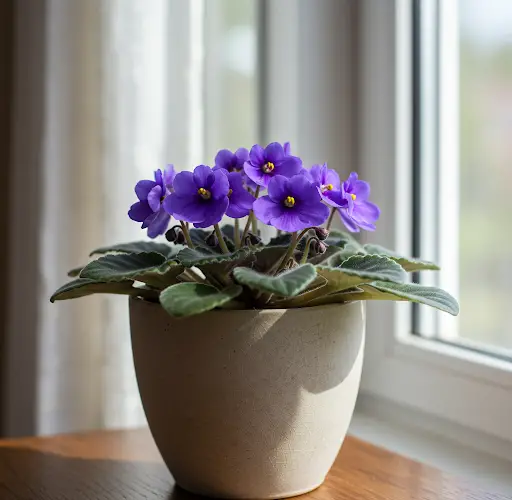
Today, I will share with you the most practical and easiest method for propagating violets. While growing violets may seem like a challenge, it is actually quite simple if you follow the correct steps. One of the most effective ways to propagate violets is through leaf propagation, a method many people want to try. In this article, I will guide you through the most practical technique for violet propagation and provide essential tips for proper violet care.
Before we begin, I encourage you to support my channel by subscribing and turning on notifications so you can stay updated with my latest videos.
Understanding Violet Growth and Pruning
As you can see, I have two violets in my hand. One of them has large leaves around it, while the other has smaller leaves forming in the middle. One of the most critical aspects of violet care is pruning. Pruning is essential if you want your violets to produce abundant flowers and new offshoots.
So, how do we prune violets correctly? Pruning violets involves removing old and thick leaves, which helps redirect the plant’s energy toward new growth. This practice promotes new offshoot formation and encourages the plant to bloom. As you can see, after pruning, multiple offshoots emerged in the same pot and began to grow simultaneously. If your violet has not bloomed for a long time, pruning can help rejuvenate it.
For instance, the violet I am holding was in bloom about a month ago. After removing several leaves and using them for propagation, I noticed a significant change. The remaining leaves have supported the growth of a new bud and flower. This occurs because large, old leaves consume too much of the plant’s energy, preventing it from flowering. By carefully removing the older leaves, we allow the plant to focus on producing flowers.
I highly recommend this technique. Take a look at this other violet I pruned earlier. After removing large leaves, new leaves started growing more densely and rapidly. Regular pruning helps the plant bloom faster, as its energy is no longer directed toward unnecessary foliage but toward flower and leaf production. This method ensures a healthy, flourishing violet.
Additionally, if your violet has too many small offshoots, you should remove some of them. Excessive offshoots can prevent the plant from producing flowers. This is because when there are too many new shoots, the plant directs its energy toward growing foliage rather than blooming. By managing the number of offshoots, you can stimulate flower formation more effectively.
Propagating Violets Through Leaf Cuttings
Now, let’s move on to propagating violets using leaf cuttings. To start, take a healthy leaf and place it in a glass jar with a small amount of water. The water level should be minimal—just enough to keep the leaf’s stem submerged. Then, seal the jar tightly and store it in a bright place, avoiding direct sunlight.
This method helps the leaf develop roots quickly. After about two weeks, you will notice root formation. If you were to plant the leaf directly into the soil, rooting could take a month or more. By using the water propagation method, you can accelerate the process significantly. Once the leaf has rooted, you can transfer it to soil, where it will continue to grow and eventually produce new offshoots.
Here is an example of a leaf I propagated earlier. As you can see, it has already developed strong roots, and even small new leaves have started to emerge. If left in water for a little longer, additional small leaves would form. However, to prevent rot, it is best to plant it in the soil once the roots have developed sufficiently.
Transplanting Violet Cuttings into Soil
Once the violet leaf has developed roots, it’s time to plant it in soil. I recommend using a shallow, wide plastic container for this step. Transparent containers with lower heights work best, as they provide better results by allowing the roots to establish more efficiently.
For soil, you can use standard flower garden soil. Make small holes in the soil for the violet leaves and carefully plant them. Since the leaves already have roots, they will adapt quickly and start growing.
Essential Tips for Violet Care
While planting, it is crucial to understand proper violet care to ensure healthy growth. Here are some essential tips:
- Light Conditions: Violets do not like direct sunlight. They thrive in areas with plenty of indirect light. If placed in direct sunlight, their leaves may burn, and their growth may be stunted. However, keeping them in a bright location will ensure healthy and rapid growth.
- Watering: Violets dislike dryness, and their soil must remain consistently moist. If violets do not receive enough water, their leaves will become soft and wilt. However, once watered, they regain their firmness, vibrancy, and green color. While keeping the soil moist is crucial, avoid overwatering, as excess water can lead to root rot.
- Pot Selection: Choosing the right pot is essential for healthy violet growth. I always use pots that are wide and shallow, with sufficient drainage holes. Violets thrive in pots that allow proper airflow and water filtration. Avoid planting them directly in decorative containers without drainage, as this can lead to water retention and root rot.
- Humidity: Violets prefer a humid environment. If your home is dry, consider placing a small tray of water near the plant to increase humidity. This helps maintain optimal growing conditions for the violets.
- Regular Maintenance: Check your violet plants frequently for any signs of disease or pests. Removing affected leaves and maintaining good airflow around the plant will help prevent common violet issues.
Final Thoughts
If you follow these propagation and care tips, you will see your violets growing and blooming quickly. By pruning correctly, propagating through water rooting, and providing the right care, you can enjoy beautiful, vibrant violets in your home.


