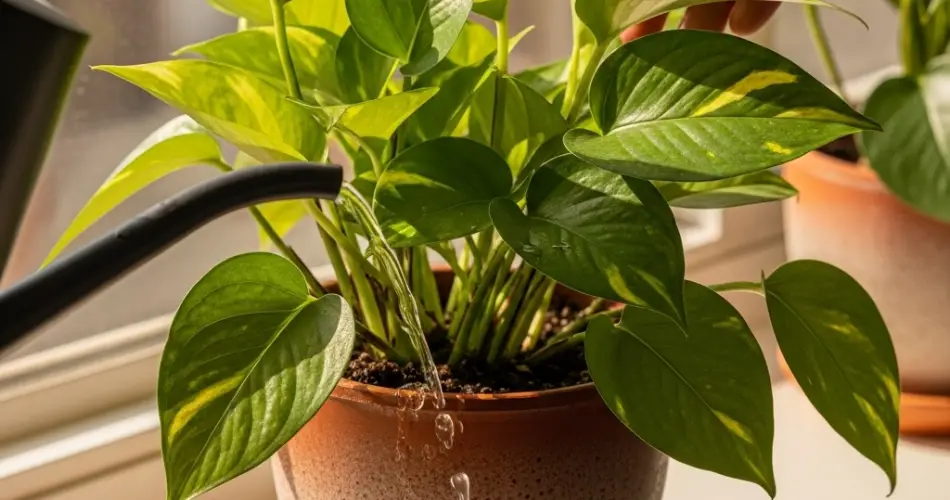
Pothos (Epipremnum aureum), often called devil’s ivy, is one of the most popular and beginner-friendly houseplants. Known for its trailing vines, heart-shaped leaves, and resilience, pothos can adapt to a variety of indoor environments. However, one of the few things that can cause this hardy plant trouble is improper watering.
Understanding how much and how often to water pothos is key to maintaining a healthy, lush plant. While it tolerates some neglect, consistent watering based on environmental factors and pot conditions will ensure your pothos thrives.
Why Watering Matters for Pothos
Though pothos is forgiving, overwatering or underwatering can lead to a range of problems. Overwatering can cause root rot, yellowing leaves, and mushy stems, while underwatering results in drooping, dry, or curling leaves. A balance must be struck, and that means learning how to read your plant’s needs.
How Much Water Does Pothos Need?
There is no one-size-fits-all answer, as several factors affect how much water your pothos will require. However, a good general rule is to water when the top 1–2 inches of soil are dry. This typically means watering once every 1 to 2 weeks, depending on your home’s humidity, light, and temperature levels.
Light Exposure
-
Bright, indirect light: Pothos in brighter locations will need more frequent watering, as the soil dries faster.
-
Low light: In dimmer areas, the plant grows more slowly and uses less water, so wait longer between waterings.
Season and Climate
-
Summer: In warmer months, increased temperatures and growth rates often mean watering every 7–10 days.
-
Winter: During cooler periods or when the plant goes semi-dormant, you may only need to water every 2–3 weeks.
Pot Size and Material
-
Smaller pots dry out more quickly than larger ones and will need more frequent watering.
-
Terracotta pots are porous and absorb moisture, meaning they’ll also dry out faster.
-
Plastic or ceramic pots retain moisture longer, so adjust accordingly.
Indoor Humidity
Pothos appreciates moderate humidity but adapts well to drier air. In dry homes or those with constant air conditioning or heating, your pothos may require slightly more frequent watering.
How to Check if Your Pothos Needs Water
Rather than following a strict calendar schedule, use these simple techniques to determine when it’s time to water:
-
Touch the Soil: Stick your finger into the pot about an inch or two deep. If it feels dry at that level, it’s time to water.
-
Lift the Pot: A pot that feels noticeably lighter than usual likely has dry soil.
-
Leaf Cues:
-
Underwatered: Leaves become limp, curled, or feel thin and papery.
-
Overwatered: Leaves may turn yellow, droop while the soil is still wet, and feel mushy.
-
How to Water Pothos Properly
When it’s time to water your pothos, do so thoroughly. Water until it flows freely out of the bottom drainage holes. Let the excess drain completely and never allow the pot to sit in a saucer of standing water.
Avoid light surface watering, as this doesn’t moisten the full root ball and may encourage roots to grow upward. A deep soak ensures that water reaches all parts of the soil and encourages strong root development.
Tips to Prevent Overwatering
-
Always use a pot with drainage holes to avoid trapped water at the bottom.
-
Use well-draining soil, such as a peat-perlite mix or a commercial houseplant blend with added perlite or coco coir.
-
Don’t follow a fixed schedule blindly; let the soil and plant condition guide you.
-
Reduce watering during colder months, especially if the plant is in a cooler or darker spot.
What to Do If You Overwatered
If you suspect overwatering (yellow leaves, soggy soil, mold smell), act quickly:
-
Remove the plant from the pot and inspect the roots.
-
Trim away any brown, mushy, or rotted roots with sterilized scissors.
-
Repot the plant in fresh, dry, well-draining soil.
-
Allow the plant to dry slightly before resuming a more careful watering routine.
Final Thoughts
Pothos is a low-maintenance plant, but watering it properly makes a big difference in its appearance and longevity. By paying attention to the moisture level in the soil and responding to environmental factors, you can avoid common pitfalls like root rot or dehydration.
Remember: it’s better to slightly underwater a pothos than to overdo it. With the right watering habits, your pothos will continue to reward you with long vines of lush, cascading foliage that enhance any space with a touch of easy greenery.


