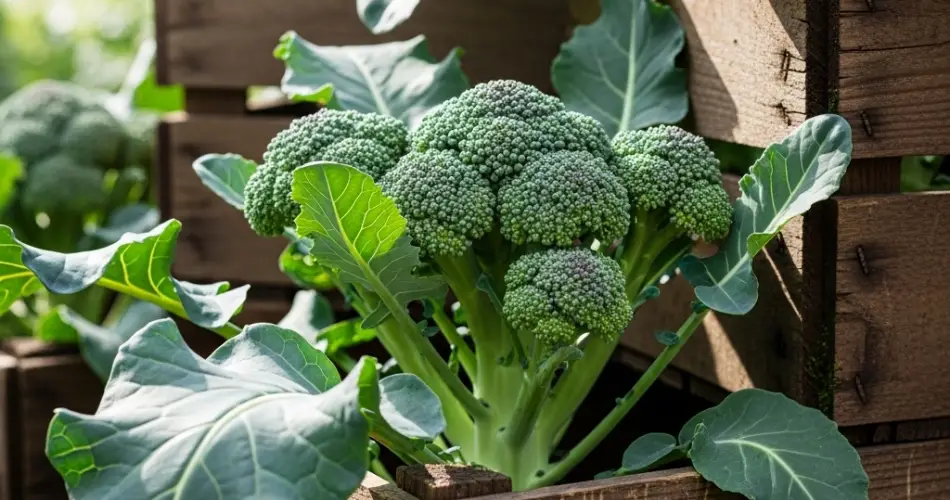
Broccoli is one of the most satisfying cool-season vegetables to grow at home. Not only is it packed with nutrients such as vitamin C, vitamin K, fiber, and antioxidants, but it also adapts well to different growing systems, including crate gardens. For gardeners with limited space, wooden or plastic crates provide a practical and efficient way to cultivate this leafy green. While growing broccoli in crates requires attention to soil, watering, and fertilization, knowing when and how to harvest is equally important. A well-timed harvest ensures tender, flavorful heads and encourages additional yields from side shoots.
Why Grow Broccoli in Crates?
Crates are ideal for small-space or urban gardeners. Wooden boxes provide insulation, drainage, and portability, allowing growers to manage soil quality and move plants to catch sunlight. Unlike in-ground gardens, crates allow precise control over growing conditions, which is especially useful for broccoli—a plant that thrives in cool weather and consistent soil fertility.
Because crate-grown broccoli grows in limited soil volume, its development can be slightly faster, meaning harvest timing is crucial to avoid over-mature heads that turn bitter or flower prematurely.
Recognizing When Broccoli Is Ready to Harvest
The most important part of harvesting broccoli is recognizing the signs of maturity. Unlike some vegetables that can be left on the plant for extended periods, broccoli must be harvested at just the right time for the best flavor and texture.
Here are the key indicators that your crate-grown broccoli is ready to pick:
-
Head size: The central head should be firm and compact, typically measuring 4–7 inches across depending on the variety.
-
Bud tightness: The small green florets (buds) should be tightly closed. Once they begin to loosen or show yellow petals, the plant is starting to flower, and the quality declines.
-
Color: The head should be a rich, deep green. Any yellowing indicates overripeness.
-
Timing: Most broccoli varieties are ready 60–90 days after transplanting seedlings, though timing varies with temperature and crate conditions.
How to Harvest Broccoli from Crate Gardens
-
Use the Right Tools
A sharp knife or garden shears is ideal. Avoid twisting or breaking the head off, as this can damage the plant and reduce the chance of side shoot production. -
Cut at an Angle
Slice the central stem about 5–6 inches below the head. Cutting at a slight angle prevents water from pooling on the stem, which reduces the risk of rot. -
Leave the Plant in Place
Unlike some crops, harvesting the main broccoli head does not mean the plant’s lifecycle is over. Crate-grown broccoli often produces smaller side shoots from the remaining stalks. These can extend the harvest for several more weeks.
Encouraging Secondary Harvests
One of the biggest advantages of growing broccoli is its ability to produce after the main head is harvested. Once you remove the central crown, the plant redirects energy into side shoots that develop in the leaf axils.
-
Side shoots are usually smaller (1–2 inches across) but equally delicious.
-
Frequent harvesting of these shoots encourages more to develop.
-
With proper fertilization and watering, you can continue harvesting side shoots for up to two months after the main head.
Post-Harvest Care for Crate-Grown Plants
After the first harvest, continue caring for the broccoli plant to maximize production:
-
Fertilization: Apply a balanced organic fertilizer, such as compost tea or fish emulsion, to replenish nutrients after the main head is cut.
-
Watering: Keep soil evenly moist, as drought stress reduces side shoot growth.
-
Mulching: Add fresh mulch to maintain soil moisture and reduce temperature fluctuations.
Eventually, the plant will stop producing, especially as the weather warms. At this point, remove it and replace it with another crop to keep your crate productive.
Storing and Using Harvested Broccoli
Freshly harvested broccoli is best eaten immediately, but it can also be stored:
-
Refrigeration: Wrap in a damp paper towel and place in a breathable bag. Broccoli will keep in the refrigerator for about 5–7 days.
-
Freezing: Blanch florets in boiling water for 2–3 minutes, cool in ice water, dry, and freeze. Frozen broccoli retains much of its nutrition and is excellent for soups and stir-fries.
Because crate gardens yield smaller harvests than large garden plots, preserving what you grow helps extend the enjoyment of your effort.
Common Mistakes to Avoid at Harvest
-
Waiting too long: Over-mature broccoli quickly develops yellow flowers, making it tough and bitter.
-
Harvesting too early: Small, underdeveloped heads reduce overall yield potential.
-
Damaging the plant: Rough harvesting can injure the stalk and reduce side shoot production.
By avoiding these mistakes, you’ll get the best quality and longest harvest window from your crate-grown plants.
Final Thoughts
Harvesting broccoli from crate gardens is a rewarding experience, especially for urban and small-space gardeners. The key to success lies in timing—picking the central head when buds are tight and green, then continuing to collect side shoots for extended harvests. With proper fertilization, watering, and post-harvest care, a single crate of broccoli can provide multiple meals and weeks of fresh produce. Whether on a balcony, patio, or small backyard, crate gardening proves that you don’t need large plots of land to enjoy crisp, nutrient-rich broccoli straight from your own garden.


