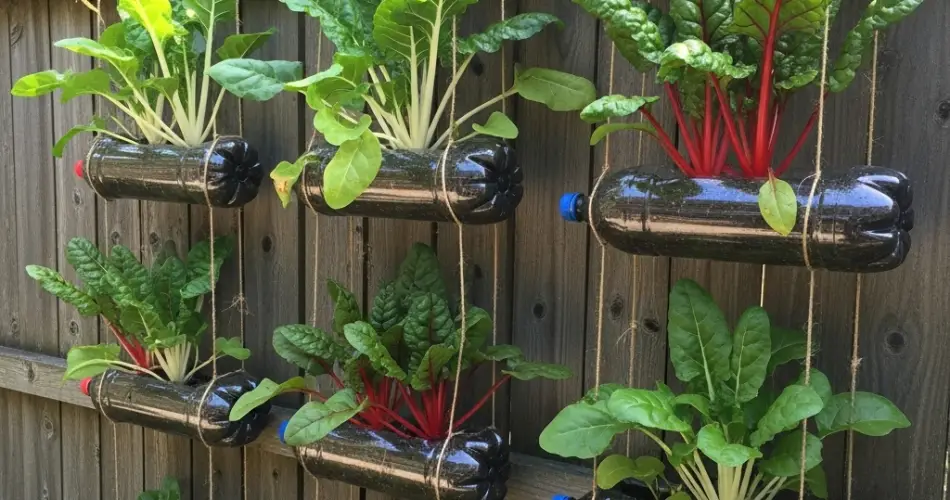
Swiss chard is a colorful, nutritious, and versatile leafy green that thrives in containers—and it’s perfectly suited for vertical gardening using hanging plastic bottles. Whether you’re short on space or want to create a sustainable, decorative garden wall, this method allows you to recycle materials while producing a steady supply of fresh greens right at home.
With its vibrant stems and lush leaves, Swiss chard adds both beauty and health benefits to your meals. And best of all, you don’t need a traditional garden to grow it—just a few bottles, some good soil, and a sunny spot.
Why Grow Swiss Chard in Hanging Bottles?
Swiss chard has a shallow root system, grows well in containers, and thrives in moderate climates, making it an excellent candidate for vertical gardening. The hanging bottle setup saves ground space and transforms walls, fences, or balconies into productive, living gardens. It’s also a great way to reduce plastic waste by repurposing used bottles into functional planters.
This method works particularly well in small spaces such as apartment balconies, patios, and rooftops. It also keeps plants off the ground, reducing the risk of pests and allowing for better airflow and sunlight exposure.
Materials You’ll Need
To start your vertical Swiss chard garden, gather the following:
-
1.5 to 2-liter plastic bottles (clean and dry)
-
A utility knife or scissors
-
A nail or skewer to make drainage holes
-
String, rope, or wire for hanging
-
Good-quality potting mix with compost
-
Swiss chard seeds or seedlings
-
A sunny wall or railing with at least 4–6 hours of light daily
You can hang the bottles individually or stack them vertically in columns using ropes or tie them to a wire mesh attached to a wall or wooden frame.
Preparing the Bottles
Start by cutting a large rectangular opening on one side of each bottle, leaving enough structure around the edges to support the soil. Keep the bottle cap on, but pierce a few small holes in it to allow slow drainage, especially if you’re stacking the bottles vertically.
Also, make drainage holes at the bottom and near the sides of the bottle to prevent water buildup. If you’re hanging the bottles with string or rope, punch holes on both ends to thread the material through securely.
Be sure the bottles are spaced apart enough to allow light to reach each plant and provide room for the leaves to expand.
Soil and Planting
Use a lightweight, well-draining potting mix enriched with organic compost. Swiss chard grows best in fertile, slightly moist soil. Avoid heavy garden soil, which may compact inside the bottles and restrict root growth.
Fill the bottles about three-quarters full with the soil mix. If you’re using seeds, plant 2–3 seeds per bottle about ½ inch deep. If using seedlings, dig a small hole, insert the plant, and press the soil gently around the base.
Water the soil thoroughly after planting to help settle the roots and remove air pockets.
Light and Water Requirements
Swiss chard prefers full sun to partial shade. Choose a wall that receives morning sun and a bit of afternoon shade, especially in hotter climates. If your location gets intense midday sun, a little protection can help prevent the leaves from wilting.
Water the plants regularly, especially during dry or warm periods. Because hanging bottles tend to dry out quickly, check the soil daily by pressing your finger into the top inch. Water when it feels dry. If stacking bottles vertically, you can water the top container and let gravity feed the ones below.
Feeding and Maintenance
Every 2–3 weeks, feed your plants with a balanced liquid fertilizer or compost tea. Swiss chard is a leafy vegetable, so it appreciates regular nitrogen-rich feeding to encourage lush growth.
Remove any yellowing or damaged leaves to keep the plants healthy. Watch for common pests like aphids or leaf miners, and rinse the leaves or treat with natural insecticidal soap if needed.
Keep the area around your vertical setup clean and ensure each plant has enough space and light to grow strong and healthy.
Harvesting Swiss Chard
Swiss chard is a cut-and-come-again crop. Once the outer leaves are about 6–8 inches long, you can begin harvesting. Use scissors to snip the mature outer leaves, leaving the central growing point untouched. This method allows the plant to continue producing new leaves for several weeks or even months.
Harvest early in the morning for the crispest leaves, and rinse them well before use.
Final Thoughts
Growing Swiss chard in hanging bottles is a smart, space-saving way to enjoy fresh greens no matter where you live. This DIY vertical garden project is sustainable, productive, and easy to maintain—even for beginner gardeners. With just a few materials and a bit of effort, you’ll transform a blank wall into a thriving food source full of color, flavor, and nutrition.


