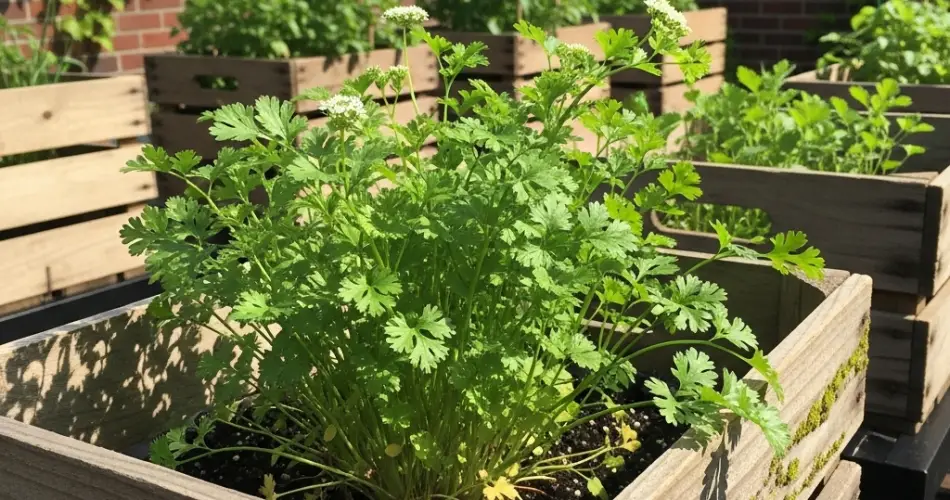
Cilantro, also known as coriander, is a popular herb appreciated for its fresh, vibrant flavor and aromatic leaves. It’s a versatile addition to a variety of dishes, from salsas and salads to soups and sauces. For apartment dwellers and small-space gardeners, crate gardening provides an efficient and manageable way to grow cilantro. By using crates as containers, you can create a productive, compact herb garden that allows for continuous harvesting throughout the season. This guide offers step-by-step advice on growing, maintaining, and harvesting cilantro in crates.
Choosing the Right Crate
The first step in container gardening is selecting an appropriate crate. Wooden crates, plastic bins, or repurposed boxes are all suitable options, as long as they are sturdy and have proper drainage. Wooden crates are particularly advantageous because they are breathable and add a rustic charm to your balcony or patio. The crate should be at least 20–25 cm (8–10 inches) deep to accommodate cilantro’s taproot system and allow sufficient space for healthy growth. Ensure there are multiple drainage holes to prevent waterlogging, which can damage roots and stunt plant growth.
Preparing the Soil
Cilantro thrives in soil that is well-draining, loose, and nutrient-rich. A good soil mix ensures strong root development, reduces the risk of disease, and promotes vigorous foliage. The ideal soil mix for cilantro in crates consists of:
-
Potting Soil: A high-quality potting soil forms the base, providing essential nutrients and a light, airy structure.
-
Compost: Organic compost enriches the soil with nutrients, improves water retention, and encourages beneficial microbial activity.
-
Perlite or Vermiculite: Adding perlite or vermiculite improves drainage and aeration, preventing compacted soil and promoting healthy roots.
-
Sand: A small amount of coarse sand enhances drainage, which is crucial for container-grown cilantro.
-
Organic Fertilizer: Incorporate a slow-release organic fertilizer or granular compost to provide ongoing nutrients. Cilantro responds well to moderate nitrogen levels, promoting lush green leaves without compromising flavor.
Mix these components thoroughly to create a balanced, well-draining medium. Lightly moisten the soil before planting to help seedlings or seeds establish.
Planting Cilantro
Cilantro can be grown from seeds, cuttings, or small seedlings. For seeds, sow them directly into the soil, spacing them 5–7 cm apart, and cover lightly with soil. Keep the soil consistently moist until germination, which usually occurs within 7–10 days. Once seedlings develop two or three sets of leaves, thin them to maintain proper spacing and airflow, preventing overcrowding and disease.
Positioning the Crate
Cilantro prefers full sun to partial shade, requiring at least 4–6 hours of sunlight per day. Place your crate in a location that receives morning sun or bright, indirect light. Adequate sunlight encourages robust growth, healthy leaves, and strong stems. In areas with limited natural light, supplemental grow lights can help maintain consistent growth.
Watering and Fertilizing
Cilantro thrives in soil that is evenly moist but not waterlogged. Water at the base of the plants to avoid wetting the leaves, which can lead to fungal problems. Overwatering can result in root rot, so it’s essential to let the soil dry slightly between waterings. Fertilize lightly every 3–4 weeks with a balanced, water-soluble fertilizer or organic alternative such as compost tea. This keeps the plants healthy without overwhelming them with nutrients, which could compromise flavor.
Pruning and Maintenance
Regular maintenance ensures cilantro remains productive and healthy. Remove yellowing or damaged leaves to improve airflow and reduce disease risk. Pinch back the tops periodically to encourage bushier growth. Cilantro can bolt quickly in hot weather, so keeping the plants trimmed and well-watered helps prolong the harvest period.
Harvesting Cilantro
Cilantro can be harvested once plants reach 15–20 cm in height. Snip stems from the outer edges, leaving enough foliage for continued growth. Frequent harvesting encourages new shoots, allowing for a continuous supply of fresh leaves. Cilantro can be used immediately in cooking or stored by freezing or drying for later use.
Benefits of Crate Gardening Cilantro
Growing cilantro in crates offers several advantages. It maximizes space efficiency, making it ideal for balconies, patios, or small urban gardens. Using repurposed crates promotes sustainability by recycling materials that might otherwise be discarded. Crate gardens are portable, allowing you to move plants to optimize sunlight exposure or protect them during extreme weather. Additionally, having fresh cilantro readily available enhances cooking, improves flavor, and adds greenery to your living space.
By following these steps, small-space gardeners can cultivate healthy, aromatic cilantro in crates with ease. This method combines practicality, sustainability, and convenience, making it simple to enjoy fresh cilantro year-round. With regular care and consistent harvesting, your crate-grown cilantro will provide flavorful leaves for culinary use while adding a vibrant touch to your balcony or patio.


