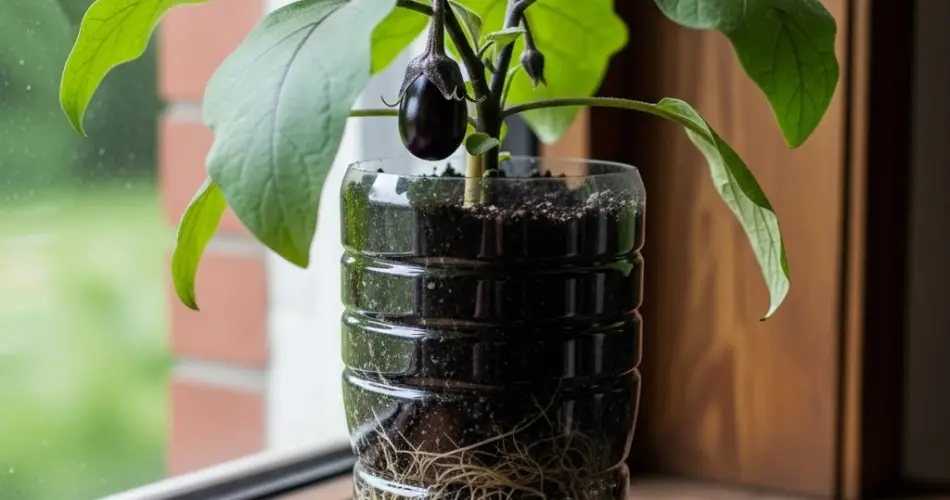
Eggplants are a versatile crop, valued for their rich flavor, meaty texture, and ability to feature in countless recipes. While many gardeners grow eggplants from seeds or buy seedlings from nurseries, there’s another simple way to expand your crop—rooting cuttings in water using bottles. This method allows you to multiply your plants without extra seed costs, making it an excellent choice for thrifty and resourceful gardeners.
Bottle-water rooting is an easy, space-saving, and sustainable propagation technique. It’s particularly useful for gardeners who want to grow more eggplants quickly or preserve a variety they particularly enjoy.
Why Root Eggplants in Water?
Water propagation offers several benefits:
-
Faster root development compared to direct soil planting for certain cuttings.
-
Easy monitoring of root growth, as you can see the progress in clear water.
-
Space efficiency, perfect for small gardens or indoor setups.
-
Low cost, as you only need bottles and basic household items.
By starting cuttings in water, you reduce the risk of transplant shock and increase the survival rate of new plants.
Selecting and Preparing Eggplant Cuttings
To begin, choose a healthy, mature eggplant plant that’s free from pests and diseases. Look for stems that are semi-mature—firm but still flexible.
Steps:
-
Using clean, sharp scissors or pruning shears, cut a stem about 15–20 cm long. Select a stem that has a few leaves but isn’t flowering or fruiting.
-
Remove the lower leaves, leaving only the top 2–3 leaves intact. This helps the cutting focus its energy on root development instead of maintaining excess foliage.
-
If desired, dip the cut end in rooting hormone powder to encourage faster root growth, though this step is optional.
Preparing the Bottle-Water Setup
Plastic bottles are ideal for this method because they’re lightweight, recyclable, and easy to modify.
-
Select a clear plastic bottle (500 ml to 1 liter works well).
-
Cut off the top portion so you have an open container.
-
Fill it with enough water to cover the lower part of the cutting—about 5–7 cm.
-
If you want to keep the stem stable, you can cover the bottle opening with a piece of cardboard or plastic wrap, poking a small hole to hold the cutting upright.
Rooting Process
Place the bottle in a warm, bright spot with indirect sunlight. Avoid direct midday sun, which can overheat the water and damage the cutting.
-
Change the water every 2–3 days to keep it fresh and prevent bacterial growth.
-
Watch for tiny white roots forming at the base of the cutting. This usually happens within 1–2 weeks.
-
Keep the water level consistent, ensuring the cut end is always submerged.
When the roots are at least 5–7 cm long, the cutting is ready to transplant into soil.
Transplanting to Soil
-
Prepare a small pot or garden bed with well-draining, nutrient-rich soil. A mix of garden loam, compost, and sand works well.
-
Make a hole deep enough to accommodate the new roots without bending them.
-
Gently place the rooted cutting into the hole and cover with soil.
-
Water thoroughly to settle the soil around the roots.
For the first week after transplanting, keep the soil consistently moist and provide partial shade to reduce stress. Once the plant is established, move it to a sunnier location.
Caring for Your New Eggplants
Eggplants thrive in warm conditions and need at least 6–8 hours of sunlight daily. Space plants about 45–60 cm apart to allow for healthy growth.
Key care tips:
-
Watering – Keep soil evenly moist but not waterlogged.
-
Feeding – Apply a balanced fertilizer every 2–3 weeks to promote leaf and fruit development.
-
Pruning – Remove lower leaves as the plant matures to improve airflow and reduce disease risk.
-
Support – Stake taller plants to keep them upright, especially when they begin to bear heavy fruits.
Harvesting
Most eggplant varieties are ready to harvest 60–80 days after transplanting. Pick fruits when their skin is glossy and firm. Overripe eggplants become dull and develop tough seeds, so check plants regularly during peak production.
Advantages of Bottle-Water Rooting for Eggplants
-
Cost-effective – No need to purchase additional seeds or seedlings.
-
Eco-friendly – Reuses plastic bottles that would otherwise be discarded.
-
High success rate – Visible root development allows you to transplant only healthy cuttings.
-
Speed – Cuttings grow faster than seedlings in certain conditions.
Bottle-water rooting is a straightforward way to multiply your eggplant plants, save money, and reduce waste. With this method, you can quickly expand your garden and enjoy a more abundant harvest, all while using simple materials you likely already have at home.
Whether you’re a beginner gardener or an experienced grower, this technique adds a valuable tool to your propagation skills. With patience and care, you’ll soon have a thriving eggplant patch ready to supply your kitchen with fresh, homegrown produce.


