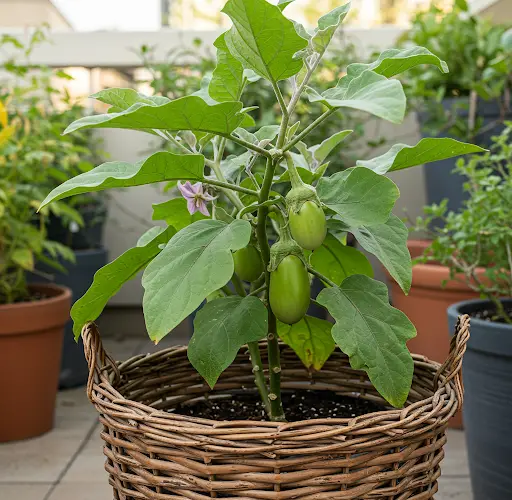

If you think growing vegetables requires a big garden or expensive containers, think again. Green eggplant, a delicious and productive vegetable, can be grown easily right on your terrace or balcony using something as simple as a recycled plastic basket.
This guide walks you through the process of growing green eggplant in used recycling baskets—an affordable, space-saving, and eco-friendly method that works even if you don’t have a traditional garden.
1. Why Grow Green Eggplant in Baskets?
Green eggplant, also called Thai green eggplant or Lao eggplant, is a compact variety that produces tender, pale green fruits with mild flavor. These plants adapt well to containers and require less space than traditional garden beds. Using recycled baskets not only reduces waste but also provides excellent drainage and root aeration, which are essential for healthy growth.
With a little preparation, even a small sunny corner of your terrace can yield a bountiful harvest.
2. Choosing the Right Basket
Select a sturdy plastic recycling basket—such as a laundry or storage basket—with dimensions of at least 30 cm (12 inches) deep and 30–40 cm wide. The many small holes on the sides of these baskets help ensure proper airflow and drainage, reducing the risk of root rot.
Line the inside of the basket with coconut husk, old cloth, or a double layer of rice sacks to prevent the soil from falling out while still allowing water to drain. This creates a breathable, well-drained growing container perfect for eggplant roots.
3. Preparing the Soil Mix
Eggplant thrives in nutrient-rich, loose soil. A good soil mix is essential for container success.
Ideal Soil Mix Recipe:
-
40% garden soil or loam
-
30% composted manure or vermicompost
-
20% rice husks or coco peat (for aeration)
-
10% sand or perlite (for drainage)
To boost the soil, mix in:
-
A handful of wood ash (for potassium)
-
1 tablespoon of bone meal (for phosphorus and calcium)
-
Crushed eggshells or oyster shell powder (to prevent blossom-end rot)
This combination ensures that the plants receive balanced nutrients throughout their growth.
4. Starting from Seeds or Seedlings
You can start with seeds or young seedlings from a nursery. If starting from seeds:
-
Soak the seeds overnight in warm water to improve germination.
-
Sow in seedling trays or small pots, and keep them in a warm, shaded area.
-
Transplant when the seedlings have 3–4 true leaves, usually after 2–3 weeks.
Plant one seedling per basket to ensure it has enough space to grow into a strong, productive plant.
5. Sunlight and Watering Needs
Green eggplant requires full sunlight for at least 6 hours a day. Place the basket in a spot that receives morning sun, such as a south- or east-facing terrace or balcony.
Water deeply 2–3 times a week or whenever the topsoil feels dry. Be careful not to overwater—good drainage from the basket lining will help prevent root rot. Adding a mulch layer made of dry leaves, grass clippings, or rice husks helps retain moisture and keep roots cool.
6. Fertilizing for Maximum Yield
Feed your eggplant regularly with organic fertilizers. Use a liquid compost tea or banana peel fertilizer every 10–15 days. Once the plant begins flowering, switch to potassium-rich feeds like wood ash water or diluted fish amino acid to support fruit development.
If the leaves look pale or growth is slow, top-dress the basket with an additional layer of compost.
7. Supporting the Plant
As the eggplant matures and begins producing fruit, the stems may become heavy. Install a simple bamboo or stick support in the basket and tie the main stem loosely with soft string to prevent bending or breaking.
This small step goes a long way in ensuring healthy fruit development and maintaining plant structure.
8. Dealing with Pests Naturally
Eggplants can be targeted by aphids, flea beetles, and caterpillars. Use natural pest control methods like:
-
Neem oil spray (weekly)
-
Garlic and chili water spray (to deter insects)
-
Companion planting with basil or marigolds to repel pests
Inspect the plants regularly and remove affected leaves or pests by hand if needed.
9. Harvesting Green Eggplant
You can begin harvesting green eggplants about 60–75 days after transplanting. Pick fruits when they’re still firm and glossy, usually about the size of a chicken egg or slightly larger depending on the variety.
Frequent harvesting encourages the plant to produce more fruits. Avoid leaving mature fruits too long on the plant, as this can slow further production.
Final Thoughts
Growing green eggplant on the terrace using recycled baskets proves that you don’t need a large garden or expensive containers to produce fresh, healthy food at home. This low-cost method is ideal for beginners, urban gardeners, and anyone looking to make use of small spaces in a sustainable way.
With the right care and setup, a few recycled baskets on your terrace can turn into a mini vegetable haven—yielding delicious eggplants for months.


