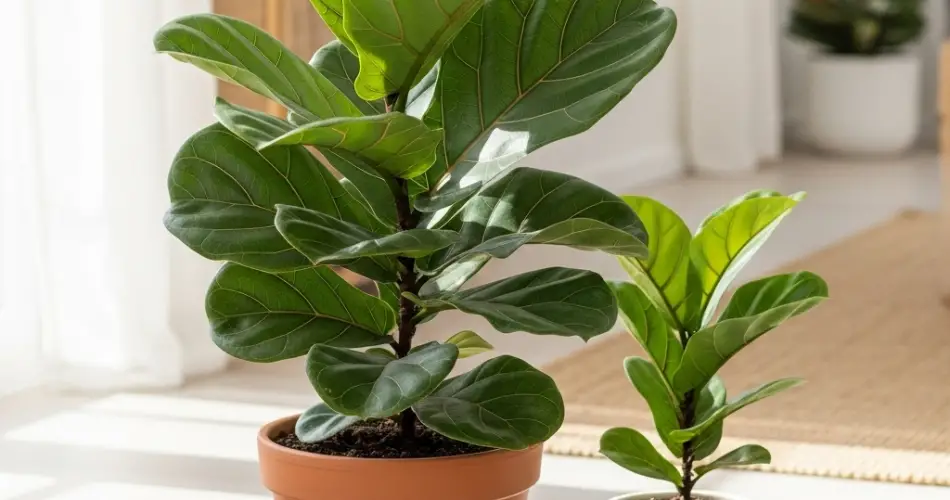
Fiddle leaf figs (Ficus lyrata) are known for their large, violin-shaped leaves and striking presence, making them a favorite among interior plant lovers. These plants can transform a space with their bold greenery, especially when paired with the right container. Choosing a modern, stylish pot doesn’t just enhance the look—it also supports the plant’s health. This guide covers how to grow fiddle leaf figs successfully while showcasing them in contemporary containers that match your décor.
Selecting the Right Container
The pot you choose has a big impact on both the plant’s growth and the overall style of your space. When selecting a container for a fiddle leaf fig, keep two main factors in mind: function and design.
Function
Fiddle leaf figs need a container with proper drainage. Without drainage holes, excess water can collect at the bottom, leading to root rot. If you find a decorative pot without holes that you love, use it as a cover pot: place your plant in a plastic nursery container inside the decorative one, making sure you can remove it for watering.
Choose a pot that is 2–4 inches larger in diameter than the root ball. An oversized pot may hold too much moisture, while a tight fit can limit root growth.
Design
Modern containers come in a variety of materials and finishes. Sleek ceramic planters, minimalist concrete pots, or woven baskets with a plastic liner can complement your fiddle leaf fig while fitting seamlessly into different interiors. Light, neutral colors can create a fresh, airy look, while darker tones can make the vibrant green leaves pop.
Soil and Planting
Fiddle leaf figs thrive in well-draining, nutrient-rich soil. Use a high-quality indoor potting mix that contains ingredients like pine bark, perlite, and peat moss to promote aeration and moisture balance. Avoid using dense garden soil, as it can compact and suffocate the roots.
When repotting:
-
Remove the plant from its old container, gently loosening the root ball.
-
Place a layer of fresh soil at the bottom of the new pot.
-
Position the plant so the base sits about an inch below the rim.
-
Fill in around the roots with soil, lightly pressing it down without compacting too tightly.
-
Water thoroughly to help the roots settle.
Light Requirements
Fiddle leaf figs love bright, indirect light. Position them near a large window where they receive plenty of filtered sunlight. A south- or east-facing window works best. Avoid harsh direct midday sun, which can scorch the leaves, but don’t place them in dim corners either—too little light can cause leaf drop.
If natural light is limited, consider using a full-spectrum grow light to keep your fiddle leaf fig healthy year-round.
Watering and Humidity
The key to watering fiddle leaf figs is moderation. Overwatering can be as harmful as underwatering.
-
Check before watering: Insert your finger into the soil about 2 inches deep. If it feels dry, it’s time to water.
-
Water deeply: Give enough water so that it drains from the bottom, then empty the saucer to prevent soggy roots.
-
Frequency: In most homes, watering every 1–2 weeks is sufficient, but always check the soil first.
Fiddle leaf figs appreciate a bit of humidity, especially in drier climates or during winter heating season. Mist the leaves occasionally or place a humidifier nearby to keep the air comfortable.
Feeding Your Plant
To maintain healthy growth and vibrant leaves, feed your fiddle leaf fig during the growing season (spring and summer). Use a balanced liquid houseplant fertilizer diluted to half strength every 4–6 weeks. Stop feeding during fall and winter when the plant’s growth naturally slows.
Styling Your Space with Containers
Pairing your fiddle leaf fig with the right container can make it a focal point in any room. Here are a few ideas:
-
Minimalist concrete planters for a modern industrial vibe.
-
Matte ceramic pots in white or soft pastel shades for a clean, Scandinavian look.
-
Mid-century modern stands to elevate the plant and give it a retro-chic touch.
-
Woven seagrass baskets for a warm, natural feel that softens the plant’s bold structure.
When styling, remember that the plant’s size should balance with the pot’s proportions. Tall fiddle leaf figs look best in floor planters, while smaller ones suit tabletop or elevated stands.
Common Care Tips for Success
-
Rotate the plant every few weeks so all sides receive even light, preventing uneven growth.
-
Clean the leaves with a damp cloth to remove dust and allow better photosynthesis.
-
Watch for signs of stress: Brown spots may indicate overwatering, while yellowing leaves could mean inconsistent moisture or poor drainage.
Final Thoughts
Growing a fiddle leaf fig in a stylish container is both a design choice and a practical gardening decision. By combining the right pot, quality soil, proper light, and attentive care, you can enjoy a healthy plant that enhances your home with lush, architectural foliage. A well-potted fiddle leaf fig isn’t just greenery—it’s a living statement piece that grows along with your space.


