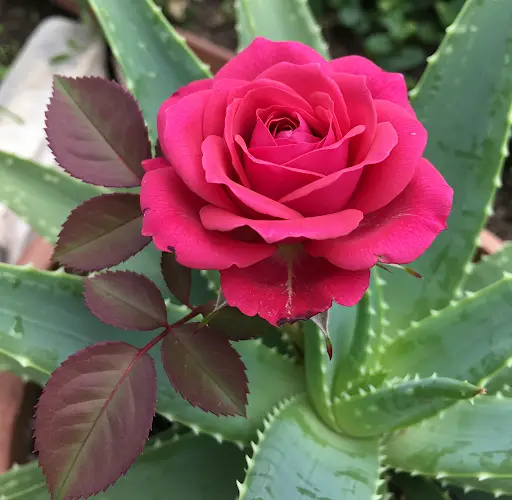
Roses are prized for their beauty, fragrance, and symbolism. While many gardeners rely on traditional propagation methods using water or soil alone, there’s a powerful natural alternative that can significantly boost your success rate: aloe vera. This common household plant isn’t just good for skin—it also acts as a natural rooting stimulant that can help your rose cuttings sprout faster, root stronger, and bloom beautifully throughout the year.
This simple technique using aloe vera is effective, budget-friendly, and easy for both beginners and experienced gardeners alike. Here’s how to propagate roses using aloe vera and grow a flourishing rose garden that brings joy year-round.
Why Use Aloe Vera for Rose Propagation?
Aloe vera is packed with essential vitamins, enzymes, amino acids, and natural plant hormones like auxins and gibberellins. These compounds are known to encourage cell division and root development. When applied to rose cuttings, aloe vera provides:
-
A natural antiseptic to protect against fungal infections
-
Moisture retention to prevent dehydration
-
Plant hormones that promote rapid rooting
-
Nutrients that support early growth
Unlike chemical rooting powders, aloe vera is entirely organic and safe for plants, pets, and the environment.
Materials You’ll Need
To propagate roses using aloe vera, gather the following items:
-
Fresh rose cuttings (6–8 inches long)
-
A mature aloe vera leaf
-
A clean knife or scissors
-
A small pot or propagation tray
-
Well-draining potting mix or soil
-
Spray bottle with clean water
-
Optional: transparent plastic cover or bag for humidity
Step-by-Step Guide to Propagating Roses with Aloe Vera
1. Choose and Prepare Your Rose Cuttings
Select a healthy rose stem that has recently flowered and is neither too woody nor too soft—this stage is known as semi-hardwood. Cut a 6- to 8-inch segment just below a leaf node at a 45-degree angle. This will increase the surface area for root development.
Remove all flowers, buds, and lower leaves, leaving just a couple of leaves at the top to maintain some photosynthesis without stressing the cutting.
Optionally, you can lightly scrape the lower inch of the stem to expose the green layer (cambium) beneath the bark—this stimulates root growth.
2. Prepare the Aloe Vera Gel
Cut a fresh aloe vera leaf near the base of the plant and slice it open lengthwise. Scoop out the inner gel using a spoon and blend it until smooth, or simply cut the leaf into chunks if you prefer direct application.
Dip the cut end of your rose cutting directly into the fresh aloe gel or insert it into a sliced piece of the aloe leaf. Allow the cutting to sit in the gel for at least 10–15 minutes so it can absorb the nutrients and growth hormones.
3. Plant the Cutting
Fill a small pot or container with well-draining soil—ideally a mix of compost, sand, and perlite or vermiculite. Make a hole in the soil and insert the aloe-treated cutting about 2–3 inches deep, ensuring it’s upright and stable.
Gently firm the soil around the cutting and water lightly to moisten the soil without waterlogging it.
4. Maintain Moisture and Humidity
To create a greenhouse-like effect, cover the pot with a clear plastic bag or dome to trap humidity. This is especially useful in dry indoor environments and encourages faster rooting.
Place the cutting in a warm location with indirect sunlight. Avoid exposing it to direct sun, which can dry it out or cause stress.
Mist the cutting daily with clean water to maintain moisture, but avoid making the soil soggy.
Monitoring and Root Development
Within 7–10 days, you may notice the cutting looking fresher, and tiny bumps (root initials) may appear near the base. In 2–3 weeks, these will develop into strong roots. You can check root progress by gently tugging on the stem—if there’s resistance, roots are forming.
New leaf growth usually follows shortly after rooting, signaling that the cutting is ready for transplanting.
Transplanting and Long-Term Care
Once the cutting has a robust root system (usually around 3–4 inches long), transplant it into a larger pot or directly into your garden. Choose a sunny location with good air circulation and nutrient-rich, well-drained soil.
Continue to water regularly, especially during dry periods, and feed your roses with a balanced organic fertilizer every few weeks to promote blooms.
Prune dead or diseased branches to encourage new growth, and you’ll enjoy a stunning rose garden that thrives throughout the year.
Final Thoughts
Aloe vera is more than a medicinal plant—it’s a powerful ally for gardeners. By using it as a natural rooting aid, you can transform withered stems into thriving rose plants without the need for synthetic chemicals. This method is gentle, effective, and supports healthy, resilient root systems.
With regular care and this aloe-assisted propagation trick, your rose garden can bloom season after season, bringing beauty, fragrance, and life to your outdoor space.


