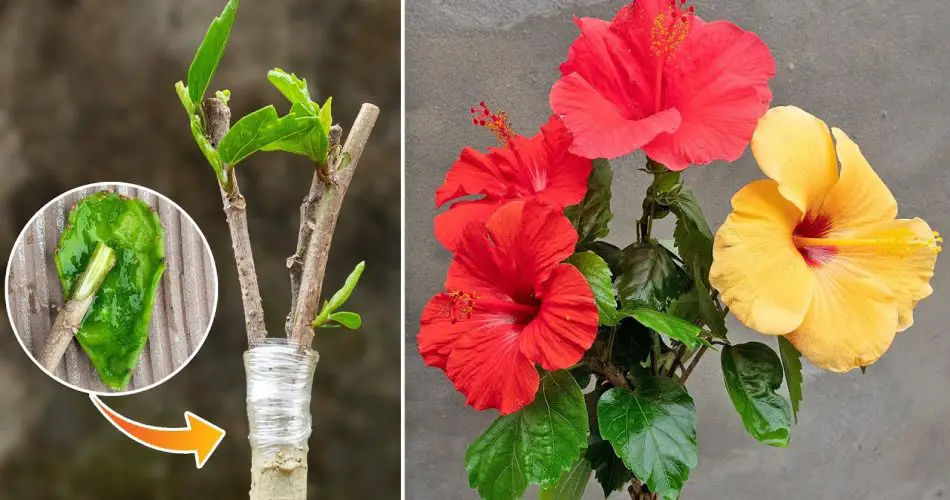
Creating a hibiscus plant with multiple flower colors through grafting involves combining different varieties onto a single rootstock. Grafting allows you to enjoy a stunning array of colors on a single plant. Here’s a step-by-step guide on how to graft multiple colors of hibiscus flowers:
Materials Needed:
- Hibiscus plants with different flower colors: Choose two or more hibiscus varieties with distinct flower colors that you want to graft onto a single plant.
- Rootstock Hibiscus plant: This will serve as the base or rootstock onto which you will graft the other varieties. Choose a healthy and vigorous rootstock.
- Grafting knife or razor blade: Use a clean, sharp tool for making precise cuts.
- Rubber bands or grafting tape: To secure the grafted sections together.
- Sterilizing solution: Rubbing alcohol or a diluted bleach solution to sterilize your cutting tools.
Grafting Procedure:
- Select Rootstock Plant: Choose a healthy hibiscus plant that will serve as the rootstock. This plant should have a sturdy stem and be free from diseases or pests.
- Select Scion Plants: Choose hibiscus plants with the desired flower colors (scion plants) that you want to graft onto the rootstock. Select young, healthy stems for grafting.
- Prepare the Rootstock: Cut the rootstock stem at a 45-degree angle, creating a clean surface for grafting.
- Prepare the Scion: Take a cutting (scion) from the desired hibiscus plant, making a diagonal cut just below a leaf node. Trim the scion to about 4-6 inches, ensuring it has at least two nodes.
- Make a Matching Cut: Make a matching 45-degree cut on the scion, aligning it with the cut on the rootstock.
- Join the Cuts: Press the cut surfaces of the rootstock and scion together, ensuring a snug fit. Secure the graft with rubber bands or grafting tape. Make sure the connection is tight to promote successful healing.
- Seal the Graft: Apply grafting wax or a sealing compound to the grafted area to protect it from drying out and pathogens.
- Repeat for Multiple Grafts: If you want to graft multiple colors, repeat the process with additional scion plants, positioning them evenly around the rootstock.
- Label Grafted Plants: Label each grafted section to keep track of the different varieties.
- Provide Support: Stake the grafted plant if needed to provide support and prevent damage to the grafts.
- Create a Humid Environment: Place the grafted plant in a humid environment or cover it with a plastic bag to promote healing and reduce stress on the grafts.
- Monitor and Care: Keep the grafted hibiscus in a shaded area for a few weeks. As the grafts heal and new growth emerges, gradually expose the plant to more sunlight. Water the plant as needed.
Tips:
- Graft during the growing season for faster healing and integration.
- Keep the grafted plants well-watered, and avoid stressing them during the healing process.
- Be patient, as it may take some time for the grafts to fully integrate and for the plant to start producing flowers.
Grafting hibiscus to achieve multiple colors on a single plant can be a rewarding process, but success may vary. Some varieties may be more compatible than others. Experimentation and careful attention to the grafting process will increase your chances of success.
Show Comments