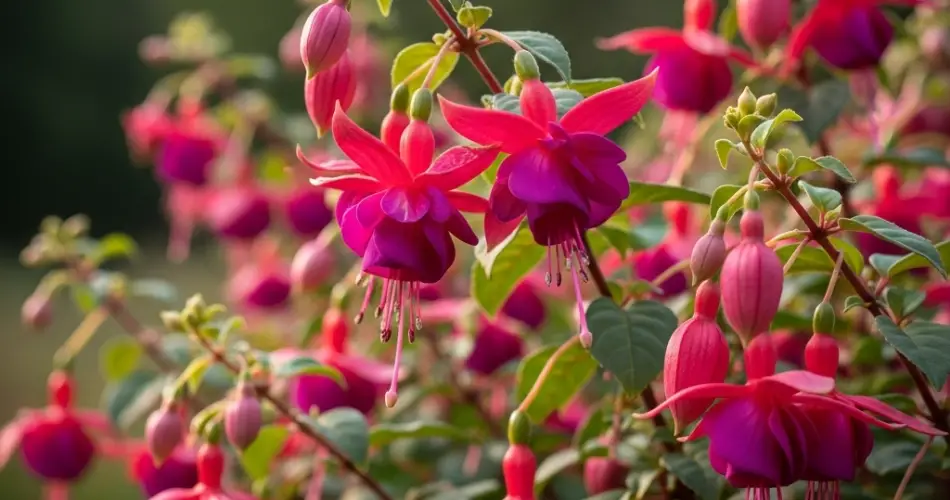
Fuchsia, often called the Queen’s Earrings due to its graceful, dangling blossoms resembling elegant jewelry, is a beloved ornamental plant prized for its vibrant flowers and delicate beauty. This plant adds charm and color to indoor spaces, making it a favorite among houseplant enthusiasts. If you want to bring a touch of floral elegance into your home, understanding how to properly care for fuchsia is key. Here’s a detailed guide to growing and maintaining healthy, flowering fuchsias indoors.
About Fuchsia: The Queen’s Earrings
Fuchsia plants belong to the genus Fuchsia, consisting of over 100 species native to Central and South America and parts of New Zealand. Known for their distinctive bell-shaped flowers that hang like earrings, fuchsias come in various colors—ranging from rich reds and purples to pinks and whites—and often have a two-tone look that adds to their visual appeal.
Indoor fuchsias, while adaptable, require some specific care conditions to thrive and bloom beautifully. With proper attention, these plants can bloom profusely for months, brightening any room.
Light Requirements
Fuchsias prefer bright, indirect light. Too much direct sunlight, especially during the hottest part of the day, can scorch their delicate leaves and flowers. Placing your plant near an east- or north-facing window is ideal. If your indoor light is limited, consider supplementing with fluorescent or LED grow lights to provide adequate illumination.
Lack of sufficient light often results in poor flowering and leggy growth. On the other hand, moderate filtered light encourages robust growth and prolific blooms.
Temperature and Humidity
Fuchsias are temperate plants that thrive in cooler indoor temperatures, ideally between 60°F and 70°F (15°C to 21°C). They do not fare well in excessive heat or dry conditions. Avoid placing them near heating vents or radiators, as dry air can cause leaf drop and inhibit blooming.
To mimic their natural humid environment, maintain moderate humidity levels around your plant. This can be achieved by:
-
Using a humidity tray filled with water and pebbles under the pot.
-
Regular misting of leaves with water.
-
Grouping plants together to create a micro-humid environment.
Watering Needs
Fuchsias like evenly moist soil but dislike waterlogging. Overwatering can lead to root rot, while underwatering causes wilting and leaf drop. Water your plant when the top inch of soil feels dry to the touch.
During the active growing and blooming season (spring through early fall), water more frequently. Reduce watering in winter when the plant enters dormancy or slows its growth. Always use pots with drainage holes to prevent excess water accumulation.
Soil and Fertilizing
A well-draining potting mix is essential for fuchsia plants. Use a light, rich soil blend—such as one formulated for flowering houseplants—that retains moisture but allows excess water to drain away.
Feed your fuchsia regularly during the growing season with a balanced liquid fertilizer, diluted to half strength, every two to four weeks. Fertilizing supports healthy leaf growth and encourages more flowers. Cease fertilizing in winter to allow the plant to rest.
Pruning and Maintenance
Regular pruning keeps your fuchsia plant compact, bushy, and full of blooms. Pinch back the tips of new shoots in spring to encourage branching. Remove any dead or yellowing leaves and spent flowers to maintain plant health and improve air circulation.
Fuchsias can be sensitive to pests like aphids, spider mites, and whiteflies. Inspect your plant regularly and treat infestations early with insecticidal soap or neem oil sprays.
Repotting
Repot your fuchsia every two years or when it becomes root-bound. Spring is the best time for repotting. Choose a container slightly larger than the current one and refresh the soil to provide nutrients and better drainage.
Flowering and Blooming
Fuchsias bloom profusely from late spring through fall. Their striking pendulous flowers attract hummingbirds and add a splash of color to indoor settings. For abundant blooms:
-
Ensure the plant receives sufficient indirect light.
-
Maintain consistent watering and fertilization.
-
Keep temperatures within the ideal range.
If your fuchsia stops blooming, it might be due to insufficient light, excessive heat, or nutrient deficiency.
Common Problems
-
Leaf drop: Often caused by sudden temperature changes, drafts, or improper watering.
-
Powdery mildew: A fungal disease that appears as white powder on leaves; prevent by ensuring good airflow and avoiding overhead watering.
-
Pests: Aphids, spider mites, and whiteflies can damage leaves and flowers.
Address these problems promptly to keep your plant healthy.
Why Choose Fuchsia as an Indoor Plant?
Fuchsia’s combination of delicate beauty, variety of colors, and relatively straightforward care makes it a rewarding choice for indoor gardeners. It’s perfect for brightening living rooms, sunrooms, or even offices, providing an elegant floral display that stands out.
Conclusion
With the right care, fuchsia (Queen’s Earrings) is a stunning indoor plant that can fill your home with graceful blooms and vibrant color for many months. By providing bright indirect light, consistent watering, adequate humidity, and regular pruning, you can enjoy the beauty and charm of this exquisite plant year-round.
Whether you’re a seasoned gardener or new to indoor plants, fuchsia offers a wonderful way to add elegance and life to your space. Start caring for your Queen’s Earrings today and watch it flourish into a radiant centerpiece in your home.


