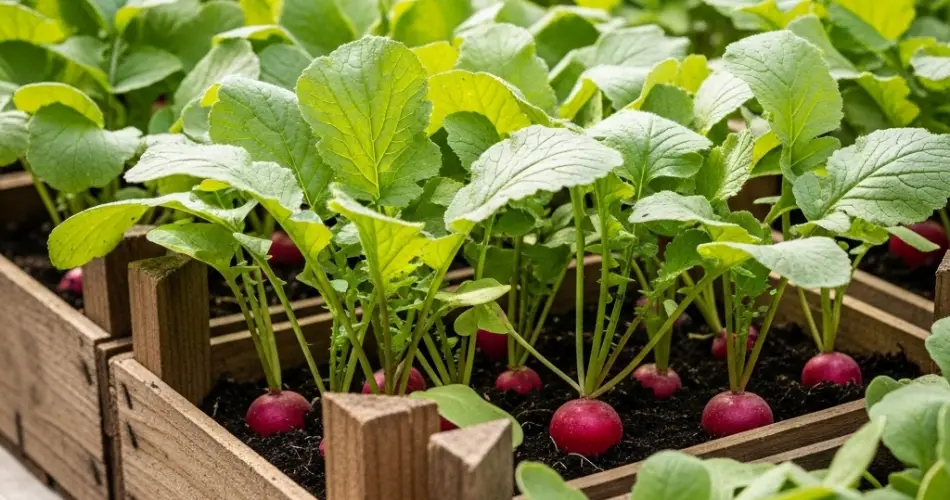
Radishes are one of the quickest and easiest vegetables to grow, making them perfect for beginner gardeners or anyone who wants fast results. Their crisp texture, peppery flavor, and vibrant colors make them a great addition to salads, pickles, and garnishes. The best part? You don’t need a traditional garden bed to grow them. With a few wooden crates, you can enjoy fresh radishes right from your backyard, balcony, or patio.
This method is not only space-saving but also practical, allowing you to control soil conditions and easily manage your crop. Whether you’re short on space or simply love the rustic charm of crate gardening, radishes are an excellent choice for a quick harvest.
Why Grow Radishes in Crates?
Radishes are compact plants that thrive in shallow containers, making them ideal for crate gardening. This method offers several benefits:
-
Perfect for small spaces — Even a single crate can produce enough radishes for multiple meals.
-
Better soil control — You can choose a soil mix that ensures proper drainage and nutrient balance.
-
Fewer pests — Crates elevate plants off the ground, reducing pest pressure.
-
Mobility — You can move crates to catch more sunlight or protect them from heavy rain.
-
Aesthetic appeal — Wooden crates bring a charming, rustic look to any outdoor space.
Choosing the Right Crate and Preparing It
Select a sturdy, untreated wooden crate at least 8 inches deep. This depth is enough for radish roots to develop fully without becoming cramped.
To prepare the crate:
-
Line the inside with landscape fabric or burlap to keep the soil from spilling out while still allowing water to drain.
-
Drill extra drainage holes in the base if needed. Good drainage is essential to prevent waterlogging.
-
Elevate the crate by placing it on bricks or wooden blocks. This helps airflow and keeps the crate’s bottom from rotting.
The Best Radish Varieties for Crate Gardening
While most radishes will grow well in crates, smaller and quicker-maturing types tend to perform best:
-
Cherry Belle — Round, red, and ready in about 22 days.
-
French Breakfast — Mild flavor and attractive pink-and-white coloring.
-
Easter Egg Mix — A colorful assortment that adds variety to your harvest.
-
Daikon — Long white radishes for cooler weather, though they require a deeper crate.
Creating the Ideal Soil Mix
Radishes prefer loose, well-draining soil. A heavy, compacted mix will produce misshapen roots. For best results, fill your crate with:
-
50% high-quality garden soil
-
30% compost for nutrition
-
20% coarse sand or perlite to improve drainage
Mix thoroughly before planting to ensure an even texture.
Planting Your Radishes
Radishes grow best when sown directly into the crate rather than transplanted.
Steps for planting:
-
Sow seeds ½ inch deep and about 1 inch apart.
-
Space rows about 4 inches apart to allow good airflow.
-
After sowing, water gently to settle the soil without displacing seeds.
For a continuous supply, plant new seeds every 10–14 days during the growing season.
Watering and Sunlight Needs
Radishes require consistent moisture for crisp, tender roots. Uneven watering can lead to woody or split radishes.
-
Watering — Keep soil evenly moist, checking daily in hot weather.
-
Sunlight — Place crates where they get 6–8 hours of sunlight per day. In extremely hot climates, light afternoon shade helps prevent premature bolting.
Fertilizing for Healthy Roots
Radishes don’t need heavy feeding, but balanced nutrition supports healthy growth. Avoid high-nitrogen fertilizers, as these encourage leafy tops instead of root development.
-
Mix a balanced organic fertilizer into the soil before planting.
-
If needed, give a light feed halfway through the growing cycle, focusing on phosphorus and potassium for root health.
Pest and Disease Prevention
While crate gardening reduces many ground pest problems, some issues can still occur:
-
Flea beetles — Protect young seedlings with row covers until they are established.
-
Root maggots — Rotate crops and avoid reusing the same soil repeatedly.
-
Fungal diseases — Prevent overcrowding and water at the base to keep leaves dry.
Harvesting Your Radishes
One of the best things about radishes is their quick turnaround.
-
Most varieties are ready to harvest in just 3–4 weeks.
-
Check size by gently brushing away soil from the top of a root. Harvest when it’s firm and about 1 inch across.
-
Avoid leaving radishes in the soil too long, as they can become pithy and overly spicy.
Regular harvesting also frees up space for replanting, keeping your supply constant.
Replanting for Continuous Harvests
After each harvest, loosen the soil, mix in some fresh compost, and sow a new batch of seeds. In mild climates, this method allows nearly year-round production. In cooler regions, focus on spring and autumn planting for the best flavor and texture.
End-of-Season Care
When the growing season ends, empty the crate, clean out any plant debris, and refresh the soil mix before storing or reusing it. If the crate is exposed to rain during winter, consider storing it under cover to extend its life.
Final Thoughts
Backyard crate gardening for radishes is one of the simplest ways to enjoy fresh, homegrown vegetables, even in a small space. With minimal equipment, quick-growing seeds, and easy maintenance, you can be harvesting crisp radishes in less than a month. Whether you enjoy them raw, roasted, or pickled, crate-grown radishes bring flavor, freshness, and satisfaction straight to your table.


