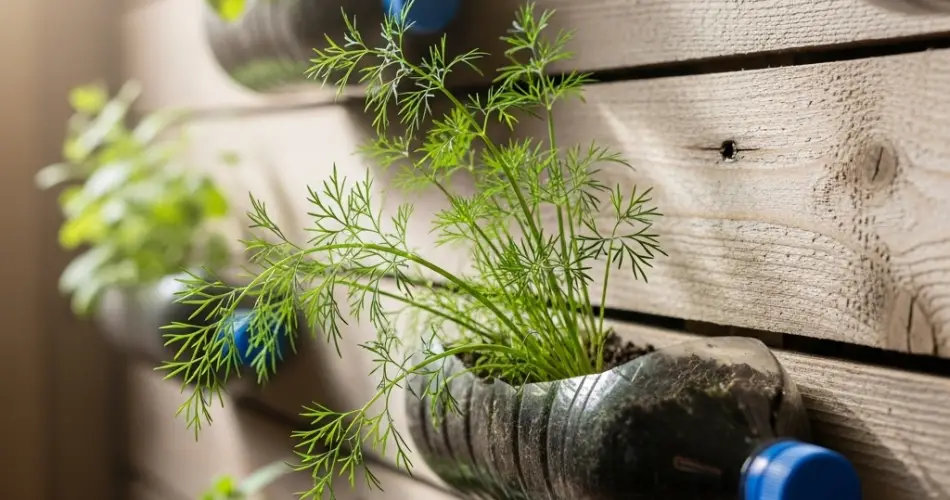
Dill is a fragrant and flavorful herb that’s valued in kitchens around the world. Its delicate, feathery leaves bring a fresh burst of flavor to salads, seafood dishes, soups, and pickles. Traditionally grown in open garden beds, dill also adapts beautifully to vertical gardening—particularly when planted in recycled plastic bottles.
This method is perfect for gardeners who want to make the most of limited space, reduce waste, and keep fresh herbs within easy reach. With a little creativity, you can transform an unused wall or fence into a lush, productive dill garden that’s as attractive as it is functional.
Why Grow Dill in Bottles?
A vertical bottle garden offers several benefits for growing dill:
-
Space Saving: Perfect for balconies, patios, and compact backyards.
-
Eco-Friendly: Reuses plastic bottles that might otherwise end up in landfills.
-
Convenience: Elevates plants to an accessible height for easy care and harvesting.
-
Aesthetic Appeal: Creates a green, living wall that adds beauty to your home.
Dill thrives in full sun and well-drained soil, making it an ideal candidate for a bottle-based planting system.
Materials You’ll Need
Gather the following before starting your project:
-
Large plastic bottles (1.5–2 liters recommended)
-
Scissors or a utility knife
-
Drill with a small bit
-
Sturdy frame, wall-mounted rack, or wire mesh for support
-
Potting mix formulated for herbs
-
Dill seeds or seedlings
-
Small pebbles or gravel for drainage
-
Screws, nails, or zip ties for mounting
Step-by-Step Instructions
1. Prepare the Bottles
Wash each bottle thoroughly and remove any labels. Cut an opening along one side large enough to plant in but small enough to hold soil securely. Keep the bottle caps on and drill 2–3 drainage holes into them.
2. Add a Drainage Layer
Place a small layer of pebbles or gravel at the bottom of each bottle to prevent water from sitting around the roots.
3. Fill with Soil
Use a light, well-draining potting mix. Dill prefers soil that isn’t overly rich—too much fertilizer can cause it to grow tall and weak instead of producing healthy foliage.
4. Plant the Dill
If sowing seeds, sprinkle them thinly over the soil surface and cover lightly. Keep the soil consistently moist until germination, which usually takes 1–2 weeks. For seedlings, plant them at the same depth they were growing before.
5. Mount the Bottles
Secure each bottle horizontally to your support structure. Use screws through the base for wooden frames or zip ties for wire mesh. Arrange the bottles in neat rows or stagger them for a more dynamic look.
6. Water Carefully
Dill needs regular watering, but the soil should not be soggy. Check moisture levels often, especially in hot weather, as vertical gardens can dry out more quickly than ground-level beds.
Caring for Your Dill Bottle Garden
-
Sunlight: Place the garden where it gets at least 6 hours of direct sun each day.
-
Pruning: Harvest leaves regularly to encourage bushier growth. Remove flower heads if you want to prolong leaf production, but allow some to bloom if you’d like to collect seeds.
-
Fertilizing: Feed sparingly with a balanced, water-soluble fertilizer once a month.
-
Airflow: Keep enough space between bottles to allow good air circulation, which helps prevent disease.
Harvesting Tips
Fresh dill leaves are best picked in the morning, after the dew has dried but before the heat of the day. Use scissors to snip the leaves you need, taking no more than one-third of the plant at a time to ensure continued growth.
If you want dill seeds, allow some plants to flower. When the seed heads turn brown, cut them and place them upside down in a paper bag to dry. Once dry, shake out the seeds and store them in an airtight container.
Decorative and Functional Ideas
Your dill wall can be both practical and visually appealing:
-
Painted Bottles: Use non-toxic paint to add color or match your home décor.
-
Mixed Herb Display: Combine dill with parsley, basil, or cilantro for variety.
-
Rustic Wrapping: Wrap bottles in burlap or twine for a more natural look.
-
Labeling: Attach small chalkboard tags or painted wood labels to identify each herb.
Benefits Beyond the Kitchen
A vertical dill garden offers more than just culinary value:
-
Fresh Aroma: Dill’s gentle fragrance adds a refreshing scent to outdoor spaces.
-
Pollinator Attraction: Its flowers attract bees, butterflies, and other beneficial insects.
-
Sustainable Gardening: Reduces plastic waste while promoting homegrown food.
-
Educational Value: Great for teaching children about herbs and recycling.
Final Thoughts
Growing dill in a vertical garden made from recycled bottles is an inventive, sustainable, and space-efficient way to enjoy fresh herbs year-round. With just a few simple materials and some creativity, you can turn an unused wall into a fragrant, productive green space.
This project proves that gardening doesn’t require large plots of land—just a sunny spot, a few plastic bottles, and the desire to bring fresh flavors into your kitchen. In no time, you’ll be harvesting your own dill, straight from a living wall you built yourself.


