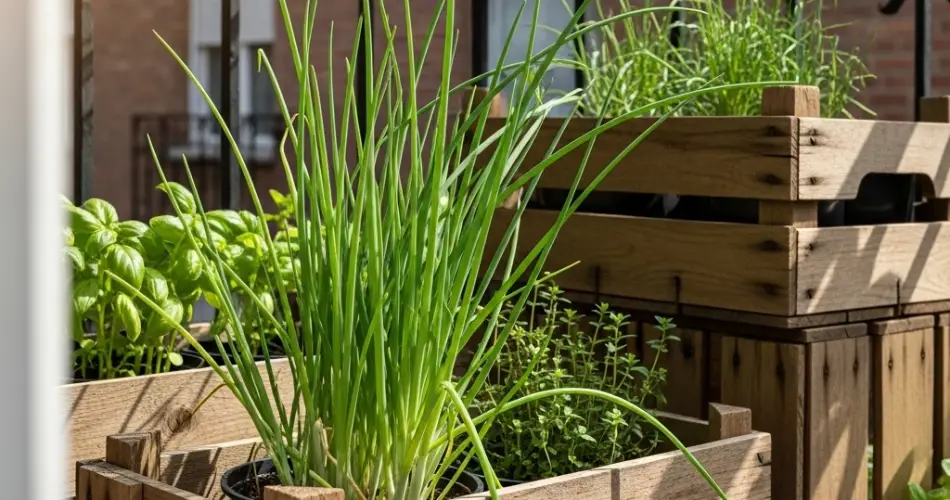
If you love cooking with fresh herbs, few are as rewarding and low-maintenance as chives. Their mild onion flavor, vibrant green leaves, and delicate purple flowers make them both useful in the kitchen and attractive on the balcony. By growing them in a crate garden, you can enjoy fresh chives year-round—even in a small apartment setting.
Crate gardening offers flexibility, style, and practicality. Whether you have a sunny balcony, rooftop nook, or a small patio, a simple wooden crate can become a thriving mini herb garden. With a little care, chives will provide a continuous harvest, turning your balcony into both a decorative and culinary asset.
Why Chives Suit Balcony Crate Gardening
Chives are perennial herbs, meaning they return year after year with proper care. They have compact growth habits, shallow root systems, and a tolerance for various conditions, making them ideal for crate planting.
A crate provides controlled growing conditions, good drainage, and easy mobility. If your balcony’s sunlight changes with the seasons, you can simply move the crate to a brighter spot. The rustic look of wooden crates also adds charm to any urban garden.
Choosing and Preparing the Crate
Size and depth
For chives, a crate with a depth of 8–10 inches is sufficient. They don’t have deep roots, so you can prioritize width over depth to grow more plants in a single container.
Material
Untreated wooden crates are best, as treated wood can leach harmful chemicals into the soil. Reclaimed fruit crates, wine boxes, or handmade planters work well.
Drainage
Good drainage is crucial. If the crate’s base is solid, drill several holes for water to escape. Add a layer of mesh or broken terracotta pieces over the holes to keep soil from washing out.
Lining
Line the inside with breathable fabric like burlap or landscape cloth to hold the soil in place while allowing water to drain freely.
Soil and Planting
Chives prefer well-draining soil enriched with organic matter. A blend of potting mix, compost, and a small amount of coarse sand or perlite works well. The soil should be fertile yet light to encourage root development and healthy foliage.
From seeds
Sow seeds 1/4 inch deep, spaced about 2 inches apart. Keep the soil evenly moist until germination, which typically takes 10–14 days.
From clumps
If you have access to mature chive plants, divide them into smaller sections and plant them directly into the crate. This method gives you a quicker harvest than starting from seeds.
Sunlight Requirements
Chives thrive with at least 6 hours of sunlight daily. On a balcony, position the crate where it receives morning and midday sun. In hotter climates, some afternoon shade can help prevent the leaves from scorching.
If natural light is limited, you can supplement with a small grow light to keep plants healthy year-round.
Caring for Chives in a Crate
Watering
Keep the soil consistently moist but never waterlogged. Check the top inch of soil—if it feels dry, it’s time to water.
Fertilizing
Feed with a diluted liquid fertilizer every 4–6 weeks during active growth. Compost tea or organic herb feed works well to maintain flavor and leaf production.
Pruning
Frequent harvesting is the best form of pruning. Cut leaves down to about 2 inches above the soil level to encourage new growth. Remove flower stalks if you want the plant to focus on producing leaves rather than seeds.
Pest and Disease Management
Chives are naturally resistant to many pests thanks to their onion-like aroma, but they can occasionally attract aphids or thrips. These can be managed by spraying with a gentle stream of water or using insecticidal soap.
Ensure good airflow around the crate to reduce the risk of fungal issues. Avoid overhead watering late in the day to prevent moisture from lingering on the leaves overnight.
Harvesting for Year-Round Use
Once your chives are established, you can harvest regularly throughout the growing season. Snip only what you need for each meal to keep the plants productive.
For year-round supply, consider moving the crate indoors during colder months or covering it with a frost cloth outdoors. Chives can also be grown entirely indoors near a sunny window in winter.
To store, you can freeze chopped chives in airtight containers or in ice cube trays with a little water for convenient use in soups, stews, and sauces.
Styling Your Balcony Crate Garden
A crate of chives is more than just functional—it can be a decorative feature. You might:
-
Paint the crate to match your balcony décor.
-
Pair chives with other herbs like parsley, basil, or mint in a multi-compartment crate.
-
Arrange several crates in a tiered display for a mini vertical herb garden.
Final Thoughts
Growing chives in a balcony crate garden is an easy, rewarding way to keep fresh herbs at your fingertips all year long. With minimal care, your plants will keep producing, adding freshness and flavor to countless dishes.
From the first tender shoots in spring to the last harvest before winter, a crate garden offers both practicality and charm, proving that you don’t need a large outdoor space to enjoy the pleasures of homegrown herbs.


