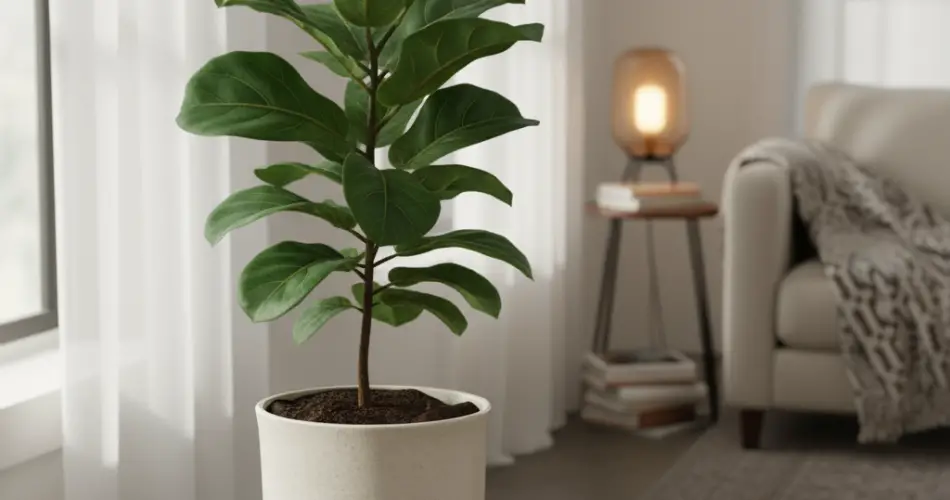
The Fiddle Leaf Fig (Ficus lyrata) is one of the most iconic houseplants of modern interiors. With its large, violin-shaped leaves and striking upright form, it adds elegance and drama to living rooms, offices, and lobbies. But behind its beauty lies a reputation for being finicky. Many owners struggle with dropping leaves, brown spots, or stunted growth—and more often than not, improper light is the culprit.
Understanding the Fiddle Leaf Fig’s light requirements is essential to helping it thrive indoors. With the right balance, this tropical plant can grow into a stunning focal point that remains lush and healthy for years.
Native Habitat: A Clue to Light Needs
The Fiddle Leaf Fig comes from the tropical rainforests of West Africa, where it grows as a tall tree under the canopy. In this natural environment, it receives abundant bright light filtered through taller trees. It rarely experiences deep shade, nor is it exposed to prolonged harsh sun. This explains why indoors it craves bright, indirect light and struggles in darker corners.
Ideal Indoor Light Conditions
For healthy growth, a Fiddle Leaf Fig needs bright, indirect light for at least 6–8 hours a day. It thrives near large windows that provide consistent natural light without direct exposure to scorching rays.
Best window placements include:
-
East-facing windows: Gentle morning sunlight is perfect for the plant.
-
South-facing windows: Provide abundant light, but protect with sheer curtains to diffuse the strong rays.
-
West-facing windows: Afternoon light can be intense; place the plant a few feet back to avoid leaf burn.
-
North-facing windows: Often too dim, leading to weak growth, unless supplemented with artificial lighting.
Direct vs. Indirect Light
-
Bright Indirect Light (Preferred): Keeps leaves glossy and vibrant while supporting steady growth.
-
Direct Light: One to two hours of soft morning sun is usually safe, but harsh midday or afternoon sun may cause scorched, brown patches on leaves.
-
Low Light: The plant survives temporarily but will not thrive. Leaves may yellow, drop, or grow small and sparse.
Signs of Incorrect Lighting
The Fiddle Leaf Fig is sensitive and quickly shows signs when its light needs aren’t met:
-
Too Little Light: Slow or no growth, yellowing leaves, lower leaf drop, or legginess as it stretches toward light sources.
-
Too Much Direct Sun: Crispy brown spots, faded patches, or scorched leaves.
-
Ideal Light: Upright stems, large healthy leaves, and consistent new growth during the growing season.
Supplementing with Artificial Light
For homes or offices with limited natural light, artificial grow lights are a practical solution. Full-spectrum LED grow lights replicate the wavelengths of natural sunlight and help maintain steady growth. Place lights 12–18 inches above the plant, providing 8–12 hours of exposure daily.
Artificial lighting is particularly useful in:
-
North-facing rooms.
-
Winter months when daylight hours are shorter.
-
Urban apartments where tall buildings block sunlight.
Outdoor Light for Fiddle Leaf Figs
If your climate allows, moving your Fiddle Leaf Fig outdoors during warm months can boost growth. Place it in a spot with bright, filtered light, such as under a covered patio or beneath taller trees. Avoid sudden exposure to direct sun—plants adapted to indoor light will scorch if moved outdoors too quickly. Always acclimate gradually, starting with shaded conditions and slowly increasing light exposure over one to two weeks.
Seasonal Light Adjustments
The intensity and duration of sunlight change with the seasons, and your plant’s placement may need adjustment:
-
Spring and Summer: More natural light is available; growth is active. Consider rotating the plant every few weeks for even exposure.
-
Autumn and Winter: Shorter days mean less light. Move closer to a window or use a grow light to compensate.
Placement Tips for Healthy Growth
-
Rotate your plant every few weeks so all sides receive even light.
-
Avoid drafty spots near doors or air vents, as sudden temperature shifts add stress.
-
Pair proper light with consistent watering and humidity for best results.
Final Thoughts
The Fiddle Leaf Fig’s reputation for fussiness often comes down to its light needs. While it is not a plant that tolerates dim corners, it thrives when placed in bright, indirect light that mimics its natural rainforest habitat. A few hours of gentle morning sun can be beneficial, but harsh direct rays should be avoided.
If you can provide at least 6–8 hours of steady light—whether through windows, grow lights, or a combination—you’ll be rewarded with a bold, lush plant that continues to put out new leaves and enhance your indoor space.
With the right lighting setup, your Fiddle Leaf Fig can grow into the statement plant you envisioned—healthy, vibrant, and truly worthy of its reputation as a star of modern indoor gardening.


