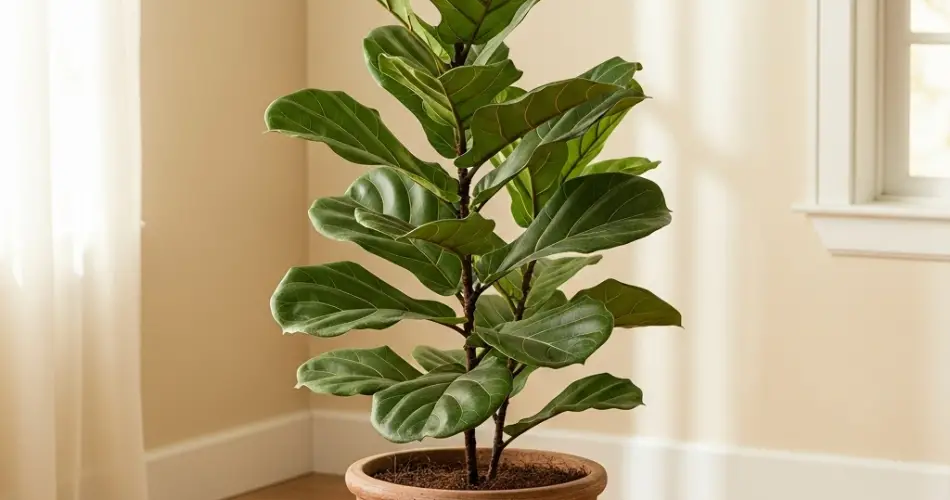
The fiddle leaf fig (Ficus lyrata) is a stunning houseplant, known for its large, violin-shaped leaves and impressive height. But while it’s visually captivating, this plant has a reputation for being a bit fussy—especially when grown in pots. Leaf drop is a common concern, but with the right care, your fiddle leaf fig can go from shedding leaves to thriving with lush, green growth. Here’s how to make that transition and keep your potted fiddle leaf fig happy and healthy.
Understanding Leaf Drop: Why It Happens
Leaf drop in fiddle leaf figs is usually a sign that something in its environment isn’t quite right. It can be caused by several stressors:
-
Overwatering or underwatering
-
Sudden changes in light or temperature
-
Root-bound conditions
-
Poor drainage or heavy soil
-
Lack of humidity
Each of these can signal the plant to shed its lower leaves to conserve energy. The good news? If you catch the problem early and correct it, your plant can bounce back.
Start with the Right Pot
Choosing an appropriate container is crucial for the overall health of your fiddle leaf fig. The pot should:
-
Have proper drainage holes to prevent water from pooling at the bottom.
-
Be only 2–4 inches larger in diameter than the root ball to avoid overwatering issues caused by excess soil.
-
Be stable and sturdy, especially if your plant is tall, to prevent tipping.
Materials like terracotta allow the soil to breathe, while heavier pots like ceramic or concrete offer better support for large plants.
Use Well-Draining Soil
A fiddle leaf fig hates sitting in soggy soil. Use a mix specifically designed for indoor plants or make your own by combining:
-
2 parts indoor potting mix
-
1 part perlite
-
1 part pine bark or orchid bark
This blend encourages good aeration and allows excess water to drain, reducing the risk of root rot.
Establish a Watering Routine
Inconsistent watering is a leading cause of stress and leaf drop. Establish a regular routine based on your home’s environment:
-
Water only when the top 2–3 inches of soil are dry.
-
Stick your finger into the soil or use a moisture meter to check.
-
Water thoroughly, allowing excess to drain out of the bottom.
-
Empty saucers to avoid letting the roots sit in standing water.
During the growing season (spring and summer), you may water more often. In winter, reduce frequency as growth slows.
Light Requirements: Bright but Indirect
Fiddle leaf figs love bright, indirect light. Too little light can lead to leaf yellowing and drop, while too much direct sun can scorch the leaves.
-
Place your plant near a south- or east-facing window with filtered light.
-
Avoid moving the plant too often, as it dislikes frequent environmental changes.
-
If you must move it, do so gradually over several days to allow it to adjust.
Maintain Stable Conditions
Fiddle leaf figs prefer stability in their environment. Drastic changes can cause shock and leaf loss.
-
Keep temperatures between 65–75°F (18–24°C).
-
Avoid cold drafts, air conditioning vents, and heaters.
-
Increase humidity, especially in dry climates or winter months. Aim for 40–60% humidity. You can use a humidifier, a pebble tray, or group plants together to raise humidity levels.
Watch for Pests and Diseases
Common pests like spider mites, scale, or mealybugs can sap your fiddle leaf fig’s energy and cause it to shed leaves. Inspect the leaves regularly for signs like:
-
Tiny webs
-
Sticky residue
-
White cotton-like masses
If found, treat with neem oil or insecticidal soap, and isolate the plant if needed to prevent the spread.
Pruning and Encouraging Growth
Removing damaged or yellowing leaves not only keeps the plant looking tidy but also encourages new growth.
-
Use sterilized pruning shears.
-
Cut just above a node (the spot where a leaf or branch grows).
-
Consider pruning the top of a leggy plant to encourage branching.
New leaves are a sign that the plant is recovering and adjusting well.
Repotting: Give Roots Room to Breathe
Every 1–2 years, your fiddle leaf fig may outgrow its pot.
-
Repot in spring or early summer, when it’s actively growing.
-
Gently loosen any circling roots.
-
Move to a pot just slightly larger, and refresh the soil.
Repotting gives the plant room to expand and improves overall vigor.
Final Thoughts: From Droop to Bloom
Seeing your fiddle leaf fig drop its leaves can be discouraging, but it’s often a sign that it needs a few adjustments. By providing the right pot, soil, light, and consistent care, your plant can bounce back beautifully. In time, it’ll reward you with fresh, glossy leaves and stand tall as a thriving, dramatic centerpiece in your home.


