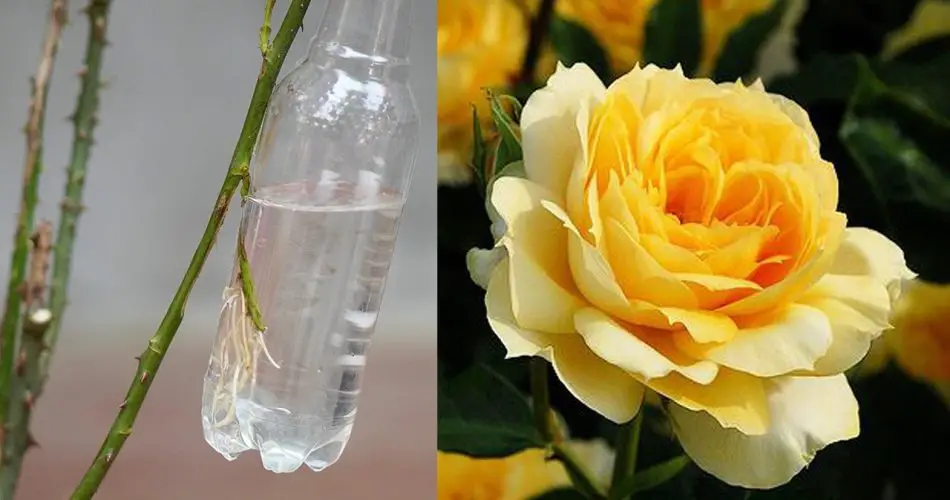
Do you have a beautiful rose bush in your garden and want to propagate new plants with ease? You’ll be delighted to learn that you can effortlessly extract rose branches using just water! In this guide, we’ll walk you through the simple steps to propagate rose branches successfully using water, allowing you to expand your garden with minimal effort.
Materials You’ll Need:
- Healthy rose branches or stems
- Clean, sharp pruning shears
- Clear glass or jar
- Fresh water
- Optional: Rooting hormone (if desired)
Step-by-Step Instructions:
- Select Healthy Rose Branches: Choose strong, healthy rose branches from your existing rose bush. Look for branches that are free from disease or damage and have several leaf nodes along their length.
- Prepare the Branches: Using sharp pruning shears, cut the selected rose branches at a 45-degree angle, ensuring each cutting is 6 to 8 inches long. Remove any flowers or buds from the lower portion of the cutting to encourage root growth.
- Fill a Clear Glass or Jar with Water: Pour fresh water into a clear glass or jar, filling it to a depth of 2 to 3 inches. The clear container allows you to monitor the development of roots over time.
- Place the Rose Cuttings in Water: Insert the cut end of each rose cutting into the water-filled container, ensuring that at least two leaf nodes are submerged. Arrange the cuttings in the container without overcrowding to allow ample space for root development.
- Change the Water Regularly: To prevent the growth of algae and ensure the health of the rose cuttings, change the water in the container every few days. Fresh, clean water helps maintain optimal conditions for root development.
- Provide Indirect Sunlight: Place the container of rose cuttings in a location with indirect sunlight. Avoid placing it in direct sunlight, as this can cause the water to heat up and potentially harm the cuttings.
- Monitor Root Growth: Over the next few weeks, monitor the rose cuttings regularly for signs of root growth. You should start to see tiny white roots emerging from the submerged nodes within a few weeks.
- Transplanting: Once the rose cuttings have developed a healthy root system, carefully transplant them into pots filled with well-draining potting soil. Water the newly transplanted cuttings thoroughly and place them in a sunny location to continue growing.
Optional: Use Rooting Hormone: If you want to speed up the rooting process, you can dip the cut ends of the rose branches in rooting hormone before placing them in water. Rooting hormone helps stimulate root growth and can increase the success rate of propagation.
With these easy-to-follow steps, you can effortlessly extract rose branches using water and propagate new rose plants to enhance your garden’s beauty. Enjoy the satisfaction of watching your cuttings develop into healthy, thriving rose bushes, and share the joy of gardening with friends and family. Happy propagating!