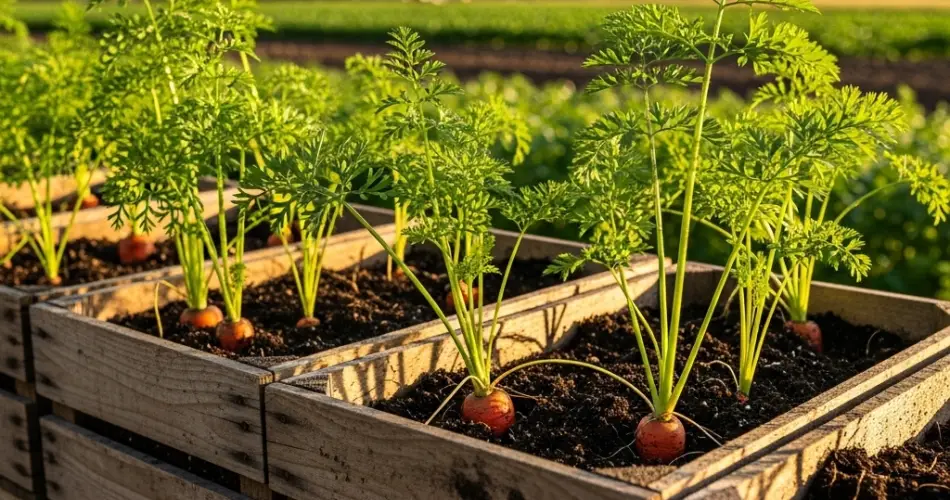
Carrots are among the easiest and most satisfying vegetables to grow, offering a crisp, sweet flavor and a boost of vitamins straight from your own backyard. While traditional garden beds are a common choice, using wooden crates can make carrot growing simpler, cleaner, and more space-efficient. This method is perfect for small backyards, patios, or balconies and allows you to control soil quality for consistently straight, healthy roots.
Why Grow Carrots in Wooden Crates?
Carrots thrive in loose, well-drained soil, free from stones and compacted clumps. Many gardeners struggle with poor soil conditions, but wooden crates solve that problem by creating a controlled growing environment.
Advantages of crate gardening for carrots include:
-
Custom soil mix for perfect root development.
-
Better drainage, reducing the risk of root rot.
-
Mobility—move crates to follow the sun or avoid pests.
-
Space efficiency, ideal for small gardens.
-
Fewer weeds, as the crate is an isolated growing area.
Selecting the Right Crate
Depth is critical for carrot growth. Choose a sturdy wooden crate that is at least 12 to 16 inches deep to allow roots to develop fully. Make sure the wood is untreated to avoid chemicals leaching into the soil.
Preparing your crate:
-
Check drainage—if there are no holes, drill several in the bottom.
-
Line with fabric such as burlap or landscape cloth to keep soil in while letting water drain out.
-
Elevate the crate on bricks or wood blocks to improve airflow and prevent rotting.
Choosing Carrot Varieties
Not all carrots are the same, and the depth of your crate will influence which type grows best.
-
Deep crates (14–16 inches): Nantes, Imperator, or Danvers varieties produce long, straight roots.
-
Medium crates (12 inches): Chantenay carrots perform well and develop sturdy roots.
-
Shallow crates (under 12 inches): Paris Market and Thumbelina are short and round, perfect for compact spaces.
The Ideal Soil Mix
Carrots need loose soil to grow evenly. A heavy or clumpy mix can cause twisted or forked roots.
A recommended mix for crate carrot gardening:
-
50% high-quality garden soil
-
40% well-sifted compost
-
10% coarse sand or perlite for aeration
Before filling the crate, sift the soil to remove any stones or large debris. This ensures smooth root development.
Planting Your Carrots
Carrots should be direct-sown into their growing container because transplanting can damage their delicate taproots.
Planting steps:
-
Sow seeds ¼ inch deep, spaced about 1 inch apart.
-
If desired, mix seeds with fine sand before planting for even distribution.
-
Keep the soil evenly moist during the 1–3 week germination period.
Once seedlings are a few inches tall, thin them to about 2 inches apart to give each root space to grow.
Watering and Sun Requirements
Carrots need consistent moisture for sweet, tender roots.
-
Water deeply to encourage strong root growth.
-
Avoid waterlogging, which can cause rot.
-
Position crates in an area with at least 6–8 hours of direct sunlight daily.
Uneven watering may cause carrots to split, so aim for a steady watering routine.
Fertilizing for Healthy Roots
Carrots benefit from nutrients, but too much nitrogen leads to leafy tops instead of large roots.
-
Before planting, mix in a low-nitrogen, balanced fertilizer.
-
Halfway through the growing cycle, add compost or a root-crop fertilizer to support root development.
Pest and Disease Prevention
While elevated crates reduce some pest problems, there are still a few to watch for:
-
Carrot rust flies: The height of the crate can help deter them, but using fine mesh covers adds extra protection.
-
Aphids: Remove them with a blast of water or a neem oil spray.
-
Fungal issues: Ensure good airflow and avoid overhead watering.
Harvesting Your Carrots
Carrots are usually ready 60–90 days after planting, depending on variety.
-
Gently brush away the topsoil to check root size.
-
Pull carrots when they are firm and brightly colored.
-
Loosen the soil first to avoid breaking roots during harvest.
For extra sweetness, wait until after a light frost, as cool temperatures convert starches into sugars.
Continuous Carrot Supply
If your climate allows, you can have fresh carrots nearly year-round. Plant a new crate every 3–4 weeks during the growing season for a steady harvest. Refresh or rotate the soil between plantings to maintain fertility.
End-of-Season Care
After your final harvest:
-
Empty the crate and compost the used soil.
-
Clean the crate thoroughly to remove any pests or fungi.
-
Store it in a dry area until the next planting season.
Final Thoughts
Growing carrots in wooden crates is a practical, space-saving, and rewarding gardening method. It allows you to avoid poor ground soil, reduce pests, and create the perfect growing environment for straight, sweet, and colorful carrots. Whether you have a large backyard or just a sunny balcony, this method makes it easy to enjoy homegrown carrots whenever you like.


