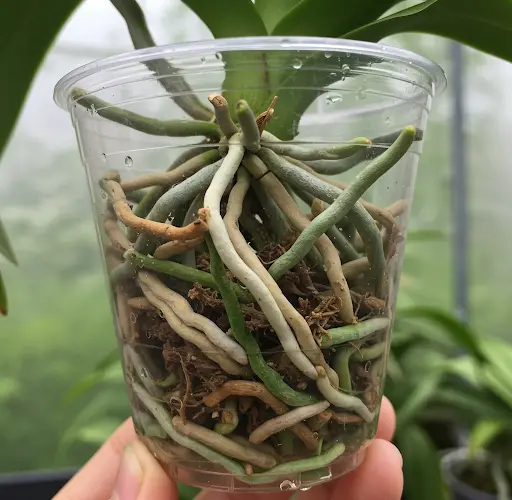
Orchid care is a delicate process that requires attention to various factors, including temperature, humidity, and light. Today, I want to share a crucial technique that can help your orchids produce abundant flower branches. If you’ve noticed that your orchid is growing plenty of roots and leaves but not producing any flower branches, this method can make a significant difference. By applying this technique, you can encourage your orchids to bloom profusely, sometimes even producing double flower branches.
One of the most essential factors in encouraging orchids to bloom is altering their environmental conditions. Orchids that remain in the same temperature and humidity for extended periods may stop producing flower branches. To stimulate flowering, you need to create a seasonal transition effect for your orchids. This means changing the air around them, which signals to the plant that it is time to bloom.
Understanding Air Exchange for Orchids
Air exchange is a critical practice for orchids that have not produced flower branches for one or two years despite healthy root and leaf growth. By exposing your orchids to a different temperature range, you encourage them to enter the blooming phase. However, it is crucial to perform this process correctly to avoid harming the plant.
The ideal temperature range for air exchange is between 12 to 18 degrees Celsius (53-64 degrees Fahrenheit) at night. These conditions help the orchid sense the change of seasons and prepare for flowering. However, if the temperature drops below 10 degrees Celsius (50 degrees Fahrenheit), orchids may suffer from cold damage or freezing.
Additionally, only healthy orchids should undergo air exchange. A healthy orchid is one that is actively producing new roots and leaves. If your orchid is sick or weak, this method may not be effective.
How to Perform Air Exchange
I applied air exchange to some of my orchids at the end of September. At the time, they had no flower branches. Within two months, the results were remarkable—new leaves had grown, and flower branches had developed. Out of the seven orchids I placed outside, four produced double flower branches, while the remaining ones grew a single flower branch. Some even bloomed from their old flower nodes.
To implement air exchange, follow these steps:
- Choose the Right Time: Look for a period when night temperatures remain between 12-18 degrees Celsius for at least a few consecutive days.
- Place Orchids Outdoors: Keep your orchids outside for four nights and up to five days to expose them to the cooler temperatures.
- Avoid Wind and Direct Sunlight: Although temperatures may be ideal, avoid exposing orchids to strong winds or harsh sunlight. Wind can dry out the plant, and intense sunlight can burn the leaves.
- Use a Sheltered Area: If you have a balcony that gets gentle morning sunlight, place your orchids there. If you lack an outdoor space, open a window to allow fresh air in.
If temperatures are too cold at night, you can adjust the process:
- Keep your orchids outside only during the day and bring them inside at night.
- If you live in a region with consistently cold temperatures, place your orchids in the coolest room of your home and open the window occasionally for fresh air.
Post-Air Exchange Care
After five days, bring your orchids inside and place them near a window that receives plenty of light but not direct sunlight. This placement is crucial for continued growth and blooming. At this stage, you can support the orchid’s development with natural fertilizers like banana peel water and eggshell water. Additionally, vitamin supplements can further aid the blooming process.
Observing Results
Typically, after one to two weeks, orchids begin to produce flower branches. However, if your orchid has not responded within two weeks, you can repeat the air exchange process. Place the orchid outside for another four nights and five days, then bring it back inside. This second round often triggers blooming.
From my experience, some orchids produced flower branches within one week of the first application. Others required a second round of air exchange, and shortly afterward, they developed double flower branches. By following this method, I now have no orchids left without flowers.
Final Thoughts
I wanted to share this technique because many people struggle with getting their orchids to bloom. If your orchid has been producing only leaves and roots without flowering, air exchange is an effective method to trigger blooming.
If you found this information helpful, I encourage you to try this method and observe the results. Additionally, providing proper nutrition and ensuring adequate lighting will support the health and blooming cycle of your orchids. By following these steps, your orchids can thrive and bloom beautifully, bringing vibrant colors and life to your home.


