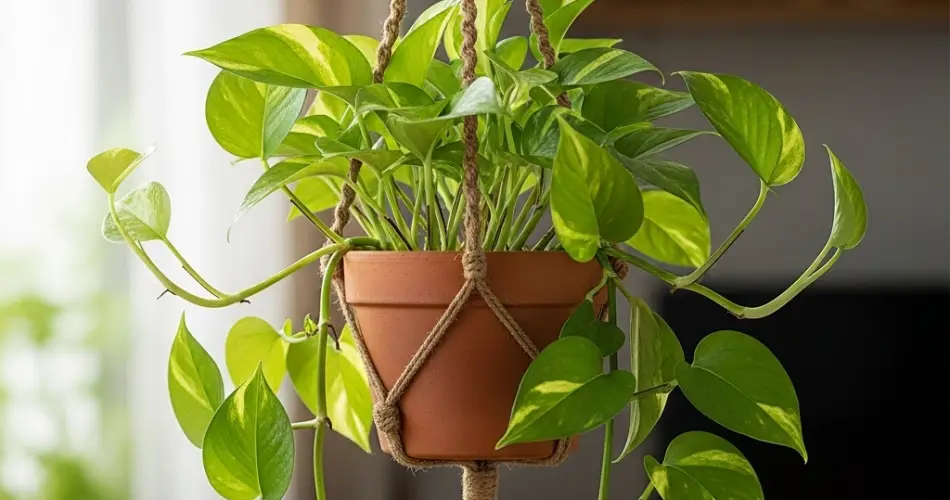
Pothos (Epipremnum aureum), also known as devil’s ivy, is one of the most popular and versatile houseplants, beloved for its trailing vines, vibrant green leaves, and ability to adapt to a wide range of growing conditions. When grown in hanging pots, pothos transforms into a stunning, cascading display that can brighten up any indoor or shaded outdoor space.
Whether you live in a small apartment, a spacious home, or have a balcony in need of greenery, a hanging pothos garden is both practical and decorative. With the right setup, care, and container choice, you can enjoy a lush, flowing curtain of leaves year-round.
1. Why Choose Hanging Pots for Pothos?
Pothos naturally trails and climbs, making it perfect for vertical gardening. Hanging pots take advantage of this growth habit, allowing the vines to drape gracefully and create a living curtain. This setup not only saves space but also keeps the plants out of reach of pets and small children.
Hanging pots also give you creative flexibility—you can mix varieties like golden pothos, marble queen, and neon pothos in the same display for a colorful, textured look.
2. Selecting the Right Hanging Pots
When choosing hanging pots, both functionality and style matter. Your pots should:
-
Have drainage holes to prevent excess water from sitting at the bottom, which can cause root rot.
-
Be sturdy enough to support the plant’s growth over time.
-
Match your space’s aesthetic, whether rustic, modern, or minimalist.
Materials to consider:
-
Plastic: Lightweight and easy to hang, ideal for larger plants that may become heavy.
-
Ceramic: Adds a stylish touch, but heavier, so requires strong support.
-
Coconut coir baskets: Provide excellent aeration but dry out faster, requiring more frequent watering.
3. Preparing the Soil
Pothos thrives in light, well-draining soil. A good mix should retain enough moisture without becoming soggy. Use a blend of:
-
2 parts high-quality potting soil
-
1 part perlite or pumice for aeration
-
Optional: a small amount of coconut coir or peat moss to help with moisture retention
This combination encourages healthy root growth and keeps the plant safe from waterlogged conditions.
4. Planting Your Pothos
When planting in hanging pots:
-
Place a layer of gravel or small stones at the bottom for extra drainage.
-
Fill the pot halfway with your prepared soil mix.
-
Gently remove the pothos from its original container, loosen the roots, and position it in the center.
-
Add more soil around the roots, pressing lightly to secure the plant.
-
Water thoroughly until excess drains out, then allow it to dry slightly before watering again.
5. Positioning Your Hanging Pothos Garden
Pothos is adaptable but grows best in bright, indirect light. A spot near a window with filtered sunlight or under a shaded balcony roof is ideal. Direct sunlight can scorch the leaves, while low light will slow growth and cause less vibrant foliage.
Indoors, hanging your pothos near a curtain rod, ceiling hook, or wall bracket can create a dramatic effect. Outdoors, ensure they are protected from strong winds and harsh midday sun.
6. Watering and Feeding
One of the reasons pothos is so popular is its tolerance for occasional neglect. However, consistent care will make your hanging garden thrive.
-
Watering: Wait until the top 1–2 inches of soil are dry before watering. Reduce watering frequency in cooler months when growth slows.
-
Fertilizing: Feed monthly during the growing season (spring and summer) with a balanced liquid houseplant fertilizer, diluted to half strength. Skip fertilizing in winter.
7. Encouraging Lush Growth
To keep your hanging pothos looking full and vibrant:
-
Prune regularly to remove yellow leaves and encourage branching.
-
Pinch back vine tips to stimulate side shoots, making the plant bushier.
-
Rotate the pots every few weeks to ensure even light exposure and balanced growth.
If vines become too long, you can propagate cuttings in water or soil and replant them in the same pot to add density.
8. Maintenance and Long-Term Care
Dust can accumulate on pothos leaves, especially in indoor hanging arrangements. Wipe leaves gently with a damp cloth every few weeks to restore their shine and improve photosynthesis.
Check the pot’s weight and hanging hardware periodically to ensure safety, especially as the plant grows heavier. Replace worn hooks, chains, or cords to prevent accidents.
Repot every 2–3 years or when roots start circling the inside of the container. When repotting, choose a slightly larger pot to give the roots more space to grow.
Final Thoughts
A cascading pothos garden in hanging pots is a beautiful, low-maintenance way to bring greenery into your living space. With their trailing vines and resilient nature, pothos plants offer a natural elegance that works in nearly any setting.
By selecting the right containers, preparing well-draining soil, and providing consistent but minimal care, you can enjoy a lush display of foliage that continues to grow and thrive year after year. Whether you’re aiming for a single statement piece or an entire wall of greenery, hanging pothos gardens are both practical and visually stunning—perfect for any plant lover’s home.


