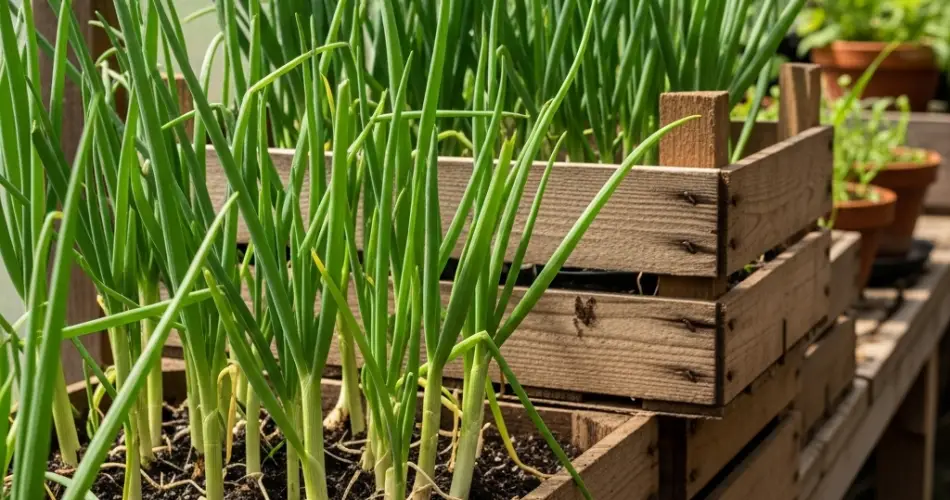
Urban gardening has made it easier than ever to grow fresh produce in tight spaces, and scallions—also known as spring onions or green onions—are a fantastic choice for crate gardening. These flavorful alliums grow quickly, take up very little space, and thrive in containers, making them ideal for balconies, patios, rooftops, and even sunny windowsills.
With a few recycled wooden crates and basic gardening supplies, you can grow a steady supply of scallions that elevate your cooking while adding a bit of greenery to your urban environment.
Why Choose Scallions for Urban Gardening?
Scallions are a perfect crop for urban dwellers. They’re compact, grow upright, and don’t require deep soil or elaborate setups. You can grow them in small crates, pots, or planter boxes—even a shallow drawer can work if it allows for good drainage.
Aside from their space-saving benefits, scallions grow quickly. Whether you’re using seeds or kitchen scraps, you’ll enjoy fresh harvests in just a few weeks. They’re also versatile in the kitchen, enhancing everything from stir-fries to soups, omelets, and salads.
Selecting the Right Crate for Growing
When choosing a crate for your scallion garden, go for shallow wooden or plastic boxes that are at least 6 inches deep. Wine crates, fruit crates, or recycled produce boxes work well. Drill or punch a few drainage holes in the bottom if they don’t already have them. If you’re placing the crate on a balcony or windowsill, adding a tray beneath it can help catch excess water.
Line the inside with breathable landscape fabric or old burlap to prevent soil loss while allowing water to drain freely.
Preparing the Ideal Soil Mix
Scallions grow best in loose, fertile, and well-draining soil. Create a mix using equal parts high-quality potting soil and compost. You can also add a small amount of perlite or coarse sand to improve aeration and drainage. Avoid using heavy garden soil, as it tends to compact in containers and restrict root growth.
Fill your crate nearly to the top, leaving an inch of space below the rim to make watering easier.
Starting Scallions from Seeds or Kitchen Scraps
There are two easy methods to grow scallions: from seed or from cut-off root bases.
From Seeds:
Sow scallion seeds about ¼ inch deep, spaced 1 inch apart. You can plant in rows or scatter them throughout the crate. Gently cover with soil, press lightly, and mist with water. Keep the soil consistently moist during germination, which usually takes 7 to 10 days.
From Scraps:
Cut off the white bulbous ends with the roots intact when using store-bought scallions. Place the cuttings root-side down in a jar of water for a few days until green shoots emerge. Once the roots are longer and healthier, transplant them into your crate with the tops exposed above the soil.
Both methods can be combined for a quick start and a longer harvesting period.
Sunlight and Watering Needs
Scallions need at least 4 to 6 hours of sunlight a day. Place your crate in a sunny spot—balcony railings, south-facing windows, or patio corners are ideal. If sunlight is limited, consider using a grow light.
Water regularly to keep the soil evenly moist but not soggy. Shallow crates may dry out faster, especially in warmer weather, so check daily. A light mulch layer of straw or dried leaves can help retain moisture and keep the roots cool.
Fertilizing and Care Tips
Scallions are light feeders. Before planting, enrich your soil with compost or a balanced organic fertilizer. Once they begin growing, you can feed them every two to three weeks with a diluted liquid fertilizer or compost tea.
Thin the seedlings if they grow too close together, allowing about 1 inch of space between each plant for healthy growth. Remove any weeds that may appear, as they can compete for nutrients and space in small containers.
Harvesting and Regrowing
Scallions are ready for harvest in about 6 to 8 weeks from seed, or in 2 to 3 weeks if you’re regrowing from scraps. Use scissors or a knife to snip off the green tops just above the white base, leaving the roots intact.
If you continue watering and caring for the plant, the scallions will regrow. You can typically harvest from the same plants two or three times before they lose vigor. Replant new ones to keep a continuous cycle going.
Troubleshooting and Common Issues
Scallions are generally hardy, but watch out for:
-
Yellowing leaves – may indicate nutrient deficiency or overwatering. Adjust feeding and check soil moisture.
-
Fungal issues – improve air circulation and avoid watering the foliage directly.
-
Pests – aphids may appear in humid conditions. A light spray of neem oil or soapy water usually handles them effectively.
Fresh Flavor at Your Fingertips
Growing scallions in crates is an excellent way to bring freshness to your meals while making the most of limited urban space. These compact, flavorful greens require little maintenance and offer quick results, making them perfect for both beginner gardeners and seasoned city growers.
With just a few supplies and a bit of care, your crate-grown scallions will become a go-to source of flavor and a charming addition to your balcony garden.


