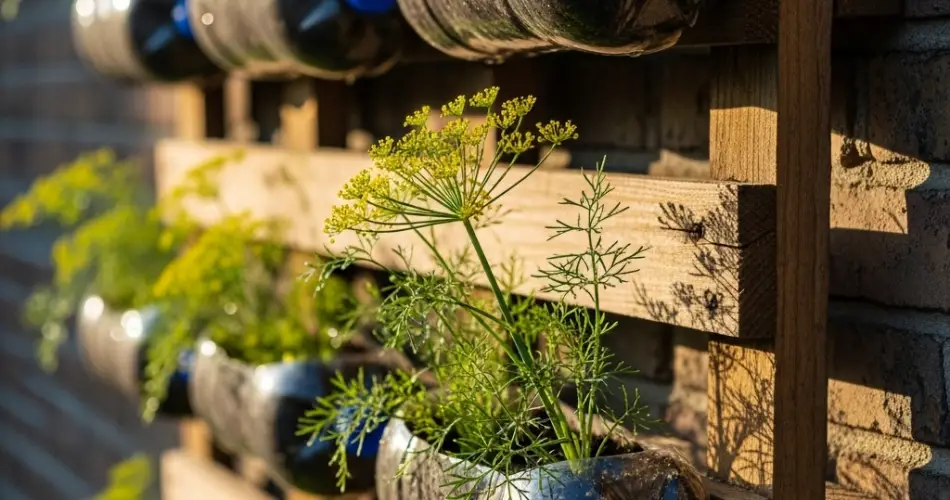
For urban gardeners or anyone with limited outdoor space, growing herbs vertically is a game-changer. Dill, with its aromatic foliage and feathery texture, is especially suitable for wall gardens. By repurposing plastic bottles, you can create a compact, sustainable, and productive vertical dill garden. This method maximizes space, reduces waste, and provides fresh herbs year-round. This guide explains how to set up and maintain a bottle wall garden for dill.
Choosing the Right Bottles
Plastic bottles are perfect for vertical gardening because they are lightweight, durable, and easily available. Standard 1- or 2-liter bottles work best, though smaller bottles can be used depending on the wall space. Make sure the bottles are clean and free of labels. Decorating the bottles is optional; painting them in bright colors or using clear bottles adds visual appeal. If your garden is outdoors, UV-resistant paint helps prevent fading and brittleness.
Preparing Bottles for Planting
Proper preparation is key to healthy plants. Cut a planting opening in the side of each bottle. Horizontal cuts create a trough suitable for soil and seedlings, while vertical cuts allow for staggered or tiered planting. Drill small drainage holes at the bottom of each bottle to prevent waterlogging, which can harm dill roots. Properly prepared bottles ensure healthy soil conditions and allow water to drain freely.
Choosing Dill Varieties
Dill is a versatile herb that thrives in vertical gardens. Standard dill (Anethum graveolens) and fernleaf dill are both suitable options. Standard dill produces upright stems and aromatic leaves, while fernleaf dill is more delicate and decorative. Choose a variety that suits your growing conditions and the available sunlight. Dill’s compact growth habit makes it ideal for staggered bottle arrangements on a wall.
Planting Dill in Bottles
Fill each prepared bottle with a well-draining potting mix. Dill prefers loose, nutrient-rich soil that is not overly compacted. Plant seeds or seedlings gently, covering the roots with soil. Water lightly after planting to help the plants settle. Dill germinates quickly, often sprouting within a week under optimal conditions. Regular observation during this stage ensures seedlings are healthy and evenly spaced.
Designing the Bottle Wall Layout
The layout of your bottle wall impacts both aesthetics and plant health. A staggered or grid pattern works best to ensure each bottle receives adequate sunlight and air circulation. If the wall is outdoors, placing the bottles closer together can protect the plants from strong winds. Experiment with color patterns and positioning to create an attractive, dynamic vertical garden.
Mounting Bottles on the Wall
Securing bottles properly is essential for safety and plant stability. Use sturdy hooks, brackets, or wire mesh to attach each bottle firmly to the wall. Ensure the bottles are mounted at a slight forward angle to promote proper drainage. Indoor walls may allow lighter mounting systems such as adhesive hooks or small racks, while outdoor walls require stronger, weather-resistant supports.
Caring for Your Dill Wall Garden
Dill requires minimal care but consistent attention to thrive in vertical planters. It prefers full sunlight, ideally six hours a day. Water moderately, allowing the soil to dry slightly between watering sessions to avoid root rot. Fertilize sparingly with a balanced, slow-release fertilizer or an organic option like compost tea. Regular pruning of stems encourages bushier growth and prolongs the harvesting period. When harvesting, avoid removing more than one-third of the plant at a time to maintain healthy growth.
Maximizing Aroma and Flavor
A vertical dill garden adds both fragrance and culinary value. Position your garden near the kitchen, patio, or dining area to enjoy the scent and convenience of freshly harvested dill. You can combine dill with other herbs like parsley, chives, or cilantro to create a multi-sensory vertical garden that enhances both flavor and appearance.
Environmental and Practical Benefits
A vertical dill garden using bottle planters promotes sustainability by reusing plastic waste. It maximizes space efficiency, making it ideal for apartments, balconies, or small yards. Vertical gardens also improve air quality, provide natural insulation for walls, and make harvesting easier, as each plant is accessible and elevated. Additionally, compact vertical gardening reduces soil compaction and pest issues compared to traditional ground beds.
Creating a compact dill wall garden using recycled bottles is both practical and environmentally friendly. With the right preparation, planting, and care, your vertical herb garden will flourish, providing year-round fresh dill, visual appeal, and a fragrant atmosphere. This innovative gardening method transforms any wall into a productive, green feature, perfect for urban or small-space gardeners.


