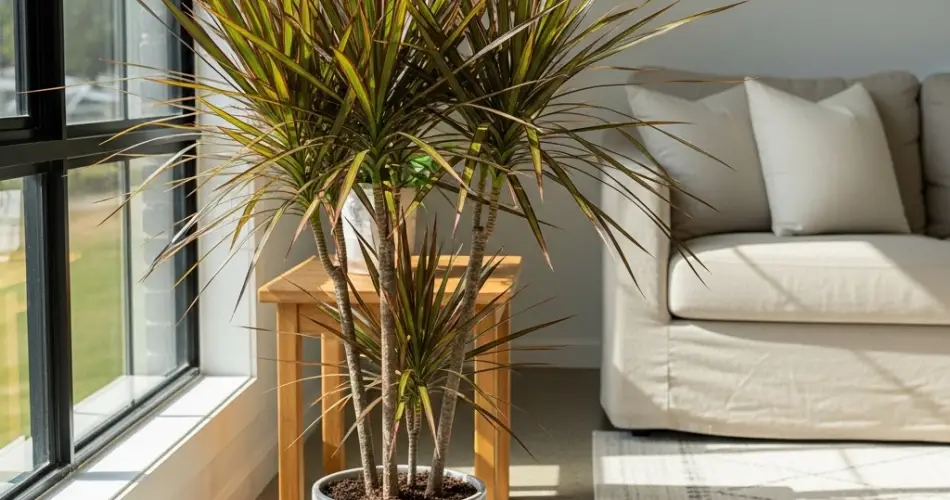
Dracaena plants are among the most popular indoor plants thanks to their striking foliage, tall elegant growth, and resilience in different environments. With dozens of species and cultivars, they range from the compact Dracaena compacta to the tall, tree-like Dracaena marginata or Dracaena fragrans (commonly known as the corn plant). Their tolerance for less-than-ideal conditions makes them a favorite for homes, offices, and commercial spaces.
But one question many plant owners have is: Can Dracaena plants survive in dark rooms? The short answer is that while Dracaenas are more tolerant of low light than many other houseplants, they cannot truly thrive in complete darkness. They need at least some source of indirect or artificial light to stay healthy and maintain their vibrant foliage.
Natural Habitat and Light Preferences
Dracaena species are native to tropical regions of Africa, Asia, and Central America. In their natural habitats, many grow beneath taller trees, where they receive dappled or filtered sunlight instead of harsh direct exposure. This explains why they adapt so well to indoor conditions and can handle spaces with moderate or low light.
Indoors, the ideal environment for most Dracaenas is bright, indirect light. Too much direct sun can scorch their long, narrow leaves, while too little light can weaken their growth and dull their appearance.
Can Dracaenas Grow in Dark Rooms?
The term “dark room” can mean different things, so it’s important to clarify.
-
Rooms with no windows and no artificial light: Dracaenas cannot survive here for long. Like all plants, they need light for photosynthesis, and complete darkness will eventually lead to decline.
-
Rooms with some artificial lighting but no natural sunlight: Yes, Dracaenas can adapt and survive under consistent artificial light, especially if you use full-spectrum grow lights.
-
Rooms with minimal natural light (such as north-facing windows or shaded spaces): Dracaenas can tolerate these conditions, though their growth will be slower.
So while they cannot survive in true darkness, they are a great choice for spaces where natural light is scarce.
How Dracaenas Respond to Low Light
In dim environments, you might notice changes in your Dracaena’s appearance:
-
Slower growth: The plant will conserve energy, producing fewer new leaves.
-
Loss of variegation: Variegated types, such as Dracaena Warneckii, may lose their striping, turning more solid green to maximize photosynthesis.
-
Leaning or stretching: The plant may bend toward the nearest light source.
-
Dull foliage: Leaves may lose some of their natural gloss and vibrancy.
These changes don’t necessarily mean the plant is unhealthy—they simply reflect its adaptation to reduced light.
Tips for Growing Dracaenas in Darker Rooms
If your home or office doesn’t have much natural light, you can still keep Dracaenas healthy with a few simple adjustments:
-
Supplement with artificial light
Full-spectrum LED grow lights are ideal, but even regular fluorescent lights can help. Position lights about a foot above the plant and run them for 10–12 hours daily. -
Choose darker-leaved varieties
Dracaena species with solid green leaves, like Dracaena Janet Craig, handle low-light conditions better than highly variegated ones. -
Rotate regularly
Turn the pot every couple of weeks to prevent the plant from leaning toward the light source. -
Avoid overwatering
In lower light, the plant uses less water. Let the top inch of soil dry out before watering again. Overwatering in dark conditions can quickly lead to root rot. -
Wipe the leaves
Dust reduces a plant’s ability to absorb light. Keeping leaves clean maximizes whatever light is available.
When Low Light Isn’t Enough
If your Dracaena shows signs of stress—like yellowing leaves, weak stems, or excessive leaf drop—it may not be getting enough light. Moving it closer to a window or adding artificial light can make a big difference. If artificial lighting isn’t an option, consider switching to a plant that thrives in very low light, such as a ZZ plant or snake plant.
Final Thoughts
Dracaenas are resilient, adaptable plants that can tolerate lower-light conditions better than many other indoor species. However, they cannot survive in complete darkness. For long-term health, they need at least some indirect natural light or supplemental artificial lighting.
If you have a darker room and want greenery that doesn’t demand bright sunlight, Dracaenas are an excellent choice. With proper care—especially careful watering and occasional lighting support—they can remain striking, low-maintenance plants that bring life and elegance to even the dimmest corners of your home or office.


