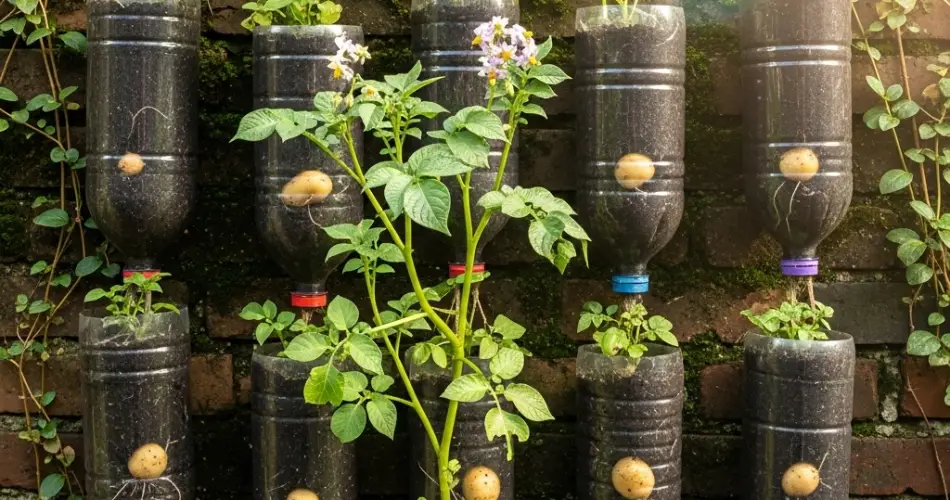
Growing potatoes doesn’t require sprawling garden beds or deep soil trenches. With a bit of creativity, you can cultivate them vertically using recycled plastic bottles mounted on a wall. This method saves space, reuses materials, and makes potato harvesting easier than ever. Whether you have a balcony, a small backyard, or just a sunny wall, this approach allows you to enjoy homegrown potatoes without the need for traditional gardening plots.
Why Grow Potatoes in Bottle Walls?
Potatoes are usually associated with wide plots of soil, but this vertical method turns unused vertical space into a productive growing area. Using bottle planters:
-
Saves floor space – Perfect for urban gardeners.
-
Improves air circulation – Reduces the risk of rot and pest infestation.
-
Makes harvesting simpler – You can easily open the bottle or remove the plant without digging.
-
Recycles plastic waste – Giving bottles a second life as planters.
Materials You Will Need
To start your potato bottle wall garden, gather:
-
Large plastic bottles (1.5–2 liters work best)
-
A sharp utility knife or scissors
-
Potting soil mixed with compost
-
Seed potatoes (or sprouted potatoes from your kitchen)
-
String, wire, or a sturdy frame for mounting
-
A watering can or spray bottle
Choose healthy seed potatoes with small sprouts or “eyes.” Avoid using potatoes treated with anti-sprouting chemicals, as they won’t grow successfully.
Preparing the Bottles
-
Clean and Dry – Wash the bottles thoroughly to remove any residue.
-
Cut an Opening – About halfway down the bottle, cut a horizontal flap or a wide oval hole on one side. This will serve as the planting and harvesting access point.
-
Create Drainage Holes – Use the knife or a heated nail to poke several small holes in the base to prevent waterlogging.
-
Optional Painting or Wrapping – If you want to protect roots from excess sunlight, you can paint the bottles or wrap them with burlap.
Planting Your Potatoes
-
Add the First Soil Layer – Fill the bottle with 5–8 cm of soil at the bottom.
-
Place the Potato – Position the seed potato with sprouts facing upward.
-
Cover and Water – Add more soil until the potato is buried, then water lightly.
-
Mount the Bottle – Secure the bottle to your wall, fence, or frame using wire, zip ties, or hooks.
Space the bottles vertically with enough room for leaves to grow outward without shading the plants below.
Caring for Your Potato Bottle Wall
-
Watering – Keep the soil consistently moist but not waterlogged. Wall gardens dry out faster than ground gardens, so check them regularly.
-
Hilling in a Bottle – As the plant grows, add more soil inside the bottle to cover the lower stems. This encourages the development of more tubers along the stem.
-
Fertilizing – Every two weeks, feed with a balanced vegetable fertilizer or a compost tea for healthy growth.
-
Pest Control – Watch for signs of aphids or potato beetles and address them promptly with organic sprays or manual removal.
Harvesting Potatoes
Depending on the variety, potatoes are usually ready in 70–100 days. For baby potatoes, you can harvest earlier when the plants flower. To harvest:
-
Open the flap or cut section of the bottle.
-
Gently remove the potatoes without disturbing the roots if you want to continue growing.
-
For a full harvest, remove the entire plant and empty the bottle’s soil.
The vertical bottle method makes harvesting mess-free—no digging required.
Advantages Beyond Space Saving
-
Portable Gardening – Bottles can be relocated to chase sunlight.
-
Aesthetic Appeal – A potato wall doubles as a green, living decoration.
-
Educational Value – Great for teaching children about plant growth in a visible, hands-on way.
Final Tips for Success
-
Choose compact or early-maturing potato varieties for better results in bottles.
-
Ensure your wall structure can handle the combined weight of the bottles, soil, and plants.
-
Rotate crops in your bottle wall each season to prevent soil-borne diseases.
With this method, even the smallest spaces can produce a rewarding potato harvest. A wall of green foliage dotted with blossoms soon turns into a basket of fresh, flavorful potatoes—grown right at home, without a traditional garden bed.


